
- Release Year: 2020
- Platforms: Windows
- Publisher: Gadan Games
- Developer: Gadan Games
- Genre: Action
- Perspective: 1st-person
- Game Mode: Single-player
- Gameplay: Puzzle elements, Survival horror
- Setting: Fantasy
- Average Score: 30/100
Description
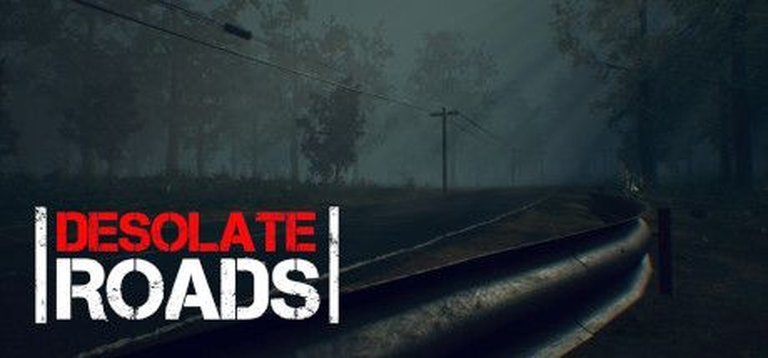
Desolate Roads is a short first-person psychological horror vignette set in a desolate, fog-shrouded wilderness of empty roads, dark forests, and an oppressive void beyond. When your car runs out of gas in this forgotten nowhere, you must explore alone, solving light puzzles and navigating survival horror elements in a tense atmosphere, with the experience completable in under an hour but multiple endings designed to linger.
Gameplay Videos
Where to Buy Desolate Roads
PC
Desolate Roads Guides & Walkthroughs
Desolate Roads: Review
Introduction
Imagine your engine sputtering to a halt on an endless, fog-choked road, the headlights piercing only a void of twisted trees and suffocating mist—welcome to Desolate Roads, a 2020 indie horror vignette that distills existential dread into a sub-hour sprint. Developed single-handedly by Gábor Dandár under Gadan Games, this first-person psychological horror experience emerged amid a crowded 2020 indie scene flooded with bite-sized terrors inspired by P.T.. Though largely overlooked, with just a handful of players and a “Mostly Negative” Steam rating from a scant 10 reviews, Desolate Roads punches above its weight in atmospheric tension, only to stumble on execution. My thesis: This is a bold solo-dev artifact of indie horror ambition—haunting in concept, but hindered by technical rough edges—earning a niche place as a cautionary tale of vignette potential unrealized.
Development History & Context
Desolate Roads represents the pinnacle of solitary craftsmanship in an era when tools like Unreal Engine democratized game development for independents. Released on October 30, 2020, exclusively for Windows via Steam, it was conceived, coded, designed, arted, and scored entirely by Hungarian creator Gábor Dandár, operating under his Gadan Games banner (sometimes stylized as Gadan Digital). This one-man polymath effort credits nine total contributors, but Dandár’s fingerprints dominate: he lists himself as “A Game By,” with advisors Brandon Sheffield (a veteran game journalist and designer credited on 46-48 other titles) providing text and design guidance, special thanks to Dezső Varga, and asset imports from Vladimir Kotov (aka Shedmon on Sketchfab) for key models like a wooden shed and a phone.
Built on Unreal Engine (1998-2020 Epic Games copyright), the game leveraged free, accessible tech amid 2020’s pandemic-fueled indie boom. The gaming landscape was saturated with short-form horrors—think Phasmophobia‘s co-op scares or walking sims like Firewatch—but Desolate Roads targeted the vignette niche, promising a complete experience in under an hour. Priced at a humble $2.49-$4.99, it embodied the Steam gold rush: rapid prototyping for quick releases. Technological constraints were minimal for a solo project; Unreal’s blueprint system likely enabled Dandár’s multi-role feats. However, the era’s DIY ethos amplified flaws—no QA team meant bugs like geometry clipping persisted, as noted in Steam forums. In context, it echoes early 2010s indie experiments like The Desolate Hope (2012), but arrives post-Among Us explosion, when player expectations for polish spiked.
Narrative & Thematic Deep Dive
At its core, Desolate Roads is a minimalist psychological horror tale of isolation, unfolding without voiced protagonists or sprawling lore. You awaken in a stranded car, gas gauge empty, surrounded by “many kinds of nothing”: serpentine empty roads, a lightless forest, and “endless thick and strangling fog” that devours visibility. No names, no backstory—just raw vulnerability as you step into the unknown, compelled to explore for salvation (gas? escape?). Community hints and a sole Steam guide reveal a sparse plot punctuated by eerie discoveries: abandoned vehicles with glitchy radios emitting “hilarious whisper-scream groan/moan” effects, a “bizarro-house” with wax-clogged keyholes, text messages on a scavenged phone, and a pursuing entity that strikes without warning.
The narrative thrives on implication, not exposition. Text messages—advised by Sheffield—likely serve as fragmented lore, hinting at prior vanishings or madness (one achievement ties to ignoring them for a “2nd Ending”). Multiple endings (confirmed feature, with at least three via player queries) hinge on choices: evasion tactics, puzzle solutions, or message interactions, fostering replayability in 20-80 minute runs. Dialogue is absent; environmental storytelling reigns—fog symbolizes mental unraveling, the entity embodies primal fear.
Thematically, it’s a meditation on solitude’s abyss. MobyGames tags it “Fantasy” setting with “Horror” narrative, but realism grounds it: modern cars, phones evoke Silent Hill‘s liminal dread. Themes dissect the unknown as predator—fog “strangling” like anxiety, roads looping into dead ends mirroring futile escape. Psychological layers probe perception vs. reality: radios warp sounds, houses defy logic, culminating in gore-tinged violence (mature descriptors warn of blood). No deep characters exist; you’re the everyman unraveling, a blank canvas for player paranoia. Flaws emerge in ambiguity—endings feel opaque without guidance—but its vignette purity evokes P.T.‘s loops, lingering as “brief time… stick[ing] with you much longer.”
Gameplay Mechanics & Systems
Desolate Roads blends walking simulator tranquility with survival horror spikes and light puzzles, all in direct-control first-person. Core loop: explore → evade → solve → survive, completable in ~1.3 hours (70% players finish 32m-1.4h per Niklas Notes). No inventory bloat; interaction is sparse—examine phonesheds, fiddle radios, navigate fog-blind.
Survival horror shines in chase sequences: an unseen “it” hunts post-triggers, forcing car-hopping for safety (no weapons). Deaths are instant and cheap—forum rants decry ambushes sans warning, like the first entity spawn far from vehicles. No jump exacerbates frustration; one player clipped into a “gallon bucket” dead-end.
Puzzles are “light”: keyhole wax implies item hunts, message-reading branches narratives. UI is Unreal-minimalist—HUD-free immersion, but clunky (no explicit maps, fog disorients). Progression is linear yet replayable via endings/achievements (5 Steam ones, e.g., all endings). Character “growth”? None—stateless survival.
Innovations falter: Realistic physics (one-way steps) add tension but bugs (geometry locks) break flow. Controls suit controller/keyboard, but no Steam Deck verification. Flawed systems—predictable chases, radio busywork—undercut tension, yet vignette brevity masks repetition.
| Mechanic | Strengths | Weaknesses |
|---|---|---|
| Exploration | Fog-forced caution builds dread | Linear paths, dead-ends frustrate |
| Combat/Evasion | Tense car-shelter dashes | Cheap insta-deaths, no countermeasures |
| Puzzles | Narrative-integrated (messages) | Obscure, trial-error heavy |
| UI/Controls | Immersive minimalism | Buggy clipping, no jump |
World-Building, Art & Sound
The eponymous “desolate roads” forge a masterful atmosphere of encroaching void. Setting: contemporary nowhere—paved veins through fantasy-tinged woods (MobyGames nod), fog as active antagonist “strangling” sightlines. World-building is environmental: derelict cars imply vanishings, shed/phone assets (Sketchfab imports) ground realism amid surrealism (wax locks, warped audio).
Visuals, solo-crafted by Dandár, stun in simplicity: Unreal’s lighting crafts deep shadows, volumetric fog dense/threatening. “Beautiful environment” promise holds—dark forests loom organically, roads curve hypnotically. Low-poly assets (shed/phone) blend seamlessly, evoking Layers of Fear‘s unease. Performance: Modest specs (GTX 460 min), 3D first-person fluid at 1080p.
Sound design, also Dandár’s, amplifies isolation: Ambient fog whooshes, forest creaks, radio static births horrors. No score overwhelms; subtle drones pulse tension. Chases spike with entity groans, mature gore implied sonically (splats?). Collectively, they forge threatening immersion—fog/sound cocoon dread, visuals haunt post-play.
Reception & Legacy
Launch reception was muted: No MobyGames/Metacritic critic scores (first-to-review pleas), Steam’s 10 reviews yield “Mostly Negative” (30% positive, 3/10). Players praise atmosphere (“tense”), decry bugs/deaths (“really bad,” “stuck in geometry”). Niklas Notes: 30% positive, short playtimes. Low ownership (4 MobyGames collectors) reflects obscurity.
Commercially: ~$5 Steam sales, no ports (Windows-only). Community sparse—guides for 100%/achievements, forums query endings (“without checking texts?”). Reputation stagnant: No patches noted, 2023 Moby updates minor.
Influence? Negligible—unrelated “Desolate” titles (Desolate 2018) share vibes, but no direct lineage. As solo vignette, it foreshadows 2024’s Broken Roads, embodying indie risks. Legacy: Cult obscurity for horror historians, warning on QA for vignette devs.
Conclusion
Desolate Roads captivates with its fog-wreathed isolation, Dandár’s multifaceted vision yielding tense vignettes that linger despite brevity. Yet, bugs, opaque mechanics, and unpolished horror undermine ambition, dooming it to “Mostly Negative” limbo. In video game history, it claims a footnote: Exemplary solo horror intent, flawed execution—a 6/10 artifact for atmospheric enthusiasts willing replays. Worth $2.49 for fog-fear fans; skip if polish demanded. Its roads lead nowhere grand, but the journey terrifies fleetingly.