
- Release Year: 2004
- Platforms: Wii, Windows
- Publisher: ak tronic Software & Services GmbH, Digital Jesters Ltd., dtp digital tainment pool GmbH, dtp entertainment AG, Focus Home Interactive SAS, Frogwares Game Development Studio, Global Software Publishing Ltd., hell-tech, Nobilis France, Odyssey, Ltd., Ubisoft Entertainment SA
- Developer: Frogwares Game Development Studio
- Genre: Adventure
- Perspective: 3rd-person
- Game Mode: Single-player
- Gameplay: Graphic adventure, Puzzle elements
- Setting: Belle Époque, India, London
- Average Score: 72/100
Description
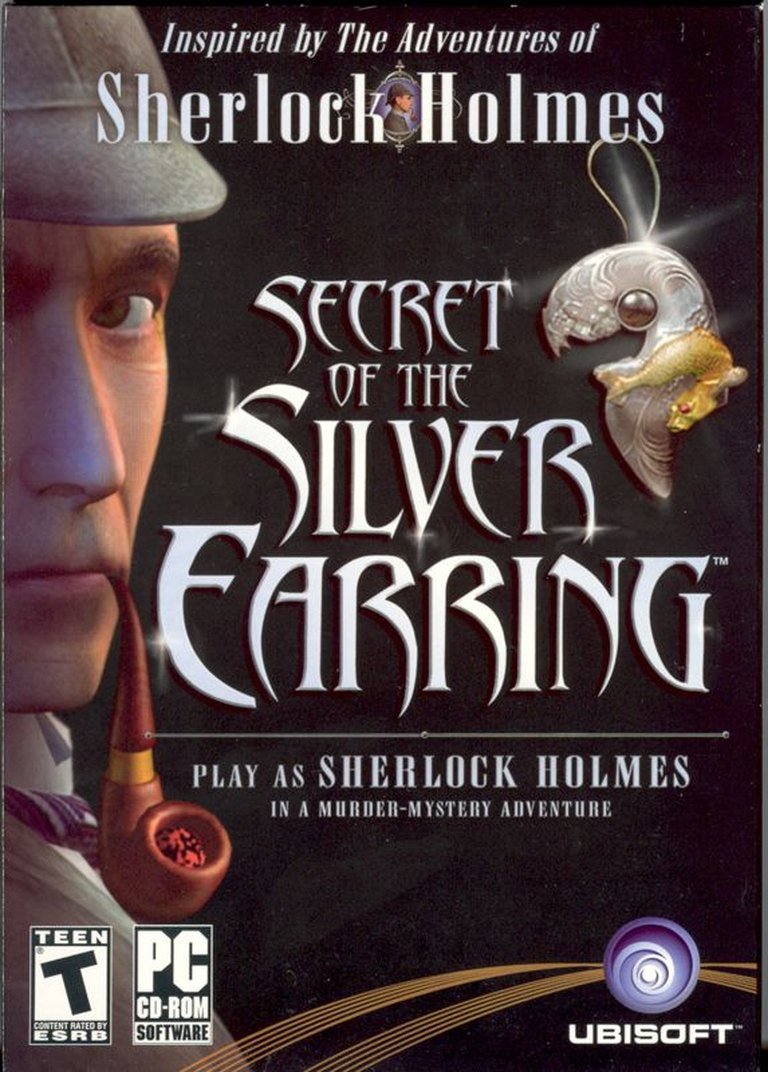
Sherlock Holmes: Secret of the Silver Earring is a third-person point-and-click adventure game set in 19th-century England, where players control detective Sherlock Holmes and Dr. Watson as they investigate a murder at Sherringford Hall. Invited to a reception celebrating the return of wealthy industrialist Sir Bromsby’s daughter, the duo uncovers clues after the host is shot during his speech, with suspicion falling on his daughter; players interrogate suspects, examine evidence with tools like a magnifying glass and test tube, analyze substances in Holmes’ lab, consult a diary of findings, and solve daily quizzes across five days to reveal the mystery of the silver earring.
Gameplay Videos
Where to Buy Sherlock Holmes: Secret of the Silver Earring
PC
Sherlock Holmes: Secret of the Silver Earring Cracks & Fixes
Sherlock Holmes: Secret of the Silver Earring Guides & Walkthroughs
Sherlock Holmes: Secret of the Silver Earring Reviews & Reception
metacritic.com (68/100): Mixed or Average
ign.com : Sherlock Holmes delves into a solidly rewarding adventure.
imdb.com (80/100): A big improvement for Frogware Games.
adventuregamers.com (70/100): An enjoyable story-driven adventure steeped in the lore of Sherlock Holmes.
Sherlock Holmes: Secret of the Silver Earring: Review
Introduction
Imagine the gaslit grandeur of Victorian London, where the sharp crack of a gunshot shatters a lavish gala, thrusting the world’s greatest detective into a web of deceit, embezzlement, and murder. Sherlock Holmes: Secret of the Silver Earring (2004), Frogwares’ second foray into Arthur Conan Doyle’s iconic universe, catapults players into this intrigue at Sherringford Hall, where industrial magnate Sir Melvyn Bromsby meets a fatal end mid-speech. As a pivotal entry in the developer’s enduring Sherlock Holmes series—chronologically a prequel to the maligned The Mystery of the Mummy (2002)—it marks a bold evolution from puzzle-heavy escapism to immersive detective simulation. This review argues that Silver Earring stands as a flawed yet foundational triumph: a riveting “whodunit” that masterfully evokes Doyle’s deductive spirit through innovative evidence-gathering and narrative depth, while stumbling on technical rigidity and uneven execution, cementing its place as an underrated gem in adventure gaming history.
Development History & Context
Frogwares Game Development Studio, a Ukrainian team founded in 2000, emerged from humble origins with The Mystery of the Mummy, a clunky first-person adventure criticized for its obtuse puzzles and lackluster storytelling. By January 2003, they pivoted for Silver Earring, helmed by story and game designer Jalil Amr, whose unpublished French “novel”—a fanfiction-esque pastiche—formed the backbone. President Waël Amr and producer Pascal Ensenat oversaw production, with Sergey Geraschenko coordinating and Alexander Kuziaev leading programming. The 101-person credit list reflects a collaborative effort, blending 3D artists like Ivan Osadchyj and Bogdan Gursky for character models with concept artists Marina Orlova and Roman Kepkalo.
Released in August 2004 for Windows (EU via Digital Jesters, NA via Ubisoft), it targeted the post-Syberia adventure boom amid a landscape dominated by linear narratives like The Longest Journey and investigative titles like CSI. Technological constraints of the era—pre-rendered 2D backgrounds, fixed camera angles, and Bink Video middleware—prioritized atmosphere over fluidity, supporting only specific video cards (e.g., NVIDIA or ATI). A Wii port in 2011 (Focus Home Interactive) adapted controls but retained dated visuals. Budget limitations and a niche genre meant no patches for persistent bugs, though Frogwares provided saved-game fixes. This context underscores Silver Earring‘s ambition: bridging literary adaptation with interactive sleuthing in an era when Sherlock games were scarce, post-Lost Files era.
Studio Vision and Technological Hurdles
Frogwares envisioned a “true” Holmes experience—dialogue-driven deduction over arcade puzzles—learning from Mummy‘s failures. Yet, era-specific issues like stiff animations, pathfinding woes, and non-scalable UI plagued digital re-releases (Steam/GOG at $0.99). Classical music integration (Dvořák, Grieg, Schumann, Tchaikovsky) evoked Belle Époque elegance cheaply, while Pteroduction Sound handled mixed English voiceovers.
Narrative & Thematic Deep Dive
Set in May 1897 London, the plot ignites with Mycroft Holmes enlisting Sherlock and Watson to vet Italian diva Gallia at Bromsby’s gala for daughter Lavinia’s return. A sniper’s bullet fells Bromsby, smoke wafting from Lavinia’s vicinity; suspicion mounts amid her strained paternal ties and partner Hermann Grimble‘s embezzlement. Over five “days,” probes unearth four more corpses: bartender Roy Hunter, lawyer Horace Fowlett, nephew Wyatt Collins, and ties to vanished actors Veronica Davenport and Jeffries from Bromsby’s theater acquisition.
Themes probe Victorian undercurrents: class strife (Bromsby’s exploited workers), jealousy (Jeffries murders Davenport), imperialism (Indian/Brazilian leads), and redemption (Grimble’s secret philanthropy). Culprits—Lt. Herrington (Lavinia’s lover), manservant Spencer (disguised Jeffries), and Collins—orchestrate a fortune grab: Jeffries impersonates Herrington for the shot; Hunter dies for recognition; Fowlett for the will; Collins for obsolescence. Holmes’ 20-minute finale cinematic, with flashbacks, masterfully unravels it, echoing Doyle’s denouements.
Characters shine: Holmes (Christopher Lee-inspired, egotistical yet brilliant, voiced by Guy Harris) clashes rudely with loyal, notepad-wielding Watson (David Riley); bumbling Lestrade, urchin Wiggins, and Mycroft aid via missives. Lavinia’s turmoil, Grimble’s nuance, and 40+ NPCs enrich interplay. Dialogue, though linear (topic lists over natural flow), crackles with wit—”Really, Holmes. You go too far!”—but Holmes’ pomposity alienates some. The silver earring? A late reveal tying Indian intrigue, criticized as titular bait. Sprawling yet cohesive, it critiques avarice while celebrating deduction, though red herrings overwhelm.
Plot Strengths and Weaknesses
- Strengths: Twists (e.g., disguises, wills) reward scrutiny; quizzes reinforce lore.
- Weaknesses: Sprawling scope dilutes tension; player deductions optional, undermining agency.
Gameplay Mechanics & Systems
A third-person point-and-click paradigm governs: footprint cursors for movement (double-click runs), hand/face icons for interaction/examination. Switch between Holmes (indoors) and Watson (grounds) via Sherringford map; London map advances days linearly. Core loop: evidence collection (40+ clues via magnifying glass for hairs/prints, test tube for powders, tape for footprints), interrogation (exhaust topics; rare evidence confrontation), analysis (Baker Street lab: microscopy, chemistry), and daily quizzes (5-6 yes/no queries backed by journal entries).
Journal—conversations, observations, documents, maps—is indispensable, auto-updating but verbose. Puzzles skew investigative: logic (Noah’s Ark hidden images, Jester/Checkers boards, slide-safe code), inventory combos (rare), lab tests. Innovations: stealth (shadow-hopping past guards/dog—frustrating AI), timed maze (exits trigger chases). UI hides inventory (right-click); ESC menus lack named saves.
Flaws: Hyper-linearity (exhaust hotspots or stall; miss Day 1 item, restart); pixel-hunting (wall art mandatory); prompted actions hand-hold; quizzes lack error feedback (except finale, skippable). No progression system; 15-25 hours for veterans.
| Mechanic | Innovation | Critique |
|---|---|---|
| Tools | Realistic forensics | Inconsistent hotspots |
| Quizzes | Evidence justification | No wrong-answer hints |
| Stealth/Timed | Variety | Trial-error hell |
| Journal | Comprehensive log | Overwhelming text |
World-Building, Art & Sound
London 1897 pulses: Sherringford Hall’s opulent ballrooms, foggy streets, cement factories, abbeys, theaters evoke Doyle’s fog-shrouded milieu. Pre-rendered 2D backdrops (detailed textures, shadows) contrast crude 3D models—stiff walks, pathfinding glitches, no lip-sync. Costumes/props (deerstalkers, notepads) immerse; high-res options (1280×960, AA) shine, though Wii port degrades.
Sound: Ambient footsteps/noises texture stasis; classical OST (Grieg’s Violin Sonata, Dvořák’s Humoresque) ambients elegantly, if repetitively. Voices: Watson excels, Holmes middling (accent wavers); NPCs campy (cringe Wiggins, erratic Lestrade). Subtitles aid hushed tones; clipping persists.
Atmosphere triumphs—Victorian intrigue feels lived-in—bolstering deduction amid static visuals.
Reception & Legacy
Critics averaged 72% (MobyGames; 70% GameRankings, 68 Metacritic): IGN (83%) lauded mystery/UI; GameSpot (73%) decried puzzle dearth/player passivity; Adventure Gamers (70%) noted legacy pressure. Players: 3.4/5 (Moby), praising story/graphics, slamming linearity/stealth. Sales: 50k initial (strong genre-wise), 500k by 2010; boosted Frogwares (1.5M series by 2009).
Evolution: Hailed improvement over Mummy, influencing Awakened (2006: free movement), Nemesis, up to Chapter One (2021). Pioneered quiz deduction, inspiring CSI/modern sleuth sims (LA Noire, Heavy Rain). Wii flop (64%) due to laziness. Legacy: Budget classic ($0.99 digital), series cornerstone—Frogwares’ feet “growing into Doyle’s shoes.”
Conclusion
Sherlock Holmes: Secret of the Silver Earring distills Doyle’s essence into interactive form: a labyrinthine murder probe rewarding scrutiny amid Victorian splendor. Frogwares’ strides in narrative, journaling, and forensics outweigh linearity, clunky stealth, and quizzes—flaws of 2004 tech/inexperience. Not flawless, but exhaustively engaging for detective fans, it earns a 8/10—essential history for Holmes gamers, proving the game “still afoot” in evoking timeless deduction. Play it: the game’s armchair sleuthing endures.