
- Release Year: 2016
- Platforms: Blacknut, Linux, Macintosh, Nintendo Switch, PlayStation 4, Windows, Xbox One
- Publisher: Daedalic Entertainment GmbH, Merge Games Ltd.
- Developer: Teku Studios Software SL
- Genre: Adventure
- Perspective: 3rd-person (Other)
- Game Mode: Single-player
- Gameplay: Graphic adventure, Puzzle elements
- Setting: Fantasy
- Average Score: 73/100
Description
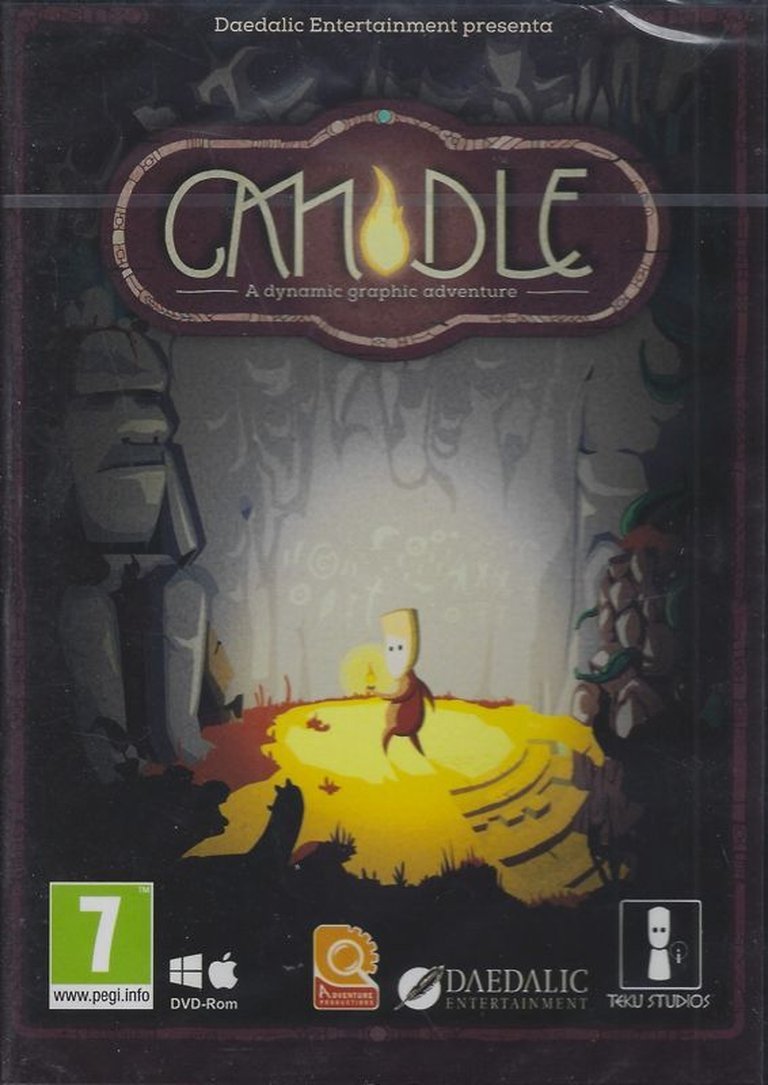
Candle: The Power of the Flame is a 2D graphic adventure game set in a captivating fantasy world, where players guide a protagonist through beautifully hand-drawn environments, solving intricate puzzles and exploring using point-and-click mechanics in a third-person perspective, all powered by the mystical force of a magical flame.
Gameplay Videos
Candle: The Power of the Flame Guides & Walkthroughs
Candle: The Power of the Flame Reviews & Reception
opencritic.com (70/100): Gorgeously made, challenging in every way, Candle is a game that shines brighter than you’d expect.
metacritic.com (76/100): Candle: The Power of the Flame delivers a gorgeously detailed and thoroughly well executed puzzle adventure.
godisageek.com : Gorgeous hand-painted visuals filled with life and colour.
ztgd.com : A beautiful game with a charming and emotionally resonant story.
Candle: The Power of the Flame: Review
Introduction
Imagine a flickering flame not just illuminating the darkness of ancient ruins and shadowy jungles, but serving as your protagonist’s very hand—a beacon of hope in a world ravaged by tribal warfare and forgotten gods. Candle: The Power of the Flame, the 2016 debut from Spanish indie studio Teku Studios, captures this poetic premise in a hand-painted watercolor dreamscape that evokes the spirit of classic platformers like Heart of Darkness and Oddworld, blended with point-and-click adventure ingenuity. As a game historian, I’ve seen countless indies rise and fade, but Candle endures as a testament to passionate craftsmanship amid the 2010s indie boom. Its legacy lies in proving that small teams could rival AAA polish in artistry while innovating mechanics around light and observation. My thesis: Candle is a triumphant artistic achievement and puzzle masterpiece that carves a niche in adventure-platformer history, though its obtuse design and clunky execution prevent it from igniting broader flames.
Development History & Context
Teku Studios, founded by visionary Spaniard Jose Antonio Gutiérrez Villar—who wore hats as director, writer, game designer, art director, and even background artist—emerged from the vibrant Spanish indie scene post-Machinarium and Braid. Their debut Candle was successfully crowdfunded via Kickstarter, backed by enthusiasts drawn to its unique flame mechanic and handcrafted aesthetic. Published initially by Daedalic Entertainment (known for point-and-click gems like Deponia) on PC (Windows, Mac, Linux) in November 2016, it later hit consoles via Merge Games in 2018 (PS4, Xbox One, Nintendo Switch), with a brief Wii U port canceled.
Built on Unity engine with 2D Toolkit middleware, Candle navigated 2010s tech constraints like modest hardware demands (dual-core CPU, 4GB RAM minimum) while pushing artistic boundaries. Every frame, background, and UI element was hand-painted with poster paints, scanned, and animated traditionally—eschewing digital tools for a tactile, cartoon-like fluidity reminiscent of 1930s Disney. This labor-intensive process (171 credits, including animators like Iker Mateo Monterde) reflected Gutiérrez’s vision: a “fairy tale for adults” homage to dynamic 2D adventures, amid a landscape dominated by precision platformers (Celeste, Ori) and narrative indies (Inside). Released during Daedalic’s sequel-heavy year (Deponia Doomsday), Candle stood out as an underdog, proving Kickstarter’s power for non-Western devs in a post-Undertale era hungry for whimsy and challenge.
Narrative & Thematic Deep Dive
At its core, Candle weaves a mythic fable of loss, discovery, and elemental power. You embody Teku, a naive shaman apprentice whose left hand manifests as a living candle—a divine gift tying him to spiritual forces. His idyllic tribal village is razed by the sinister Wakcha (or Atipax in some descriptions), who abduct revered shaman Yaqa, Teku’s mentor. Teku’s odyssey spans jungles, temples, and haunted wilds to rescue Yaqa, rescue survivors, and unearth a “dark truth” about cyclic divine destruction: gods repeatedly flood the world to purge mortal greed and hubris.
The narrative unfolds via an omniscient narrator (voiced masterfully by Terry Wilton in English, Pepe Mediavilla in Spanish), whose rhythmic, storybook cadence—evoking childhood fables—infuses lore with gravitas. Dialogue is abstracted: NPCs chatter in tribal gibberish, conveyed through pictographic icons, then summarized by the narrator. This mechanic, while immersive, drags pacing, turning conversations into tedious rituals that demand patience.
Key Characters:
– Teku: Prototypical hero—earnest, under-equipped, growing via trials. His candle hand symbolizes fragile hope amid encroaching darkness.
– Yaqa: Wise elder, catalyst for journey; voice acting (Wilton/Mediavilla) adds emotional weight.
– Supporting Cast: Eccentric villagers, shadowy Wakcha foes, and mythical beasts; interactions reveal lore fragments, like gods’ wrath or hidden pacts.
Themes probe light vs. shadow (literal and metaphorical), innocence corrupted by power, and environmental interconnectedness—puzzles demand observing ecosystems (bees, flames, water). Yet, the plot’s simplicity borders on archetypal, lacking Limbo-esque ambiguity. Emotional peaks, like uncovering ancestral betrayals, resonate via narration, but clunky delivery mutes depth. As Everyeye.it noted, it’s a “refined puzzle adventure” with “incantevole” (enchanting) personality, rewarding thematic investment for lore hounds.
Gameplay Mechanics & Systems
Candle fuses puzzle-platformer with graphic adventure in a 10-15 hour loop of exploration, item collection, and flame manipulation. Core cycle: traverse 2D side-scrolling levels, ignite hand-candle from torches, light paths/enemies, pick/examine inventory items (point-and-select interface), solve layered enigmas, backtrack.
Key Mechanics:
– Flame Power: Innovative core—reveals hidden clues, repels beasts, ignites mechanisms. Extinguishing isn’t fatal but cripples progress, forcing relights. Genius in puzzles like luring Wakcha into traps or mixing colors via firelight.
– Platforming: Basic moves (walk, run, jump, climb ledges). Clunky physics—sluggish acceleration, imprecise jumps—frustrate timed sequences, per Hooked Gamers’ gripes on “hidden platforms.”
– Puzzles: Standout variety—physics (honey for rabbits, smoke herding bees), observation (doll arm positions from distant clues), minigames (designed by Juan Diego Alegre Brun et al.). UI is clean (inventory radial?), but solutions hide in visual noise, demanding pixel-hunting.
– Progression/Combat: No leveling; skill via observation. “Combat” is avoidance/stealth—flame alerts foes. Cheap deaths abound from traps, spawning at checkpoints with backtracking.
– Flaws/Innovations: Backtracking plagues (miss an item? Hours lost). No hints beyond narrator; esoteric clues (fake walls, multi-step doll puzzles) spark rage quits. Yet, innovations like flame-as-tool elevate it beyond Limbo, blending genres fruitfully.
Gamepad support shines on consoles; single-player only. Pacing ebbs—early whimsy yields to frustration, but satisfaction peaks on eureka moments.
World-Building, Art & Sound
Candle‘s fantasy realm—a lush jungle archipelago dotted with tribal huts, foreboding temples, and bioluminescent wilds—pulses with lived-in detail. Atmosphere builds via peril juxtaposition: vibrant flora hides spikes, fire scatters shadows revealing lore carvings. Wakcha camps evoke menace; ancient mechanisms hint cataclysmic history.
Visuals: Pinnacle achievement. Hand-painted watercolor (artists: Jorge Rueda Ribera, Leticia Zamora Méndez) scanned for organic textures—vibrant hues pop, animations fluid like classic cartoons. FX (Fernando Sueiro Brea) enhance flame flicker; UI (Elena Benedí Sebastián) integrates seamlessly. Detail overload, however, camouflages interactables, a double-edged sword.
Sound: South-American-infused soundtrack swells epic crescendos to ambient whispers, amplifying isolation. Narrator’s timbre is hypnotic, lore-dumping with gravitas. SFX (drips, crackles) immerse; voice acting elevates gibberish NPCs. Collectively, they forge a “living painting,” per publisher blurbs, heightening tension and wonder.
Reception & Legacy
Launched to mostly positive acclaim (MobyScore 7.5/10, 76% critics avg from 18 reviews), Candle peaked at 95% (Ragequit.gr: “γοητευτική… διασκεδαστική εμπειρία”) but dipped to 42% (eShopper: “frustrating”). PC thrived (82% Windows), consoles mixed (Switch 66%, clunky ports blamed). Steam: “Mostly Positive” (79%, 1,163 reviews). Commercially modest—0.01m Switch sales (VGChartz)—yet collected by 61 MobyGames users.
Reputation evolved: Initial hype for art/narration endured, but frustrations (controls, opacity) tempered scores (Nintendo Life: 7/10, “ferocious difficulty spikes”). Influenced indies blending puzzles/art (My Memory of Us, watercolor peers), revitalizing flame mechanics post-The Flame in the Flood. Teku’s success spawned sequels/watchlists; as IGN España hailed, a “juego español del año.” Legacy: Niche cult classic, exemplifying 2010s indie’s artistic risks amid precision-platformer dominance.
Conclusion
Candle: The Power of the Flame blazes trails in handcrafted beauty, innovative flame puzzles, and narrated myth-making, a debut etching Teku Studios into indie lore. Yet, clunky platforming, opaque clues, and backtracking dim its glow, alienating casuals. As a historian, I verdict it a solid 8/10—essential for puzzle aficionados craving Oddworld-esque challenge wrapped in watercolor splendor, but a cautionary tale on balancing ambition with accessibility. In video game history, it flickers as a passionate indie beacon: not revolutionary, but enduringly enchanting for those who nurture its fragile light.