
- Release Year: 2023
- Platforms: PlayStation 5, Quest, Windows
- Publisher: Vertigo Games B.V.
- Developer: Innerspace VR, Inc.
- Genre: Adventure
- Perspective: 1st-person
- Game Mode: Single-player
- Gameplay: Graphic adventure, Puzzle elements
- Setting: Fantasy
- Average Score: 74/100
- VR Support: Yes
Description
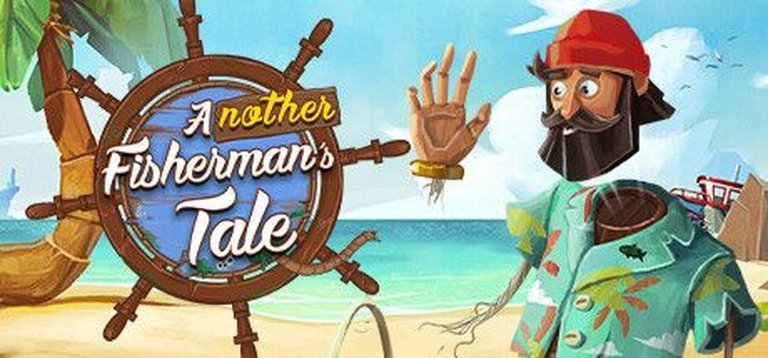
Another Fisherman’s Tale is a VR puzzle adventure sequel to A Fisherman’s Tale, set in a whimsical fantasy world where players manipulate giant hands, switch perspectives, and solve intricate puzzles involving fishermen, pirates, mermaids, and a young girl named Nina, blending clever mechanics with an engaging story of sea exploration and discovery.
Gameplay Videos
Another Fisherman’s Tale Reviews & Reception
metacritic.com (71/100): Expertly tuned controls mixed with exploring a thought-provoking, tear-jerking and hilarious story of family and loss make Another Fisherman’s Tale a must-play title.
opencritic.com (77/100): A good example of how to use virtual reality in stimulating and creative ways.
torontoguardian.com : Yes, though it’s more complicated than it needs to be.
adventuregamehotspot.com : Mind-bending VR mechanics and a poignant story will reel you in and keep you hooked.
Another Fisherman’s Tale: Review
Introduction
Imagine a world where your own body becomes the ultimate puzzle box—limbs detaching like mischievous marionette parts, heads lobbed across chasms for reconnaissance, and hands swapped for pirate hooks or crab claws to conquer impossible obstacles. This is the disorienting delight of Another Fisherman’s Tale, the 2023 sequel to Innerspace VR’s groundbreaking 2019 hit A Fisherman’s Tale. As a VR puzzle adventure that masterfully blends whimsy, existential melancholy, and mind-warping mechanics, it hooks players from the first shattered puppet frame, reeling them into a tale of fabricated legends and fractured families. Building on its predecessor’s award-winning legacy—garnering accolades like “Best VR Game of the Year” at the 2019 VR Awards—this sequel doesn’t just iterate; it evolves, transforming recursive lighthouse dioramas into sprawling oceanic odysseys. My thesis: Another Fisherman’s Tale is a triumphant expansion of VR’s narrative potential, proving Innerspace VR as the Pixar of virtual reality, though its ambitious controls occasionally snag on the line.
Development History & Context
Innerspace VR, founded in 2014 by a team of French innovators passionate about “mind-bending stuff only possible in VR,” burst onto the scene with immersive experiences like Firebird: La Péri and The Unfinished. Their 2019 breakout, A Fisherman’s Tale, shocked the industry with its “worlds within worlds” recursion, earning praise for poetic storytelling amid VR’s early mainstream push. By 2023, VR had matured—Meta Quest 2 dominated standalone headsets, PSVR2 launched with haptic feedback promises, and PC VR stabilized via SteamVR—yet puzzles remained underrepresented against zombie shooters.
Another Fisherman’s Tale emerged from this fertile landscape, developed by Innerspace VR and published by Vertigo Games (PLAION Group). Game Director and Lead Designer Alexis Moroz conceived the core hook: dismantling your puppet avatar like Theseus’ ship, questioning identity through bodily renewal. “All of our body cells are renewed after 15 years,” Moroz noted in Unreal Engine interviews, tying mechanics to themes of change. Creative Director Balthazar Auxietre and Executive Producer Richard Turco shaped the vision, drawing lessons from Maskmaker (2021), which expanded scope to six hours amid pandemic constraints.
Powered by Unreal Engine 4 (with PhysX physics and FMOD audio), the team tackled “technical hurdles” like remote hand controls and collision detection. Hundreds of playtests refined wrist-friendly assists and auto-aim, ensuring comfort across Quest 2, PSVR2, SteamVR, Viveport, and Rift. Released May 11, 2023, at $19.99-$29.99, it dedicated itself to the devs’ “four little fishes” born during production—Roméo, Anatole, Lily, Elio—infusing personal warmth. In an era of bloated open-world VR, its concise 3-6 hour structure honored the original’s intimacy while pushing boundaries, arriving as PSVR2’s library matured.
Narrative & Thematic Deep Dive
At its heart, Another Fisherman’s Tale weaves a metanarrative tapestry, alternating between Bob the puppet fisherman’s bombastic yarns and Nina’s grounded reckoning with paternal myth-making. Voiced masterfully by Augustin Jacob (Bob, with whisky-soaked French flair) and Margeaux Lampley (Nina, Mary Kenred, mermaids), the story unfolds in chapters: Bob, post-lighthouse escape, shipwrecks on an island, rebuilds via detachable limbs, then battles pirates, krakens, and seeks Libertalia’s treasure. Narrated as bedtime tales to young Nina, these escalate into musical numbers and shipboard mysteries (echoing Return of the Obra Dinn‘s deduction).
The twist—revealed post-first chapter—elevates it: fade to a realistic basement where adult Nina (human hands!) packs her dying mother’s home, unearthing Bob’s models, notes, photos. Bob’s tales mask harsh truths: failure, loss, regret. Themes of change (literal body reconfiguration, metaphorical growth), memory vs. fiction (tall tales beautifying “ugly truths”), and family transmission (emancipating from parental shadows) resonate deeply. As Moroz explained, the first game was about “escaping” recursive fears; this probes evolution—”bending over backwards to become who you need to be.”
Dialogue sparkles: Bob’s poetic whimsy (“a special key in his puppet neck”) contrasts Nina’s weary realism, with radio voices (Robert Morgan EN, Michel Dupuis FR) and pirate crews adding levity. Subtle recursion persists—models rebuilt mirror emotional reconstruction—culminating in a poignant revelation of Bob’s “real” past. Critics lauded this “tear-jerking” depth (CGMagazine), though some found narrative “contorted” for gameplay (Gaming Nexus). It’s a heartfelt foil to VR’s escapism, urging players to dismantle illusions.
Gameplay Mechanics & Systems
Another Fisherman’s Tale reinvents VR embodiment: your 1st-person puppet body is the star. Core loop: explore linear chapters, solve environmental puzzles via disassembly. Detach hands (button press), puppeteer remotely (wrist-twist + trigger for scuttling), recall via palm squeeze—Thing from Addams Family meets Swiss Army knife. Throw head (B+Y on Quest) for third-person oversight or peeking vents. Replace hands: pirate hook climbs, crab claw slices ropes, fish tail swims efficiently.
Puzzles iterate brilliantly: launch hand across ravines, match crew hands via clues, reassemble machines as “the level itself.” Progression unlocks abilities organically, no inventory—tools “poof” as needed. UI is minimal: direct motion controls, subtle hints toggleable. Chapters vary: island scavenger hunts, ship stealth, oceanic dives, kraken guts.
Flaws emerge: finicky tracking (PSVR2 Sense Controllers snag), wrist strain sans perfect assists, accidental recalls reset mazes. Voice hints—Bob’s escalating nudges—frustrate (Push Square, Adventure Game Hotspot), looping post-exhaustion. No combat/progression trees; difficulty is low-moderate, balanced for accessibility (comfort options: snap-turn, vignettes). At 3-4 hours, it’s concise, avoiding repetition, but demands VR intuition—fiddly for newcomers.
| Mechanic | Strengths | Weaknesses |
|---|---|---|
| Detached Hands | Creative reach (levers, grabs) | Collision glitches, imprecise turns |
| Head Throw | Perspective shifts, immersion | Accidental resets, disorientation |
| Limb Swaps | Environmental synergy | Limited variety (3 types) |
| Puzzles | Varied, thematic integration | Hint spam, platforming feel |
Innovative yet imperfect, it maximizes VR’s physicality.
World-Building, Art & Sound
Diverging from the original’s claustrophobic lighthouse, Another Fisherman’s Tale globe-trots via diorama models: Caribbean isles, pirate galleons, turquoise seas, cavernous wrecks, Libertalia utopia. Each chapter’s “cozy intimacy” swells grandly—swim vast oceans, infiltrate gooey kraken innards—while basement interludes ground in photorealism, dialoguing fantasy/reality.
Art direction: Pixar-esque stylization—chunky, vibrant cartoons with Spongebob bounce. Unreal Engine 4 delivers jaw-dropping vistas on Quest 2, sharper on PSVR2. Dual aesthetics (whimsical Bob-worlds vs. dusty realism) underscore themes.
Sound seals immersion: FMOD crafts lapping waves, scurrying hands, distant gulls. Sweeping Caribbean scores tense to orchestral swells; a pirate musical delights. Voice acting shines—Jacob’s charismatic growl, Lampley’s emotional range—making tales feel grandfatherly. Haptics (PSVR2) pulse climbs, snaps enhance disassembly. Collectively, they transport, blurring VR’s veil.
Reception & Legacy
Launching May 11, 2023, it earned solid acclaim: MobyGames 7.6/10 (#6,501/27K), Metacritic 71/100 (PS5), OpenCritic 77 (67% recommend). Highs: “must-play” story/puzzles (Budget Gaming 90%, Road to VR 85%), VR mastery (Hobby Consolas 83%). Lows: short length, controls (Metro 50%, GamingTrend 70%), unmet expectations vs. original (Irish Independent 60%).
Commercially modest (14-15 collectors on Moby), it sold via Steam ($7.99 lows), thriving in VR niches. Legacy: Expands Fisherman’s Tale series, influencing body-manipulation (e.g., modular avatars). Cements Innerspace as VR storytellers, post-Maskmaker. Evolving rep: “worthy sequel” (UploadVR), “Pixar of VR” (Adventure Game Hotspot). Influences: deeper narratives in I Expect You To Die sequels, thematic puzzles amid VR’s action glut.
Conclusion
Another Fisherman’s Tale masterfully casts its line wider—bolder mechanics, richer emotions, diverse worlds—while honoring its predecessor’s soul. Innerspace VR’s risks pay off: a 3-6 hour gem probing identity amid VR spectacle. Controls and brevity temper perfection, but story, innovation, and immersion reel in triumphs. Verdict: Essential VR classic, securing the series’ seafaring saga in history’s harbor—8.5/10. Dive in; the truth awaits disassembly.