
- Release Year: 2006
- Platforms: Windows
- Publisher: MumboJumbo, LLC
- Genre: Compilation
- Game Mode: Hotseat
- Setting: Arctic, North Pole
- Average Score: 20/100
Description
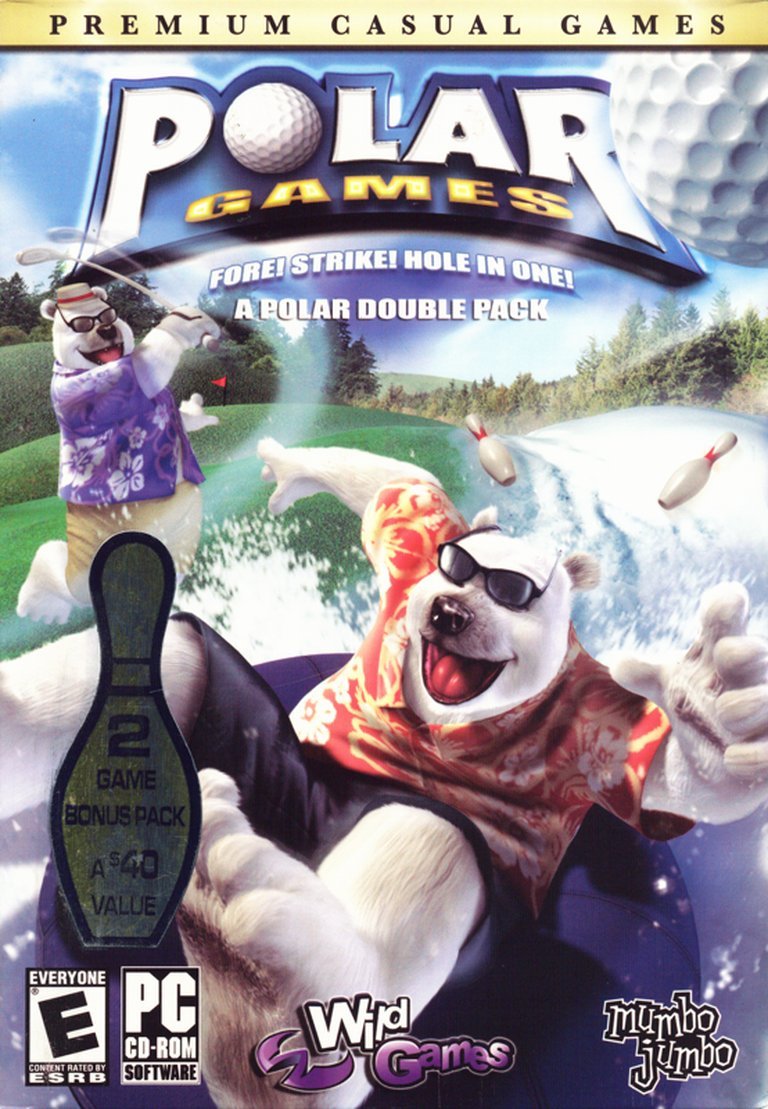
Polar Games is a 2006 Windows compilation from MumboJumbo that bundles the casual arctic-themed sports titles Polar Bowler and Polar Golfer, set in the frosty North Pole environment with polar bear protagonists engaging in bowling and golf challenges, supporting 1-4 players via hot-seat multiplayer using keyboard and mouse controls.
Polar Games Free Download
Polar Games: Review
Introduction
Imagine a time when video games weren’t epic sagas of moral ambiguity or sprawling open worlds, but bite-sized bundles of pure, unadulterated whimsy—penguins hurling themselves down icy lanes for strikes, polar bears teeing off amid snowdrifts for hole-in-ones. Released in 2006, Polar Games (aka Winter Golf) captures this essence as a double-pack compilation of Polar Bowler (2003) and Polar Golfer, emblematic of the casual gaming explosion on early-2000s PCs. In an era dominated by arcade holdovers and the dawn of console blockbusters like Gears of War, this MumboJumbo title offered accessible, family-friendly fun for 1-4 players via hot-seat multiplayer. Its legacy? A quirky footnote in the “Polar series” by WildTangent, evoking the North Pole’s frosty charm amid a sea of adware-tainted shovelware. Thesis: While mechanically simplistic and narratively barren, Polar Games exemplifies the casual gaming boom’s highs and lows—delivering joyful escapism undercut by technical sleaze, cementing its place as a historical curio in PC gaming’s democratized wild west.
Development History & Context
MumboJumbo, LLC, a Dallas-based publisher founded in 2001, spearheaded Polar Games as a CD-ROM commercial release for Windows PCs, building on WildTangent’s earlier Polar Bowler from 2003. WildTangent, known for browser and downloadable casual titles, crafted the “Polar series” with an Arctic/North Pole group aesthetic—cute anthropomorphic animals in winter sports antics. The compilation bundled Polar Bowler (penguin-as-bowling-ball mechanics) and Polar Golfer (golf with polar twists), retitled Winter Golf in some markets to emphasize its dual-sport appeal.
The 2006 landscape was pivotal: PC gaming shifted from hardcore sims and MMOs (World of Warcraft peaked) toward casual accessibility. Publishers like MumboJumbo flooded markets with $20 CD-ROMs via big-box retailers, capitalizing on post-The Sims demand for low-commitment play. Technological constraints? Minimal—keyboard/mouse inputs sufficed for 2D sprite-based action, running on era-standard hardware without 3D demands. ESRB’s “Everyone” rating targeted families, aligning with hot-seat multiplayer for couch co-op sans online infrastructure (pre-Steam dominance).
Creators’ vision: WildTangent aimed for “Wild Games” brevity—sessions under 30 minutes, per Archive.org scans—mirroring arcade roots (Pong-era simplicity) amid Wii’s motion-control hype. Yet, shadows loomed: WildTangent’s Web Driver bundled adware/spyware, as flagged in the sole critic review, reflecting shady mid-2000s practices where “free” downloads masked malware. This “kovarstvo” (cunning deceit, per Russian critique) epitomized casual gaming’s underbelly, prioritizing volume over polish in a pre-App Store ecosystem.
Narrative & Thematic Deep Dive
Narrative in Polar Games? Absent, as in primordial arcade titles like Pong or Space Invaders—pure ludology over narratology. No plot, characters with arcs, or dialogue; instead, a loose “Arctic sports festival” motif via static loading screens and menu art. Penguins bowl, polar bears golf—implied “events” in a North Pole league, but devoid of progression beyond high scores.
Thematically, it channels escapist whimsy: Arctic purity as playground, subverting winter drudgery into joy. Echoing early games’ “fun-first” ethos (per Nolan Bushnell’s recollections), themes evoke community (hot-seat multiplayer fosters turn-based rivalry) and absurdity (animals in human sports). No metaphysical lore like Mass Effect‘s ethical quandaries or Bloodborne‘s environmental puzzles; history trumps lore here, as Reddit debates distinguish—Polar Games offers “concrete provable actions” (strike! birdie!) sans abstract storytelling.
Characters? Archetypal mascots: the bowler penguin (barreling hero), golfer bear (club-wielding everyman). No development, emotions, or branching paths—static sprites reinforce thematic lightness. Dialogue? Nil, save onomatopoeic sound bites (“Fore! Strike!”). Underlying motifs nod to casual gaming’s democratization: accessible triumphs for non-gamers, prefiguring mobile hits like Angry Birds. Yet, spyware undertones invert purity—deceitful “ice” beneath festive surface, mirroring 2000s digital distrust.
Gameplay Mechanics & Systems
Core loop: Select sport, aim/power shot, watch physics unfold—repeat for high scores. Polar Bowler: Penguin curls into ball, launched down lanes past obstacles (ice blocks, fish pins) for strikes/spares. Innovative twist: Momentum conservation via ramps/jumps, blending bowling simulation with pinball chaos. Power-ups (speed boosts, multi-balls) add replayability; 10-frame structure gates progression.
Polar Golfer: Side-scrolling golf—tee off across procedurally snowy holes, navigating wind, penguins, ice patches. Club selection (driver/putter), power curves mimic real physics; birdies/par via precision. Multiplayer shines: Hot-seat alternation builds tension, 1-4 players competing scores sans splitscreen limits.
Progression: Unlockable courses/characters via stars, simple metroidvania-lite. UI: Clean menus, bold fonts, score trackers—intuitive for casuals, though clunky mouse-aiming frustrates precision. Flaws: Repetitive (few courses), no tutorials, physics jank (overpowered shots clip). Strengths: Forgiving difficulty, pick-up/drop-anytime. Systems innovate modestly—environmental hazards (avalanches derail bowls) presage Angry Birds physics puzzles. Overall: Tight loops reward twitch skill, but lacks depth for longevity.
| Mechanic | Polar Bowler | Polar Golfer | Multiplayer Impact |
|---|---|---|---|
| Core Action | Curl-and-roll | Tee/power arc | Turn-based rivalry |
| Innovation | Ramp momentum | Wind/terrain | Score leaderboards |
| Progression | Frame unlocks | Hole stars | Hot-seat rotation |
| Flaws | Pin clipping | Aim drift | No async play |
World-Building, Art & Sound
Setting: Vibrant Arctic fantasia—glittering icebergs, aurora skies, candy-cane pines. 2D hand-drawn sprites pop with Saturday-morning cartoon sheen: Penguins waddle triumphantly, bears fist-pump birdies. Atmosphere: Breezy cheer, evoking holiday warmth amid chill—contributes cozy immersion for family play.
Visual direction: Bold primaries (icy blues, snowball whites) against kooky animations (spinning pins, splashing hazards). Low-res charm suits era, scalable on CRT/LCDs. Sound design: Twangy chiptunes loop merrily; bouncy SFX (thwacks, clatters, cheers) amplify whimsy. No voice acting—music swells for strikes, underscoring triumphs sans narrative push. Collectively: Builds “festive North Pole” vibe, enhancing loops via sensory joy, though repetition grates post-hour.
Reception & Legacy
Launch: Dismal—MobyGames logs 20% critic (7Wolf Magazine’s 2/10, slamming spyware: “developers get a ‘two’ for cunning,” urging restores). One player rates 1/5; no Metacritic aggregate. Commercial? Niche CD-ROM sales amid 2006 giants (Gears of War topped charts), overshadowed by Guitar Hero‘s rise.
Evolution: Faded obscurity—sequel Polar Games 2 (2008), but series waned post-WildTangent scandals. Influence: Casual blueprint for physics sports (Bowling Buddies, mobile golf), hot-seat model echoed in apps. Industry ripple: Exposed adware perils, hastening legit platforms (Steam, App Store). Cult status? Heartened preservers (Archive.org ISO); embodies pre-narrative casuals, contrasting The Last of Us-era depth. No academic nods, but MobyGames’ 310k+ entries affirm archival value.
Conclusion
Polar Games distills 2000s casual zenith: Adorable Arctic antics masking mechanical simplicity and digital grime. No grand tale or revolution—just honest, fleeting fun amid bowling penguins and golfing bears. Verdict: 3/10—historical artifact for genre scholars, skippable for moderns. In video game history, it bookmarks casual’s populist spark before narratives eclipsed novelty, a frosty relic worth emulating for purity’s sake. Play if craving unpretentious strikes; otherwise, let it thaw in obscurity.