
- Release Year: 2020
- Platforms: iPad, iPhone, PlayStation 4, PlayStation 5, Windows Apps, Windows, Xbox One, Xbox Series
- Publisher: Capcom Co., Ltd.
- Developer: Capcom Co., Ltd., NeoBards Entertainment Ltd.
- Genre: Action, Compilation
- Perspective: Behind view
- Game Mode: Online PVP, Single-player
- Gameplay: Puzzle elements, Survival horror
- Setting: Contemporary, Fantasy, North America
- Average Score: 84/100
Description
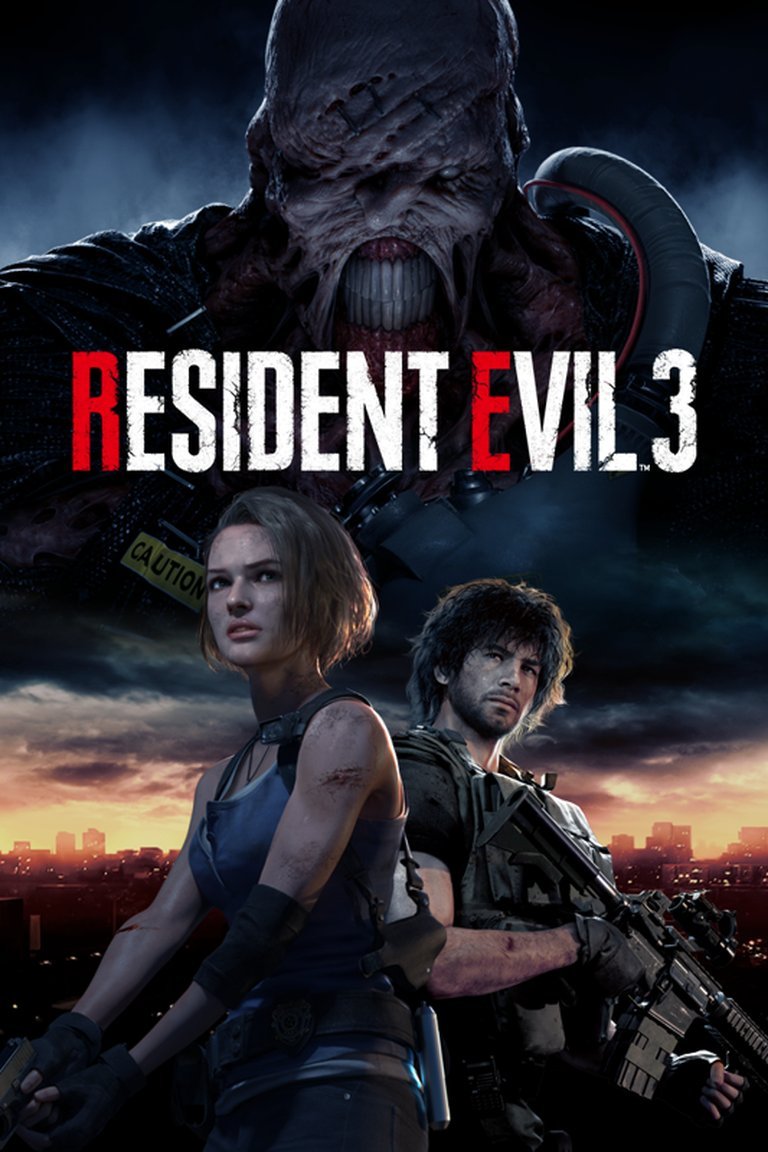
Resident Evil 3 is a 2020 survival horror action game remake developed by Capcom, set in the zombie-infested streets of 1990s Raccoon City, North America, where players control S.T.A.R.S. member Jill Valentine in a behind-view perspective, solving puzzles and fighting bio-organic horrors including the relentless Nemesis pursuer amid a T-virus outbreak unleashed by Umbrella Corporation.
Gameplay Videos
Where to Buy Resident Evil 3
PC
Resident Evil 3 Free Download
Resident Evil 3 Cracks & Fixes
Resident Evil 3 Patches & Updates
Resident Evil 3 Mods
Resident Evil 3 Guides & Walkthroughs
Resident Evil 3 Reviews & Reception
metacritic.com (79/100): Generally Favorable Based on 83 Critic Reviews
ign.com (90/100): Another stellar remake of a classic survival horror from Capcom. Keep em’ coming.
imdb.com (90/100): The Best Resident Evil In The Series By Far!
explosionnetwork.com (80/100): Resident Evil 3 brings Jill’s story roaring into 2020 with confident pacing, punchy set pieces, and smart universe building.
afterstorygaming.com : This remake of Resident Evil 3 is exceptionally engaging and bombastically enthralling. However, it cuts too many corners that ultimately hinder the overall experience.
Resident Evil 3: Review
Introduction
Imagine the rain-slicked streets of Raccoon City crumbling under the weight of an apocalyptic zombie horde, with a hulking monstrosity—Nemesis—smashing through walls in relentless pursuit of one woman: Jill Valentine. This pulse-pounding scenario defined Resident Evil 3: Nemesis in 1999, a high-stakes survival horror sequel that shifted the series toward action while amplifying dread. Capcom’s 2020 remake resurrects this classic, polishing its edges with modern tech and refined gameplay. As a pivotal entry bridging the tank-control era and today’s fluid third-person shooters, Resident Evil 3 (2020) cements Capcom’s remake renaissance post-Resident Evil 2 (2019). Thesis: While it masterfully blends heart-racing action with horror roots, delivering a taut, visually stunning experience, the remake’s brevity and scripted linearity dilute its depth, making it a thrilling but imperfect evolution of the franchise’s legacy.
Development History & Context
Capcom’s Tokyo-based teams, led by directors Yasuhiro Seto, Yasuhiro Anpo, and Yukio Ando, spearheaded Resident Evil 3‘s remake, with assistance from subsidiaries like M-Two Inc. (founded by ex-PlatinumGames CEO Tatsuya Minami) and NeoBards Entertainment. Chief producer Masachika Kawata and producers like Peter Fabiano envisioned a “reimagining” rather than a shot-for-shot faithful port, overlapping development with the 2019 RE2 remake to share RE Engine assets. This proprietary engine, debuting in Resident Evil 7, enabled photorealistic visuals and seamless performance across PS4, Xbox One, and PC at launch (April 3, 2020), later upgraded for PS5/Xbox Series X|S with ray-tracing and 120fps modes.
The 1990s PS1 original arrived amid survival horror’s golden age, post-Resident Evil (1996) and amid competitors like Silent Hill (1999), grappling with fixed-camera limitations and tank controls. Capcom’s 2020 vision honored the original’s action tilt—faster than RE1, less puzzle-heavy than RE2—while addressing era-specific constraints like limited polygons and voice acting budgets. Technological leaps allowed Nemesis’s redesign (bodybag-clad prototype aesthetic) and dynamic pursuits, but development prioritized pace over the original’s sprawling map (cutting Clock Tower, Park). Concurrent with RE2, it tied narratives loosely, reflecting Raccoon City’s concurrent fall. Bundled multiplayer Resident Evil Resistance (asymmetrical 1v4 like Dead by Daylight) compensated for excised modes like Mercenaries. In a post-RE7 landscape craving remakes amid open-world fatigue, Capcom targeted nostalgia-driven sales, shipping 2 million in days despite COVID delays.
Narrative & Thematic Deep Dive
Plot Summary and Restructuring
Set September 28–October 1, 1998 (overlapping RE2), Jill Valentine awakens in her Raccoon City apartment amid T-Virus chaos, pursued by Umbrella’s Nemesis-T prototype engineered to eradicate S.T.A.R.S. members. Teaming with U.B.C.S. mercenary Carlos Oliveira, she restores subway power, survives train derailments, synthesizes vaccines at NEST2, and confronts betrayer Nicholai Ginovaef amid U.S. missile strikes. The remake streamlines the 1999 original’s A/B paths and multiple endings into a single, linear arc (5–8 hours), expanding Carlos sections (hospital defense) while axing Clock Tower and Dead Factory for tighter pacing.
Characters and Dialogue
Jill (modeled after Sasha Zotova) evolves from damsel to resilient anti-Umbrella crusader, her practical attire and quips (“You’re done”) underscoring survivalist grit. Carlos shifts from comic relief to steadfast ally, his feathery hair and earnest dialogue (“Supercop”) forging believable chemistry. Supporting cast shines: Mikhail’s sacrificial heroism, Tyrell’s tech-savvy optimism, Nikolai’s gleeful treachery (“All that matters is my life”). Voice acting (e.g., Jill’s Nicole Tompkins) ditches campy B-movie cheese for grounded intensity, with radio chatter enhancing isolation. Revelations like Bard’s vaccine logs expose Umbrella’s cover-up, culminating in Jill’s vow: “Umbrella’s ashes.”
Themes: Pursuit, Corporate Greed, Human Resilience
Nemesis embodies inexorable doom, mutating from trench-coated stalker to tentacled abomination, symbolizing Umbrella’s hubris. Themes of betrayal (Nikolai’s data profiteering) and sacrifice (Mikhail’s C4 detonation) critique corporate malice amid viral apocalypse—prescient in 2020. Linear scripting sacrifices agency for cinematic highs (railgun finale), but deepens emotional stakes, evolving Resident Evil‘s pulp horror into bio-terror allegory.
Gameplay Mechanics & Systems
Core Loops and Combat
Over-the-shoulder third-person traversal emphasizes evasion over attrition: scavenge ammo/herbs, solve light puzzles (hydrant hoses, circuit resets), battle zombies/Hunters via precise aiming. RE Engine’s fluidity shines—Jill’s dodge (perfect timing auto-headshots) and Carlos’s melee stuns encourage aggression. Combat loop: evade Nemesis pursuits, manage infinite knife for zombies, upgrade weapons (magnum parts). Scarce resources on Hardcore/ Nightmare force stealth, rewarding knife parries.
Progression, UI, and Innovations/Flaws
No RPG trees; progression via shop unlocks (post-clear: infinite weapons, points from bobbleheads/speedruns). Inventory auto-expands (12 slots max), radial wheel UI intuitive. Dodge innovates tension (evade flamethrowers/tentacles), but finicky timing frustrates. Flaws: Linear paths limit backtracking (RE2‘s police station sprawl missed); scripted chases (Nemesis rocket barrages) wrest control, feeling railroady. Resistance multiplayer adds asymmetry but grinds quickly, per critics.
| Mechanic | Strengths | Weaknesses |
|---|---|---|
| Combat | Visceral gunplay, Nemesis variety | Less satisfying than RE2 |
| Puzzles | Contextual, brief | Minimal depth |
| Dodging | Tense, rewarding | Inconsistent window |
| Inventory | Streamlined | Less micromanagement thrill |
World-Building, Art & Sound
Raccoon City’s downfall unfolds via rain-drenched streets, overrun subways, and derelict hospitals—RE Engine’s hyper-detailed decay (gore-splattered walls, flickering fluorescents) builds oppressive immersion. Atmosphere peaks in pursuits: Nemesis’s guttural roars shatter silence, dynamic lighting casts elongated shadows. Art direction (Yonghee Cho, Yuka Chi) photorealizes 1998 grit, with mutations (Hunter Gammas, Drain Deimos nests) grotesque yet believable.
Sound design elevates dread: Masami Ueda’s remixed score swells orchestrally during chases; Wwise engine delivers crunching footsteps, zombie gurgles, and Nemesis’s iconic “S.T.A.R.S.!” taunt. Ray-tracing upgrades amplify reflections; 3D audio pinpoints threats. Collectively, they forge unrelenting paranoia, Raccoon a character unto itself—vast yet claustrophobic.
Reception & Legacy
Launch Reception
MobyGames aggregates 79% critic (84 reviews), 7.7/10 overall; Metacritic: 79/100 (PS4), 77/100 (PC), 84/100 (Xbox One). Praise dominated: IGN (9/10) lauded “horror-tension modernization”; Game Informer (9/10) called it an “incredible thrill ride.” ComicBook (100%) hailed fluid mechanics; Shacknews (9/10) deemed it a “masterpiece.” Critiques: GameSpot (6/10) faulted pacing/shortness; PC Gamer (58/100) decried “shallow action set-pieces.” Common: Shorter (6–10 hours) than RE2, underused Nemesis, action skew vs. horror purity.
Player scores averaged 3.5/5 (46 ratings), praising replayability via Infernal mode. Sold 2M in days, 10.2M by 2025—solid but trailing RE2’s 12M+.
Evolving Reputation and Influence
Initially “RE2’s lesser sibling,” reputation stabilized as a brisk action-horror benchmark. Ports (Switch cloud 2022, iOS 2025) expanded access; next-gen upgrades boosted frames. Influenced RE4 remake (2023), refining pursuits (vs. Mr. X/Lisa Trevor). Cemented RE Engine as horror standard, inspiring asymmetrical multiplayer (Resistance echoes DbD). Legacy: Proves remakes can evolve (Aliens-style action) without betraying roots, fueling trilogy completion calls (Code Veronica?).
Conclusion
Resident Evil 3 (2020) distills its progenitor’s chaos into a relentless, RE Engine-fueled sprint: stunning visuals, Nemesis-fueled terror, and empowering combat affirm Capcom’s remake prowess. Yet, excised content, scripting, and brevity (no Mercenaries, linear paths) temper its ambition, yielding a 8.5/10 gem—thrilling but not transcendent. In gaming history, it bridges survival horror’s past and action-present, a definitive Raccoon City coda. Verdict: Essential for series fans; a modern classic that prioritizes spectacle over sprawl, forever pursuing perfection. Play it, evade Nemesis, expose Umbrella—history demands it.