
- Release Year: 2018
- Platforms: Windows
- Publisher: Arquoia
- Developer: Arquoia
- Genre: Educational
- Perspective: 1st-person
- Game Mode: Single-player
- Average Score: 74/100
Description
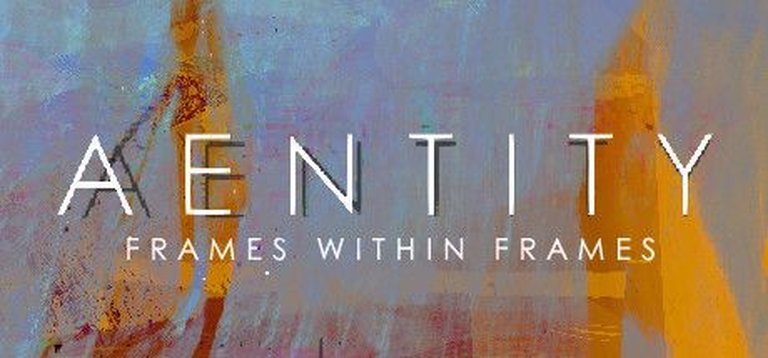
Aentity is an experimental indie adventure game developed by ARQUOIA, released in 2018, that challenges players as artists in a surreal, psychedelic first-person dreamscape. Featuring meditative pacing, nonlinear exploration, and stylized visuals, it invites players to transcend the ego, make playful moves beyond the dream wall, awaken veiled visions, and capture unseen pictures in an atmospheric, philosophical experience centered on graphics and art creation.
Where to Buy Aentity
PC
Aentity Guides & Walkthroughs
Aentity Reviews & Reception
steambase.io (71/100): Mostly Positive
store.steampowered.com (72/100): Mostly Positive
bigbossbattle.com : difficult to conquer, but not necessarily difficult to enjoy
steamcommunity.com : one of the most blissful experiences I’ve ever played
metacritic.com (80/100): Generally Favorable
Aentity: Review
Introduction
In the swirling abyss of experimental indie games, where pixels dissolve into philosophical reverie, Aentity emerges as a hypnotic beacon—a digital Plato’s cave that dares you to awaken the artist within. Released in 2018 by the enigmatic solo developer ARQUOIA, this meditative visual playscape transcends traditional gaming, inviting players to blur the lines between creator and creation, dreamer and dream. Far from the bombast of AAA blockbusters dominating 2018’s landscape—from God of War to Red Dead Redemption 2—Aentity whispers a radical thesis: true victory lies not in conquest, but in surrender. To “win,” one must abandon aims altogether, crafting ephemeral art from chaos. This review delves exhaustively into its surreal depths, arguing that Aentity stands as a profound, if polarizing, milestone in art-game evolution, challenging players to question consciousness itself amid an infinite canvas of light and shadow.
Development History & Context
ARQUOIA, a one-person studio helmed by an anonymous visionary (likely the game’s primary creator, given the intimate dedication), birthed Aentity amid the 2018 indie renaissance. Powered by Unity—a staple for bootstrapped dreamers—the game launched on Steam for a humble $0.99 on April 14, 2018, with ports to Mac and Linux following in aggregated listings. This era’s gaming landscape brimmed with introspective experiments: walking simulators like What Remains of Edith Finch and Firewatch popularized narrative-driven ambiance, while psychedelic oddities like Everything (David OReilly’s universe-simulator) echoed Aentity‘s rejection of rigid goals. Technological constraints were minimal—requiring only a modest Intel Core i3, 2GB RAM, and DirectX 10 GPU—but ARQUOIA ingeniously leveraged them for “fixed/flip-screen” visuals, evoking early 90s screensavers reimagined through modern shaders.
The project’s heart beats personal: dedicated “in memoriam” to sculptress Anne-Katrin Altwein, ARQUOIA’s beloved wife, who “always wanted to make everyone happy or enchanted with our work.” This tragedy infuses the game with raw vulnerability, lowering the “entrance fee” as a gesture of universal enchantment. No massive team or publisher backing—just ARQUOIA’s vision of a “surreal near-death experience,” greenlit via Steam Direct amid a flood of indie titles (over 10,000 that year). Development logs on itch.io hint at iterative refinement, bundling a prototype “RŌA” as a B-side. In context, Aentity rode the wave of “art games” post-Proteus (2013), but its philosophical bent—drawing from Eastern mysticism (“wanting is suffering”) and Western allegory (Plato)—positioned it as a zen counterpoint to gaming’s dopamine chases.
Narrative & Thematic Deep Dive
Aentity shuns linear plot for synaptic poetry, opening with John Donne-inspired verse: “Can death be sleep, when life is but a dream, / And scenes of bliss pass as a phantom by?” You embody a disembodied wanderer in a “calm unknown,” navigating Plato’s cave where shadows birth reality. No dialogue, no characters—only “cryptic entities” (ethereal stick figures) that emerge as you descend into dreamlike states. The narrative unfolds through emergence: movement paints the void, blurring ego contours as “past the dream wall are no rules to break, there are playful moves to make.”
Thematically, it’s a solipsistic odyssey. Core queries—”What is a good state of consciousness? Why are we truly doing what we are doing?”—probe Buddhist non-attachment (“at its core, wanting is suffering”) and existential freedom. Entities symbolize fragmented self: hypnotize them to unlock paths, mirroring introspection’s revelations. Screensavers evoke retinal overload—”destroy a great many screens slowly filling the retina”—culminating in Elysian light, a metaphor for transcendence. Player agency crafts personal myth: one session yields ghostly apparitions (achievement: “Apparition – Crossing Circe’s Trace”), another amygdala-deep dives (“Discover One Core”). Nonlinearity ensures replayability, each path a “synaptic, semi-linear groundwork.” Subtle progression—killing 486 screens (“Amnesic”), shifting 357 frequencies (“Amplifier”), saving 1001 (“Artist”)—builds a gallery of your psyche. Flaws? Its opacity alienates; without extrinsic cues, frustration mounts for goal-seekers. Yet this is intentional: “To win, request the overstrained mind to go in the background… just be aware of the fact of your existence.”
Gameplay Mechanics & Systems
At its essence, Aentity is a “simple but hard” loop of playful motion in first-person void. Core mechanic: movement generates art. Shift position, angle, or hue to birth colors and forms—trails linger as ink blots, entities flicker into view. No combat, no death (“impossible to get hurt”); instead, “hypnotise” entities (hold key near them) to summon waypoints, opening multidimensional paths. UI is minimalist: options toggle intensity (higher “artistic assault” warps visuals), a “Select” menu navigates gallery canvases by name (e.g., “Au Pèlerin”), and screenshot tools let you save/share masterpieces to a companion site (36 upvoted shots + randoms).
Progression ties to 25 Steam achievements, rewarding exploration (e.g., “Getting in to all areas”) over grind. Controls support keyboard/mouse or Xbox controller, emphasizing intuition: “move playfully” for “scintillating” compositions. Systems innovate via procedural chaos—subtle shifts ensure “no two players or sessions will ever be able to craft exactly the same picture.” Flaws emerge in navigation: invisible bounds disorient, especially on higher settings; Steam forums lament launch issues (Win11 compatibility) and pleas like “how do you play?” Yet, this meditative pacing (average 1-4 hours) fosters bliss—users report “complete, meditative state of curiosity.” No multiplayer, but communal fame via the museum site. Ultimately, it’s less game, more instrument: mastery demands patience, yielding real-world visual composition skills.
World-Building, Art & Sound
The world is an boundless “Elysian noise”—a psychedelic swirl of stylized shapes, shadows, and hues evoking Rorschach tests fused with Windows 95 mazesavers. Fixed/flip-screen perspective heightens immersion, colors blooming from your gaze like LSD: Dream Emulator‘s fever dreams. Atmosphere drips surreal calm: surreal tags dominate (Psychedelic, Atmospheric, Colorful), with entities as lonely pilgrims amid “blinding light.” Progression unveils layers—shallow chaos yields to profound entities—building a dreamlike hierarchy.
Art direction shines in dynamism: every frame pulses alive, your trails co-authoring the canvas. Sound design amplifies zen—minimalist ambiance (no bombast, just whooshes, hums via DirectX-compatible card), evoking breath or cosmic wind. No score per se, but procedural subtlety underscores “shift the frequency.” Together, they forge transcendence: visuals assault/enrapture, audio soothes, crafting “higher state of consciousness.” Critiques note repetition, but this mirrors eternity’s loop, contributions seamless to the “infinite process of creation.”
Reception & Legacy
Launch reception was niche but fervent: Steam’s “Mostly Positive” (72% of 54 reviews, 71/100 player score), praising “blissful,” “radical” meditation (Bennett Foddy: “solipsistic self-portrait”; user: “polished art game”). MobyGames lists no critic scores, RAWG deems “Not Enough Ratings,” Metacritic user 8.0/10 from four. Forums buzz with awe (“really beautiful”) and confusion (“won’t start,” “VR potential?”). Commercially modest—collected by few, bundled with RŌA—yet itch.io rates 4.8/5.
Legacy endures in experimental veins: precursor to Chicory or Lorelei and the Laser Eyes‘ painterly puzzles, influencing “experience” games amid post-pandemic mindfulness boom. Big Boss Battle calls it “interactive creative crisis,” affirming subjective appeal. No industry shaker, but preserves indie ethos—ARQUOIA’s plea to “document and preserve” echoes its themes. Evolving rep: from obscure 2018 curiosity to cult zen artifact, urging reevaluation in art-game canon.
Conclusion
Aentity defies summation, a mirror reflecting your wonder (or bewilderment). ARQUOIA’s magnum opus masterfully marries philosophy, art, and minimalism, flaws (opacity, tech hiccups) paling against its meditative genius. In video game history, it claims a vital niche: not for masses, but souls seeking ego-dissolution amid chaos. Verdict: Essential for experimental enthusiasts—a timeless “surreal near-death experience” earning 9/10, forever enchanting those who dance beyond the dream wall. Play it. Create. Be free.