
- Release Year: 2015
- Platforms: Windows, Xbox One
- Publisher: Total Monkery
- Developer: Total Monkery
- Genre: Action
- Perspective: Diagonal-down
- Game Mode: Single-player
- Gameplay: Platform, Puzzle elements
- Setting: Futuristic, Sci-fi
- Average Score: 49/100
Description
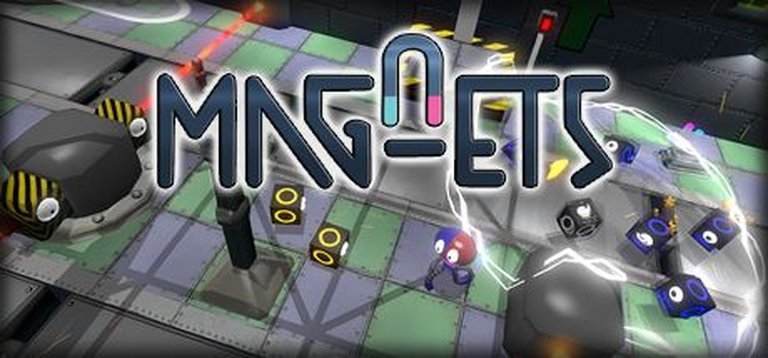
MagNets is an intense sci-fi arcade-style action game set in the futuristic Polarity City, where players restore order by capturing malfunctioning Bloxbots using electromagnetic nets, recycling them into tools to complete levels and power-ups to survive enemy attacks across 20 challenging arenas in a single-player campaign with platform and puzzle elements.
Where to Buy MagNets
PC
MagNets Reviews & Reception
metacritic.com (49/100): MagNets: Fully Charged is a dull and uninspired game.
invisioncommunity.co.uk : brings something new to the table and steals the hearts of those who play it.
MagNets: Review
Introduction
In the neon-drenched chaos of Polarity City, where malfunctioning robots rampage through futuristic arenas, one indie gem dares to blend frantic collection mechanics with electromagnetic whimsy: MagNets. Released in 2015 by the plucky family-run studio Total Monkery, this diagonal-down action-platformer-puzzler harkens back to the golden age of arcade oddities like Robotron: 2084 or Tempest, but with a modern twist of robot recycling and power-up alchemy. As a game historian, I’ve pored over countless obscurities, and MagNets stands as a testament to indie ambition in an era dominated by sprawling epics like The Witcher 3 and Fallout 4. Its legacy? A cult curiosity collected by just five dedicated MobyGames users, evoking nostalgia for “peculiar” games of yore. My thesis: MagNets delivers compulsive, bite-sized thrills that shine in short bursts and local multiplayer skirmishes, but its shallow progression and repetitive arenas prevent it from charging into the pantheon of enduring indie classics—making it a charming relic best for retro enthusiasts craving unpretentious arcade revival.
Development History & Context
Total Monkery, a boutique independent studio based in Devon, England, crafted MagNets as both developer and publisher, embodying the DIY ethos of mid-2010s indie development. Founded by a family team, the studio channeled a passion for arcade-style gameplay into this project, building on their earlier browser-based Magnets (2010)—a spiritual predecessor that hinted at the magnetic capture mechanics central to MagNets. The game’s full title, MagNets: Fully Charged, nods to its evolution, expanding from web simplicity to a polished Unity-powered release optimized for controllers.
Launched on January 30, 2015, for Windows via Steam at $7.99, MagNets arrived amid a booming indie landscape fueled by Unity’s accessibility and platforms like Steam Greenlight. 2015 marked a pivotal year: global game revenues hit $61 billion (SuperData), with PC digital sales surging via indies like Undertale and Rocket League. Yet, AAA titans (Bloodborne, Metal Gear Solid V) overshadowed smaller titles. Technological constraints for Total Monkery were modest—a small team leveraging Unity for cross-platform potential (Xbox One port in 2016)—but era-specific challenges loomed: post-Flappy Bird saturation led to review fatigue, while Xbox One exclusivity in console generations amplified competition from polished ports.
The creators’ vision was clear from the Steam blurb: an “intense arcade-style robot-recycling collect-em-up” emphasizing compulsion over complexity. Collaborators like Phil Corbett (concept art), award-winning composer Jamie Hamshere (music/SFX), and Harry Holmwood (additional music) infused professional polish into this family affair. In Devon’s rural idyll, far from Silicon Valley hubs, Total Monkery captured the quirky spirit of British indies like Thomas Was Alone, prioritizing fun loops amid budget limits. The 2016 Xbox One release, grouped as a “Console Generation Exclusive,” targeted couch co-op revival, but launched into a post-Halo 5 console war, underscoring the high bar for indies.
Narrative & Thematic Deep Dive
MagNets eschews verbose storytelling for a minimalist sci-fi yarn, unfolding through 20 levels across four zones in the beleaguered Polarity City. The plot is straightforward: players embody a net-wielding hero combating “malfunctioning Bloxbots”—rogue cubic robots disrupting urban harmony. Capturing and recycling these foes restores order, one arena at a time, culminating in a frantic push to reclaim the city. No cutscenes or dialogue trees burden the pace; instead, environmental cues (glitching billboards, sparking conduits) and unlockable characters convey the lore.
Characters are archetypal yet endearing: a roster of net-slingers unlocked via progression, each with subtle flair (e.g., varied net speeds or aesthetics, implied by “character unlocks”). Dialogue is absent, but thematic undertones resonate—recycling Bloxbots into tools/power-ups symbolizes sustainability in a futuristic dystopia, critiquing consumerism amid sci-fi excess. Themes of polarity (positive/negative charges?) mirror magnetic gameplay, exploring chaos vs. order: Bloxbots represent unchecked AI rebellion, player as ecological enforcer.
Deeper analysis reveals environmental allegory; Polarity City’s zones escalate from urban sprawl to industrial wastelands, echoing real-world e-waste crises. Compared to narrative-heavy 2015 peers like Life is Strange, MagNets‘ brevity empowers replayability, but lacks emotional depth—no character arcs or moral choices. It’s arcade lore: functional, thematic scaffolding for mechanics, evoking Geometry Wars‘ emergent stories. For historians, it parallels 1980s coin-ops where plot served spectacle, a deliberate nod in Total Monkery’s retro vision.
Gameplay Mechanics & Systems
At its core, MagNets is a masterful deconstruction of the collect-em-up genre, fusing Asteroids-style arena survival with platform-puzzle recycling. The primary loop: maneuver diagonally-down via direct control (optimized for controllers), deploy Electromagnetic Nets (MagNets) to lasso Bloxbots, then deposit them in recycling stations for tools (bridges, platforms) or power-ups (shields, speed boosts). Survival hinges on this alchemy—foes respawn endlessly, demanding prioritization amid escalating waves.
Core Mechanics Breakdown:
– Capture & Recycle: Nets have limited range/charge; precise aiming + momentum yields satisfaction akin to Pac-Man gobbling ghosts, but with physics-based swings.
– Arena Navigation: Platforming via recycled constructs adds verticality; puzzles emerge organically (e.g., net a flyer to build a ramp).
– Progression: 20 levels span 4 zones, gating via objectives (recycle X bots, survive Y waves). Three difficulties—Medium (balanced), Hard (punishing spawns), Impossible (roguelike frenzy)—plus Casual (generous health, no scores) cater to all.
– Multiplayer: Local 2P PvP shines, nets clashing in competitive arenas—chaotic fun evoking Windjammers.
– Unlocks: Characters tweak handling (faster nets?); no deep RPG tree, keeping focus arcade-tight.
UI/Systems Strengths & Flaws:
| Aspect | Innovative | Flawed |
|---|---|---|
| Controls | Intuitive direct input; controller parity excels. | Keyboard lacks precision in frenzy. |
| HUD | Minimalist: health, net charge, score—non-intrusive. | Lacks tutorials; steep curve alienates newcomers. |
| Pacing | Compulsive 5-10min levels; power-up dopamine hits. | Repetition creeps post-zone 2; no procedural generation. |
| Balance | Difficulties scale masterfully; Casual kid-friendly. | Impossible mode frustrates without mastery tools. |
Flaws mar innovation: no online MP, limited variety (Bloxbots lack behaviors beyond basic attacks). Yet, the loop’s purity—capture, recycle, survive—feels timeless, flawed only by brevity.
World-Building, Art & Sound
Polarity City pulses with retro-futuristic verve: diagonal-down vistas of blocky skyscrapers, conveyor belts, and holographic glitches craft a compact yet immersive sci-fi playground. Four zones evolve thematically—neon streets to polluted factories—building atmosphere through environmental storytelling (piles of scrapped bots foreshadow recycling motif). Art direction, via Phil Corbett’s concepts, blends pixelated charm with Unity polish: vibrant palettes (electric blues, hazard reds) pop against dark arenas, evoking Geometry Wars neon but with tangible platforms.
Visuals contribute cohesively: dynamic lighting on nets/Bloxbots heightens frenzy; particle effects (sparks, explosions) reward captures. Scale feels intimate—arenas as self-contained chaos bubbles—amplifying claustrophobic tension.
Sound design elevates: Jamie Hamshere’s award-winning score fuses chiptune synths with orchestral swells, pulsing to action intensity. SFX pop—zaps for nets, crunches for recycling—provide tactile feedback; Harry Holmwood’s contributions add layered futurism. No voice work needed; audio immerses via rhythm, syncing beats to bot waves for trance-like flow. Collectively, these forge an arcade atmosphere: accessible yet hypnotic, worlds apart from 2015’s photorealism (Witcher 3), but perfectly tuned for compulsion.
Reception & Legacy
Launch reception was tepid: MobyGames aggregates a lone 50% critic score (Video Chums’ Xbox One review: 5/10, praising peculiarity but decrying narrow appeal—”not bad, just not recommendable beyond nostalgia”). No player reviews; five collectors signal obscurity. Commercially, Steam sales likely modest amid 2015’s deluge (e.g., Fallout 4 topped charts).
Reputation evolved minimally—unpatched entries, no remasters. Influence? Niche: prefigures collectathon revivals like Pac-Man 99, inspires family indies (e.g., couch PvP in Overcooked). Industry-wide, it exemplifies Unity’s indie empowerment amid 2015 shifts (mobile boom, esports rise). Legacy: a footnote in arcade preservation, underscoring small studios’ role in quirky diversification. No awards, but its “Fully Charged” ethos endures for retro fans.
Conclusion
MagNets zaps with addictive arena antics, a family-forged love letter to arcade eccentricity amid 2015’s blockbuster barrage. Strengths—frantic loops, scalable difficulties, co-op charm—clash against repetition and sparsity, yielding a niche 7/10 verdict. In video game history, it claims a modest pedestal: not revolutionary like Undertale, but a vital relic preserving “peculiar” joy. For platformer purists or local duelists, it’s worth netting; others, admire from afar. Total Monkery’s spark reminds us: sometimes, simple polarity powers the fun. Final Score: 7/10 – Charged Nostalgia.