
- Release Year: 2007
- Platforms: BlackBerry, iPhone, Macintosh, Windows
- Publisher: I-play, iWin, Inc.
- Developer: iWin, Inc.
- Genre: Puzzle
- Perspective: Side view
- Game Mode: Online PVP, Single-player
- Gameplay: Falling block puzzle, Tile matching puzzle
- Setting: Africa
- Average Score: 77/100
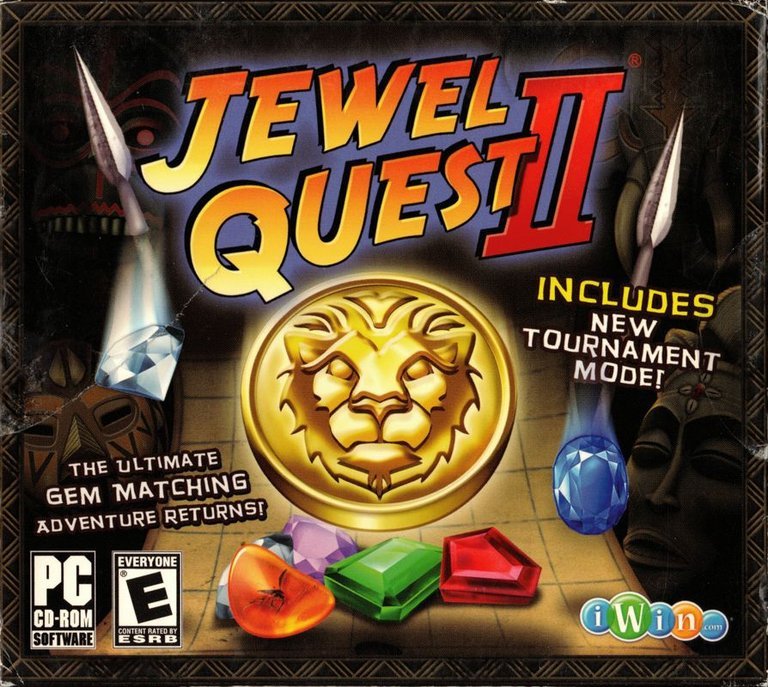
Description
Jewel Quest II is a tile-matching puzzle sequel where players explore the African continent, journeying through wildlife-filled safaris, ancient Zimbabwe ruins, and majestic Victoria Falls in a realistic setting. Match three or more adjacent relics on evolving grids to clear boards under time limits and manage lives, with the new tournament mode allowing competition against global players or the computer.
Gameplay Videos
Jewel Quest II Free Download
Jewel Quest II Guides & Walkthroughs
Jewel Quest II Reviews & Reception
ign.com : Jewel Quest II is a great sequel to the very successful original puzzler.
godmindedgaming.com : This title was a huge step up for the series, and definitely a game any Match 3 fan will love.
pocketgamer.com : Offering effective tile-swapping casual fare, technically it’s a better game to look and listen to, but really it’s just Jewel Quest with some lippy on.
Jewel Quest II: Review
Introduction
In the golden age of casual gaming, where downloadable puzzles promised bite-sized thrills amid the chaos of daily life, Jewel Quest II emerged as a shimmering gem in the match-3 crown. Released in 2007 as the direct sequel to the massively popular original Jewel Quest, this title transported players to the untamed wilds of 1940s Africa, blending addictive tile-matching with an Indiana Jones-esque tale of adventure, romance, and rivalry. Its legacy? A cornerstone of the casual puzzle genre, proving that simple mechanics could sustain deep engagement through escalating challenges and social competition. My thesis: Jewel Quest II refines its predecessor’s formula into a masterful blend of strategic depth, thematic immersion, and replayability, cementing iWin’s place as a pioneer in accessible yet unforgiving puzzle design— a game that demands mastery while rewarding every triumphant cascade.
Development History & Context
Developed and published by iWin, Inc.—a studio specializing in mass-market social and casual games—Jewel Quest II arrived during the mid-2000s explosion of browser and downloadable titles. iWin, known for hits like the original Jewel Quest (2004), leveraged the growing popularity of platforms like iWin.com and emerging mobile markets to distribute this sequel. Key creative force Warren Schwader wore multiple hats as game designer, director, and lead engineer, embodying the lean, agile development typical of casual studios. Supported by a 24-person team—including engineers like Dwain Theobald and Keith Verity, tournament server specialists David Fox, Zach Baum, and Bret Barker, and art from Present Creative (Zachary Present, Marcos Pacheco, et al.)—the game was built for efficiency.
The era’s technological constraints shaped its DNA: fixed/flip-screen 2D visuals optimized for Windows (initial release February 9, 2007), later ported to Macintosh (2007), iPhone (2008), and BlackBerry (2009). With point-and-select interfaces via mouse/keyboard (or touch on mobile), it targeted low-spec PCs amid broadband’s rise, emphasizing quick sessions over AAA spectacle. The gaming landscape? Casual puzzles like Bejeweled dominated, but Jewel Quest II innovated with online tournaments, tapping into the nascent multiplayer trend pre-social gaming boom. Released commercially (ESRB Everyone, $19.95 downloads), it fit the “try before buy” model with demos, bundled later in collections like The Ultimate Jewel Quest Collection (2007). iWin’s vision—authentic African exploration via relics—responded to the original’s success (over a million mobile sales), evolving it amid competition from titles like Big Kahuna Reef.
Narrative & Thematic Deep Dive
At its heart, Jewel Quest II weaves a pulpy adventure yarn set in 1944 Africa, starring Professor Rupert Pack as the intrepid archaeologist unearthing the mystical Jewel Board. Framed like a sepia-toned serial, the plot unfolds across 180 levels in Quest Mode: Pack treks from safari savannahs teeming with wildlife, through Zimbabwe’s ancient ruins whispering forgotten histories, to the thundering majesty of Victoria Falls. Interludes—journal entries, cutscenes—reveal a tale of love and betrayal. Pack’s romance with Emma Swimmingly blooms amid peril, while the dastardly Sebastian Grenard schemes to steal the Jewel Board, employing underhanded tactics like murder attempts thwarted by the heroes’ cunning (including a morally dubious allergic ploy).
Characters are archetypal yet endearing: Pack as the lovelorn professor (echoing Indiana Jones melodrama, per reviewers), Emma as the steadfast love interest, Grenard as the skull-adorned curse-wielder, and side figures like Hanni adding flavor. Dialogue is sparse but flavorful—dramatic whispers of “native African magic” and heart-pounding betrayals—integrated seamlessly between puzzles. Themes probe discovery vs. greed, with relic-matching symbolizing piecing together lost civilizations; each golden tile evokes unearthing history. Subtle evolution across playthroughs (six required for full story, rules changing per run) adds replay depth, critiqued as “grinding” but praised for narrative payoff. Critics like Mac Games noted its “extensive storyline” as melodramatic interference or charming enhancement, while God Minded Gaming flagged fantasy elements (magic, trickery) as minor concerns. Ultimately, the narrative elevates puzzles from rote matching to expedition chapters, fostering emotional investment in Africa’s “realistic and authentic” allure.
Gameplay Mechanics & Systems
Jewel Quest II‘s core loop is a deconstructed masterpiece of match-3 evolution: swap adjacent relics on dynamic grids (starting 7×7, growing irregular/complex) to form rows/columns of three+, clearing them as new ones cascade from above. Goal? Gild every tile (later gold-to-silver in advanced stages) before a merciless timer expires, costing a life (zero lives = game over) or exhausting moves. Success breeds cascades, combos yielding “gold frobs” (specials to instantly gild tiles) and “duelling jewels” for tournaments.
Core Systems Breakdown:
– Progression & Obstacles: Grids morph—cracked tiles lock gems (match underneath to free), hidden immovable relics demand adjacency, cursed skull-gems undo gilding until ejected downward. Empty spaces fill via pushes, enabling strategic setups.
– Power-Ups & Strategy: Rare gold relics refill the gold meter; chain reactions are key for tough corners. Later difficulties amplify randomness, move scarcity, and multi-phase boards (gold then silver).
– Modes: Quest Mode advances the story; Tournament Play (new!) pits global players or AI head-to-head via internet leaderboards, adding competition (daily/weekly ranks).
– UI/Progression: Intuitive point-and-select (mouse/touch), clear timers/lives/scores. Lives persist sparingly; replays enforce mastery. Hidden challenge mode post-story offers brutal puzzles with gem overload, one special start.
Flaws? Ruthless difficulty (IGN: “much harder,” replay-heavy) frustrates casuals, random drops irk (yet strategizable via cascades). Strengths: Fluid engine (smoother than original), balanced accessibility/depth—easy entry, expert ceilings. Pocket Gamer lauded “startling strategy,” GameZebo its “compelling challenge.”
World-Building, Art & Sound
Africa pulses as a living tapestry: safari’s sweeping savannahs with rustling grass/dust motes, Zimbabwe ruins’ crumbling stonework evoking antiquity, Victoria Falls’ misty cascades framing rainbows. Fixed side-view backdrops use warm earth tones, high-res textures for glittering relics (gems sparkle convincingly), and subtle animations (falling water, wildlife hints) for immersion. Unlockables like concept art/journals deepen lore.
Art by Present Creative shines—polished sprites, dynamic match bursts (light flares, tile swaps)—elevating mobile roots (tested on w810i). UI? Map overlays track expeditions, icons intuitive.
Sound design by Greg Rahn complements: heart-pounding Amazonian tracks swell with tension, SFX like bird squawks, gem clinks, and triumphant chimes provide tactile feedback. No voiceover, but ambient wildlife/echoes forge atmosphere. Collectively, they transform puzzles into expeditions—visuals immerse, audio punctuates victories, crafting “beautiful” (GameZebo) cohesion.
Reception & Legacy
Launch reception skewed positive: MobyGames critics averaged 77% (GameZebo 90%: “compelling, challenging, beautiful”; Mac Games/Pocket Gamer 70% each, noting story “interference” but “enjoyable” play). Players rated low (1.2/5, sparse), citing frustration. Commercial? Bundled success (Amazing Match 3 Games: Jewel Quest 10 Pack, Steam $19.99), VGChartz ~0.01m sales. Mobile ports (iPhone 70%) praised polish.
Reputation evolved: Retro Replay hailed “polished sequel,” God Minded Gaming a “huge step up.” Influence? Pioneered tournament match-3 (pre-Candy Crush sociality), spawned series (Jewel Quest III, Expeditions). Casual genre staple, inspiring bundles/trilogies (Wii 2011), preserving tile-matching via authenticity/strategy. In history: emblem of 2000s casual boom, bridging PC/mobile.
Conclusion
Jewel Quest II masterfully polishes its lineage into an addictive odyssey of cerebral cascades and continental conquest, where every match unearths strategy’s depths amid Africa’s evocative wilds. Challenges like skull curses and timer tyranny demand skill, tournament flair ensures longevity, while narrative romance adds soul—flaws (brutality, grindy replays) notwithstanding. Verdict: 9/10—an essential puzzle landmark, eternally relevant for casual historians, proving match-3’s timeless allure. Its place? Midway in gaming’s pantheon: not revolutionary like Tetris, but a gold-standard sequel defining accessible excellence. Dive in; the safari awaits.