
- Release Year: 2015
- Platforms: Linux, Macintosh, Nintendo Switch, PlayStation 4, Windows, Xbox One
- Publisher: Ripstone Ltd.
- Developer: Dreadbit Ltd, Polygon Hearts Ltd.
- Genre: Puzzle, Strategy, Tactics
- Perspective: Fixed / flip-screen
- Game Mode: Single-player
- Gameplay: Tile matching puzzle, Turn-based
- Setting: Steampunk
- Average Score: 75/100
Description
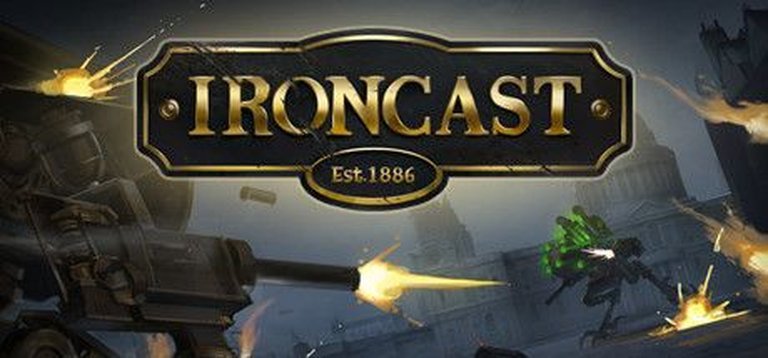
Ironcast is a steampunk turn-based strategy puzzle game set in an alternate Victorian England, where players take command of massive walking mechs called Ironcasts during a war against France. Combining tile-matching mechanics with RPG and roguelike elements, commanders must strategically match resources to power weapons, repair armor, and deploy abilities in intense, replayable battles.
Gameplay Videos
Where to Buy Ironcast
PC
Ironcast Cracks & Fixes
Ironcast Guides & Walkthroughs
Ironcast Reviews & Reception
metacritic.com (80/100): Ironcast is one of the most in-depth and engaging match three puzzlers that we’ve seen… uniquely innovative and frustratingly addicting.
opencritic.com (76/100): a game that’s tense and personable and clever.
rockpapershotgun.com : Ironcast gets it right.
Ironcast: Review
Introduction
In the clanking heart of an alternate 1886, where colossal steam-powered mechs stride across the fog-shrouded fields of Victorian England, Ironcast erupts as a thunderous fusion of match-3 puzzling and roguelite peril—a game that dares to arm Bejeweled with broadsides and FTL with top hats. Developed by the intrepid Dreadbit and launched amid the indie boom of 2015, Ironcast isn’t just a puzzle-strategy hybrid; it’s a testament to British ingenuity, pitting players against a French invasion in towering Ironcast walkers fueled by mysterious “voltite.” Its legacy endures as a cult favorite for those who relish tactical depth wrapped in steampunk flair, influencing genre-blenders like later roguelites and match-3 evolutions. My thesis: Ironcast excels as a brilliantly tense, replayable innovator that elevates the match-3 formula to strategic heights, though its punishing permadeath and repetition temper its triumph, securing it as a pivotal, if flawed, artifact in indie roguelite history.
Development History & Context
Dreadbit Ltd., founded by Daniel Leaver—a veteran senior designer from Media Molecule’s LittleBigPlanet series—emerged from the ashes of Kickstarter dreams in 2014. Leaver wore multiple hats as director, producer, designer, scripter, and mission architect, channeling his expertise in creative tools into a rigid, tactical battlefield. Co-developer Polygon Hearts Ltd. handled programming led by Chris Butler, while Ripstone Ltd. published, ensuring ports across PC (March 26, 2015), Mac/Linux, PS4/Xbox One (2016), and Nintendo Switch (2017). A modest Kickstarter raised £10,183, funding this Unity-powered debut amid post-FTL roguelite fever and the match-3 resurgence sparked by Puzzle Quest.
The era’s technological constraints were forgiving thanks to Unity’s cross-platform prowess, allowing hand-painted art by Amber Blade Jones and animations by Darren Holt to shine without AAA budgets. Yet, development hurdles loomed: balancing a roguelite’s procedural chaos with match-3’s RNG, as noted in reviews lamenting early repetition. The 2015 landscape brimmed with indies like FTL: Faster Than More (2012) and The Banner Saga (2014), but Ironcast‘s steampunk mech-puzzle niche—echoing H.G. Wells and Jules Verne—stood out. DLC packs (Stirling, Windsor, Commander) and complete editions extended its life, proving Dreadbit’s vision of “turn-based steampunk mech combat” resilient in a sea of mobile match-3 clones and sprawling MOBAs.
Narrative & Thematic Deep Dive
Ironcast‘s plot unfolds in a black-and-gray morality tale of imperial hubris, set against a decade-long Franco-British war in alt-1886 England. Players command an elite Ironcast operator for the Consortium of Merit—a cabal of top-hatted industrialists funding mechs to repel French invaders marching on London. Nine (later six) days per wave structure the roguelite campaign: select procedurally generated missions, gather “war assets” (infantry fodder), and culminate in boss duels. Dialogue from Leaver, Edmund Alcock, and Ben Porter crackles with Victorian wit—quips about tea missions poke self-aware fun at British tropes—delivered via Mission Control voices like tutorial mentor Lord Butler (who meets a mentor-occupational-hazard end) and steely Lady Blackwell.
Deeper themes pierce the steam: Phlebotinum-Induced Steampunk via voltite, a sentient silicon-based lifeform powering Ironcasts, enslaved unwittingly by humanity. France invades not from aggression but desperation, fleeing an alien “Interloper” enraged by voltite exploitation—a Historical Villain Upgrade flipping Queen Victoria’s empire into ruthless oppressors denying refugees sanctuary. The Downer Ending devastates: Britain triumphs bloodily, France lies in ruins, voltite’s kin loom vengeful, and protagonists face execution for questioning the crown. Characters shine through Gadgeteer Genius pilots (e.g., Aeres Powell’s neon fan) with unique augments, embodying Fantastic Racism toward voltite. Bilingual bonuses like French foe Durant’s “Tueur De Reines” (“Queen Killer”) add flavor. Narrative brevity serves gameplay—blurbs frame missions—but its moral complexity elevates Ironcast beyond puzzle fodder, critiquing empire in a genre often narratively sparse.
Gameplay Mechanics & Systems
At its core, Ironcast deconstructs match-3 into a resource symphony: a grid of colored tiles (purple ammo, orange energy, blue coolant, green repair, yellow scrap, white overdrive) yields three draws per turn, fueling a 7m-tall mech’s arsenal. No move limits cramp style—hoard ammo for multi-cannon barrages or pivot to repairs mid-turn—demanding prioritization amid enemy fire. Targeted Combat lets players snipe foe modules (weapons, drive, shields), countered by deflector shields vulnerable to kinetic/energy swaps. UI crisply displays hull integrity, evasion (via movement), and cooldowns, though console ports suffer minor graphical hitches.
Roguelite Loops shine: permadeath resets campaigns (60-120 minutes), but persistent unlocks (50+ weapons, augments) meta-progress pilots and Ironcasts (named for UK castles like Arundel). Commanders offer Signature Augmentations; loot wrecks for blueprints. Missions vary—combat, negotiations (scrap-trading), resource hunts—building war assets to chip boss HP. Innovations include FTL-esque tension (He Knows About Timed Hits via advisor tips) and Puzzle Quest depth without frenzy. Flaws persist: aggressive mechs dominate, early missions repeat post-death (frustrating “toilet strategizing”), RNG spikes demand patience, and balancing issues (e.g., underused upgrades) plague longevity. Switch version enhances portability for bursts, but permadeath’s soul-crush tempers triumphs. Overall, interconnected systems forge addicting chess-like duels.
- Pros: Limitless tactical combos, replayable customization.
- Cons: Repetitive restarts, RNG frustration, shallow variety post-unlocks.
World-Building, Art & Sound
Ironcast‘s Steampunk 1886 Southeast England pulses with Schizo Tech: chicken-walker mechs clash amid zeppelin raids, steamtanks rumble, and Westminster’s Big Ben smolders. Locations (Guildford to Croydon) ground the alt-history, with voltite’s alien glow justifying neon fans amid brass. Hand-painted art evokes etched plates—elegant yet drab, mechs detailed but backgrounds flat, critiqued as “dull” by RPS. Atmosphere builds via looming invasion timers, foggy battlefields, and Monumental Damage.
Edward Hargrave’s score swells heroically—dramatic strings for barrages, ticking urgency underscoring permadeath. SFX clangs authentically: cannon roars, shield hums, tile-matches plink satisfyingly. These elements amplify immersion, making resource scrambles feel like desperate engineering amid siege, though visual blandness undercuts punk edge.
Reception & Legacy
Launched to positive acclaim (MobyGames 78% critics/7.3 players; Metacritic 75 PC, 78 XB1, 70 PS4, 80 Switch; Steam 73% Mostly Positive from 949 reviews), Ironcast earned “Recommended” from Eurogamer (“tense and personable”) and RPS (“tactically thoughtful novelty”). Nintendo Life (90%) hailed Switch iteration as “endlessly replayable”; 4Players.de praised tactical depth despite restarts. Critics lauded innovation—Puzzle Quest + FTL—but dinged repetition, balancing (PC Games 65%: “needs more content”), permadeath cruelty.
Commercially modest (est. 29k units), it thrived via sales/DLC, ports boosting Switch ranking (#391). Reputation evolved: early frustration softened by unlocks; 2023 eShopper (91%) called it “strategic blast.” Influence ripples—pioneering match-3 roguelites inspired Solitarica, Immortal Rogue; steampunk mechs echoed in SteamWorld Heist. No direct sequels, but Dreadbit/Ripstone’s success (e.g., Pure Pool) affirms its indie foothold.
Conclusion
Ironcast masterfully welds match-3 precision to roguelite grit, birthing tense, customizable mech warfare in a thematically rich steampunk dystopia—its innovations outshining flaws like repetition and RNG. A product of Kickstarter pluck and Leaver’s vision, it claims a definitive niche: not flawless, but enduringly engaging for tacticians craving portable peril. In video game history, Ironcast stands as a mid-tier gem—a bridge from Puzzle Quest to modern hybrids—worthy of rediscovery on Switch or Steam sales. Verdict: 8.5/10—buy for strategic souls; its iron legacy clanks on.