
- Release Year: 2022
- Platforms: PlayStation 5, Windows, Xbox Series
- Publisher: Plaion GmbH
- Developer: GoldKnights s.r.o.
- Genre: RPG
- Perspective: Third-person
- Game Mode: Co-op, Online Co-op, Single-player
- Gameplay: Action RPG
- Setting: Fantasy, Futuristic, Medieval, Sci-fi
- Average Score: 61/100
Description
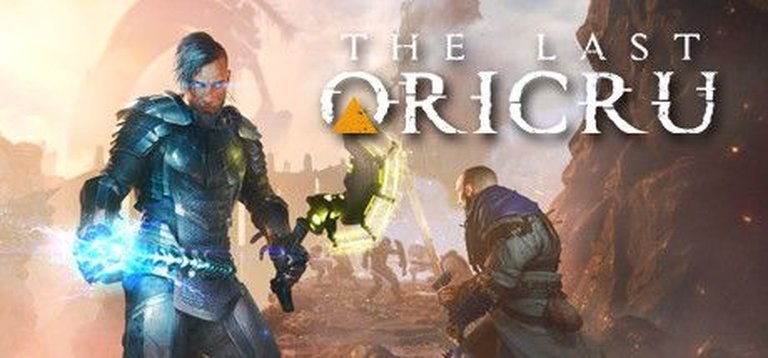
The Last Oricru is an action RPG set in a captivating world blending medieval fantasy and sci-fi/futuristic elements, where players explore intricate levels without a map, battle challenging bosses, and make meaningful decisions that impact the story and its consequences. Featuring co-op multiplayer for up to two players, it delivers a Soulslike experience with immersive gameplay, beautiful level design, and narrative depth focused on factions and choices.
Gameplay Videos
Where to Buy The Last Oricru
PC
The Last Oricru Free Download
The Last Oricru Cracks & Fixes
The Last Oricru Mods
The Last Oricru Guides & Walkthroughs
The Last Oricru Reviews & Reception
metacritic.com (54/100): Moral dilemmas do not mesh well with low-brow humor, while the game’s Souls-like approach is hampered by poorly implemented combat.
lordsofgaming.net : Despite its rough edges, what distinguishes The Last Oricru the most is its intricate branching narrative system that rewards player agency.
gamesfreezer.co.uk (75/100): More fun than Starfield.
opencritic.com (56/100): The Last Oricru has some decent ideas and will scratch an itch for fans of Risen, but it’s not quite good enough to overshadow its peers.
thirdcoastreview.com : Janky as hell.
The Last Oricru: Review
Introduction
In an era dominated by polished AAA blockbusters and minimalist indies, The Last Oricru crashes onto the scene like its amnesiac protagonist Silver tumbling from a wrecked spaceship—a bold, unrefined fusion of Soulslike rigor and branching narrative ambition that dares to blend medieval fantasy with sci-fi isolationism. Released in October 2022 by debut Czech studio GoldKnights and publisher Prime Matter (later Plaion), this action RPG thrusts players into the war-torn planet of Wardenia, where every dialogue choice ripples across factions, landscapes, and endings. As a game historian, I see echoes of Risen‘s factional intrigue and Morrowind‘s moral ambiguity, but grafted onto Dark Souls‘ punishing loops. My thesis: The Last Oricru is a fascinating misfire—a testament to AA development’s raw potential, where innovative storytelling elevates janky execution, securing its niche as a cult curiosity rather than a genre-defining triumph.
Development History & Context
GoldKnights s.r.o., founded in Prague around 2015 by software architect and entrepreneur Pavel Jiří Strnad, entered the fray as a remote team of roughly 40-45 developers spanning Europe and the USA—newcomers alongside veterans tackling their inaugural project. Development kicked off in 2017 under the working title Lost Hero, leveraging Unreal Engine 4 for its visual fidelity, PhysX physics, and FMOD audio to craft a sci-fi/medieval hybrid on a modest AA budget. This era’s gaming landscape was saturated with Soulslikes post-Elden Ring‘s 2022 dominance, while narrative-heavy RPGs like Cyberpunk 2077 grappled with launch woes, highlighting the risks for smaller studios.
The title rebranded to The Last Oricru in 2021 upon securing Koch Media (now Plaion) as publisher, signaling refined ambitions amid a post-pandemic boom in co-op and choice-driven titles. Technological constraints were evident: no initial map or manual saves reflected Soulslike purity but clashed with branching paths, leading to post-launch patches (e.g., 1.2 adding a minimap, Final Cut in 2023 overhauling bugs and performance). GoldKnights’ motto—”Better fantastic and few than mediocre and many”—captures their vision: a dense, replayable epic prioritizing player agency over AAA sheen. Amid 2022’s Soulslike flood (Lords of the Fallen, Steelrising), Oricru stood out for its co-op focus and faction politicking, but budget limitations manifested in stiff animations reminiscent of early Gothic games, underscoring AA’s charm and pitfalls.
Narrative & Thematic Deep Dive
At its core, The Last Oricru unfolds on Wardenia (or Wanderia in some lore), a partly terraformed planet sealed by a cosmic barrier, pitting Ratkin (oppressed, rodent-like revolutionaries) against Naboru (medieval humanoids enforcing hierarchy) in a civil war laced with sci-fi conspiracy. Protagonist Silver, a cryo-pod-revived human “Oricru” (immortal via a resurrection belt), awakens amid chaos, guided by ship AI Aida to retrieve the “Cradle” for escape. This fish-out-of-water setup enables layered deception: factions unveil motives through dialogue trees, where no choice is purely “good” or “evil”—only consequential.
The narrative’s brilliance lies in its massive decision tree, altering quests, reputations, level visuals, enemy spawns, and multiple endings. Side with Ratkin Queen Leanna’s “Ratvolution,” broker Naboru peace, or ignite total war; minor actions (e.g., sparing a traitor) lock areas or spawn ambushes. Themes probe war’s futility, oppression’s cycle, and immortality’s curse—Silver’s sarcasm (“She really doesn’t like me, almost as much as she doesn’t like proper grammar”) undercuts grim politicking, blending House of the Dragon-esque intrigue with pop-culture quips. Critics like Niche Gamer praised immersion (“eight hours flew by”), while Riot Pixels noted “self-unique concept dilutes clashes.”
Flaws persist: dialogue drags without depth, voice acting veers from solid (faction leaders) to grating (Silver’s Cary Elwes-esque whine), and autosaves punish experimentation. Yet, non-linear progression—replayable via faction shifts—elevates it beyond Soulslike opacity, echoing Mass Effect‘s agency in a Dark Souls shell. Multiple playthroughs reveal puzzle-piece lore via terminals’ captain’s logs, rewarding historians with Wardenia’s terraforming tragedy.
Gameplay Mechanics & Systems
The Last Oricru‘s loops marry Soulslike austerity with RPG customization, but execution falters. Core combat demands timing: light/heavy attacks, stamina-managed dodges, shields, and techno-magic (e.g., fireballs reflected off allies in co-op) against diverse foes. Essence (dropped on death, retrievable) levels six stats—life, will, vigor, strength, dexterity, intellect—unlocking builds sans skill tree. Weapons vary (melee, ranged, upgradable), with weight management and jump attacks adding flair, though animations feel floaty and unresponsive.
Innovations shine in co-op: split-screen/local/online modes let Player 2 as Silver’s hologram share XP/gear, enabling synergies (tank + archer, dual mages). Terminals mimic bonfires (heal, reset foes, lore dumps) but lack fast travel, exacerbating no-map navigation in interlinked zones. UI is sparse—quest log overwhelms, journal clips text—yet branching alters flow (e.g., bridges under siege shift dynamically).
Flaws abound: clunky camera hystericizes bosses, unresponsive inputs frustrate (e.g., jump follow-ups miss), and balance swings (easy mobs, punishing groups). Autosave rigidity and bugs (pre-patch: glitched achievements, co-op desyncs) grate, though Final Cut mitigates via adjustable difficulty (“story mode” eases combat). Loops compel exploration—shortcuts, secrets—but backtracking pads without payoff, making it “challenging yet fair” for some (Lords of Gaming), “macchinoso” (Everyeye.it) for others.
World-Building, Art & Sound
Wardenia’s genius is its seamless sci-fi/medieval marriage: Ratkin slums evoke PS3-era grit, Naboru citadels loom with cyber-ruins, a besieged bridge pulses with siege chaos. Interlinked zones (mines, fortresses, open airs) foster discovery—horizons tease destinations—bolstering immersion despite repetition. Art direction impresses on UE4: vibrant terminals glow amid desolation, faction visuals evolve with choices (burned villages, altered NPCs).
Yet, jank undermines: polygonal Ratkins jar next-gen peers, hair textures flop, pop-in plagues Unreal tropes. Level design labyrinths reward Souls veterans but confuse sans map (added post-launch). Sound design supports via FMOD-orchestral scores (subtle, supportive) and ambient war cries, but glitches (silent crashes) and uneven VO (cheeky Silver vs. wooden extras) dilute. Atmosphere thrives in boss arenas—cunning fights demand environment use—but floaty physics and frame dips (stable 60fps on Series X with VRR) occasionally shatter tension. Collectively, it crafts a “unique universe” (Hobby Consolas) that’s “beautifully designed” (Niche Gamer) yet unpolished.
Reception & Legacy
Launch reception was polarized: MobyGames’ 5.8/10 (56% critics, 3.1/5 players) ranked it #24,335 overall, #436 on Xbox Series; Metacritic hovered 50-57 across platforms, landing #7 worst of 2022. Highs (Niche Gamer 85%: “immersed for hours”; GamersRD 78%: “decisions matter”) lauded story/co-op; lows (Jimquisition 15%: “achievement in awfulness”; GamingTrend 45%: “insufferable protagonist”) eviscerated jank/combat. Steam mixed (68%, post-Final Cut), praising branches but slamming bugs.
Commercially modest ($39.99 MSRP, now ~$2 on sale), it sold poorly amid Soulslike glut, but patches (minimap, balance) and co-op appeal fostered niche fans. Influence? Minimal direct—shadowed Lords of the Fallen reboot—but pioneers “narrative Soulslikes,” inspiring risk-taking AA devs (e.g., faction agency in Elex-likes). Reputation evolved: initial “early access feel” (Way Too Many Games) to “memorable rough gem” (Lords of Gaming 7.5/10; Games Freezer 7.5: “more fun than Starfield”). As historian, it’s a Gothic-esque artifact: flawed debut signaling GoldKnights’ potential.
Conclusion
The Last Oricru embodies AA gaming’s double-edged sword: GoldKnights’ visionary fusion of Soulslike grit, co-op chaos, and truly impactful choices crafts a replayable odyssey on Wardenia, marred by clunky combat, technical woes, and tonal whiplash. Patched into playability, it rewards patient explorers craving Risen-meets-Dark Souls intrigue over perfection. Not a masterpiece—nor genre pinnacle—but a definitive cult entry for RPG historians, best at discount with a co-op partner. Verdict: 6.5/10—ambitious footnote in 2022’s Soulslike saga, proving “fantastic and few” can endure.