
- Release Year: 2011
- Platforms: iPad, iPhone, Linux, Macintosh, Nintendo Switch, PlayStation 4, Windows, Xbox 360, Xbox One
- Publisher: DoubleDutch Games, tinyBuild LLC
- Developer: DoubleDutch Games
- Genre: Action
- Perspective: Side view
- Game Mode: Online PVP, Single-player
- Gameplay: Platform, Racing
- Average Score: 87/100
Description
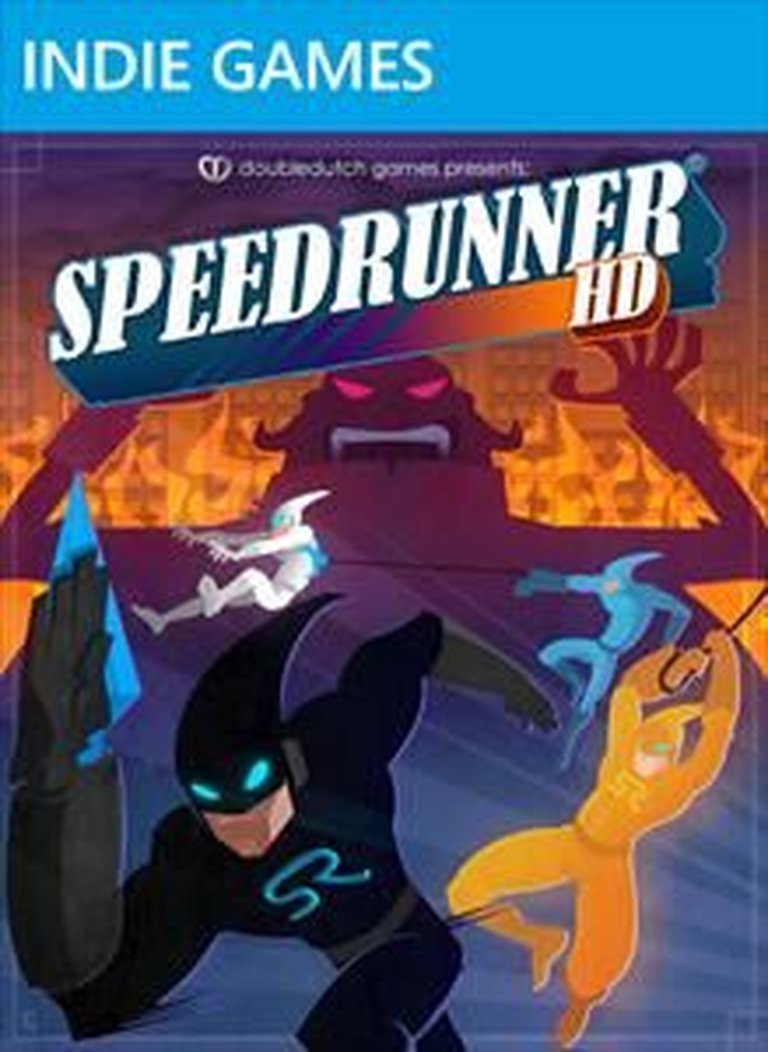
SpeedRunner HD, also known as SpeedRunners, is a competitive 2D side-scrolling platformer racing game where up to four players engage in fast-paced elimination races, either locally or online, using grappling hooks, rockets, mines, and power-ups to knock opponents off the screen while the camera follows the leader and the arena progressively shrinks, with victory achieved by outlasting others across multiple rounds and unlocking new characters, skins, levels, and abilities through progression.
SpeedRunner HD Reviews & Reception
indiegamerchick.com : So did they fix the problems of the web version? Yes. Mostly.
mashthosebuttons.com : Speedrunner HD is all about speed and momentum.
indigoindie.wordpress.com (100/100): SpeedRunner HD gets a solid 5 out of 5.
SpeedRunner HD: Review
Introduction
Imagine a pixel-perfect fusion of Sonic’s blistering momentum, Bionic Commando’s grappling swing, and Canabalt’s endless-runner tension, all crammed into a side-scrolling spectacle where outpacing your rivals isn’t just winning—it’s survival. Released on August 29, 2011, for Xbox Live Indie Games (XBLIG), SpeedRunner HD burst from the humble origins of a free Flash browser game that had already racked up over three million plays. Developed by the fledgling Dutch studio DoubleDutch Games, this unassuming title transformed a simple speedrunning prototype into a multiplayer mayhem machine, challenging players to defuse bombs in single-player while sabotaging friends in chaotic local battles. At its core, SpeedRunner HD is a testament to indie ingenuity: tight controls, addictive escalation, and a blueprint for competitive platformers that would influence its own successors and the genre at large. My thesis? This isn’t just a forgotten XBLIG gem—it’s the spark that ignited SpeedRunners, proving that velocity and viciousness make for timeless gaming adrenaline.
Development History & Context
DoubleDutch Games, founded by game design teacher Casper van Est and a tight-knit team of Dutch developers, emerged from the vibrant indie scene of early 2010s Europe. Van Est prototyped the original SpeedRunner browser game using Adam Atomic’s free Flixel engine in a single day, drawing from Canabalt‘s procedural rush, Super Meat Boy‘s precision platforming, and VVVVVV‘s mechanic mastery. The Flash version, launched in early 2011, exploded with 50,000 daily views, but technical glitches—like endless rolling and collision hiccups—plagued it, as noted in developer interviews.
Porting to XBLIG as SpeedRunner HD meant a ground-up rewrite in Microsoft’s XNA framework, their custom Chameleon engine ensuring buttery 60 FPS performance absent in the web build. Lead programmer Gert-Jan Stolk handled the heavy lifting, while artists like Robin van Lierop and Gerrit Willemse infused Disney-Incredibles-style flair. Released amid the 2011 Indie Games Summer Uprising—a promotional push highlighting XBLIG’s best—SpeedRunner HD was a semi-finalist in Microsoft’s Dream.Build.Play contest, competing with titles like T.E.C. 3001 (a 3D spiritual cousin).
The era’s gaming landscape was indie gold-rush territory: XBLIG democratized publishing but drowned developers in a 100+ weekly flood, sans online multiplayer or leaderboards (XNA limitations). Van Est cited promotion woes as key hurdles, leveraging the Flash hit’s buzz to combat visibility. Patches like 1.1 (November 2011: bonus levels, scoreboards) and 1.2 (January 2012: multiplayer maps) refined it post-launch. This HD iteration laid groundwork for SpeedRunners (Steam Early Access 2013, full release 2016 via tinyBuild), adding online play, XP progression, and ports galore—Xbox One (Games with Gold 2017), PS4 (2017), Switch (2020). Technological constraints birthed innovation: no online forced laser-focused local multiplayer, while XNA’s controller support elevated Flash’s keyboard clunkiness.
Narrative & Thematic Deep Dive
SpeedRunner HD‘s story is pure pulp-comic brevity—an “excuse plot” per TV Tropes, where you embody SpeedRunner, a lantern-jawed superhero (Spider-Man meets The Flash), thwarting mad bomber Stalnik’s city-wide plot in New Rush City. Told via stylish comic panels (Incredibles-esque), eighteen levels span a day-night cycle, from sunlit campuses to crimson dusk rooftops, culminating in boss chases. Collect winged sandals for secrets; gold medals unlock a password reward (real-world prize tease).
Characters shine through taunts and bios: SpeedRunner’s smug “fastest man alive” vibe contrasts rivals like The Falcon (vengeful chicken farmer) or Hothead (flaming fury). Comics like “Rise of the Falcon” and “Jumping the Shark” reveal nominal heroism—runners wreck crime scenes more than save them—satirizing speed-obsessed anti-heroes. Themes probe velocity’s cost: momentum trumps mercy, as bombs propel you forward (rocket jumps) while spikes punish hesitation. Multiplayer flips it to Darwinian rivalry—friends become prey in elimination races.
Later SpeedRunners expands with 20+ runners (Cosmonaut Comrade’s vodka-fueled angst, Moonraker’s time-travel queen), bilingual quips (Russian/French), and lore comics (“Race Against Time”). HD’s lean narrative prioritizes play, but seeds themes of chaotic competition, where “winning” means outlasting, not outrunning—echoing real speedrunning’s tool-assisted perfectionism.
Gameplay Mechanics & Systems
Core loop: auto-scrolling side-scroller demands flawless flow. Run (build speed), jump/double-jump (A; precise arcs dodge crates/spikes), grapple (X; swing ceilings), wall-jump (marked walls). Power-ups: jetpack boosts, bombs (self-propel or sabotage). Single-player: defuse bombs under timers; silvers for completion, golds for speed (collectibles optional but tricky). Bonus levels (6 post-story) amp precision—”so close!” frenzy akin to Super Meat Boy. Medals unlock multiplayer; secret password for all golds.
Multiplayer (4-player local): genius twist—camera tails leader; lag = death (3 lives). Sabotage via mines, missiles (homing/boomerang), crates, golden grapples (yank foes). Maps (5 total, patched in): multiple paths, switches seal shortcuts, shrinking screen post-elimination ramps panic. Boosters (triggers) even fields initially, but host advantage skews fairness (owner’s latency edge).
UI: Clean menus, scoreboards (patched), but fixed buttons irk (grapple on X suboptimal). No remapping/customization hurts. Flaws: momentum-killing crates, grapple angle slips; strengths: responsive 60 FPS, escalating chaos. XP absent in HD (added later); replay via medals/sandals/multiplayer. Innovative elimination-shrinks birthed genre staple.
| Mechanic | Single-Player Role | Multiplayer Role |
|---|---|---|
| Grapple Hook | Speed swings/shortcuts | Yank foes/pull ahead |
| Bombs/Mines | Self-boost | Trap rivals |
| Double Jump/Wall Jump | Precision navigation | Dodge/positioning |
| Camera | Fixed scroll | Dynamic eliminator |
World-Building, Art & Sound
New Rush City pulses urban frenzy: campuses, mansions (bookcase passages), powerplants (lasers/spikes). Side-scrolling 2D layers depth—foreground hazards, parallax skies. Art: Vibrant comic cel-shading, fluid animations (acrofatic slides, expressive masks). Influences scream Incredibles/superhero satire; Flash roots yield Saturday-morning sheen. Levels evolve dusk-to-night, heightening tension.
Sound: Jonathan Blow’s soundtrack (patch-noted) pulses urgency—panic-key escalations as walls close. SFX crisp: grapple thwips, bomb booms, spike crunches. Taunts add flavor (Hothead’s Angrish, Luc Jadore’s French flair). Atmosphere? Pure velocity highs—flow states shatter on failure, rebuilding addiction.
Reception & Legacy
XBLIG launch earned Indie Game Magazine’s Readers’ Choice (best 2011), Summer Uprising acclaim. Reviews mixed-positive: XBLAFans (“Try It!”; multiplayer shines), Indie Gamer Chick (corrected: fun but short/overpriced at 240 MSP), Mash Those Buttons (solid replay). MobyGames: 75% critics (DarkZero/GameSpew 90%: “instant classic”), 7.2 overall; player avg 3.1/5.
Evolved SpeedRunners: Steam Early Access refined (leveleditor endless replay), full 2016 (Metacritic PC 84/100). Ports boosted reach; Xbox One freebie spiked players. Awards: SXSW 2015 Gamer’s Voice, Indie DB 2014 Best Multiplayer, Dutch Game Awards nominee. ESL esports (2015-2016). Influenced: Competitive platform-racers (Gang Beasts crossovers), elimination mechanics. Sequel SpeedRunners 2 (2025/2026). HD’s legacy: XBLIG proof-of-concept, birthing indie hit from browser ashes.
Conclusion
SpeedRunner HD is indie history’s underdog sprint: short single-player (under hour), control quirks, no online limit it, but multiplayer’s vicious velocity endures. From Flash glitch to XBLIG polish to global phenomenon, it cements DoubleDutch’s vision—speed as sport, chaos as craft. Amid 2011’s uprising, it outran obscurity, influencing a lineage of hook-slinging havoc. Verdict: Essential artifact for platformer historians; 8/10—buy for legacy, play for the rush. Its place? Pioneer of multiplayer mayhem, forever etching “outlast to outpace” in gaming’s annals.