
- Release Year: 2018
- Platforms: Windows
- Publisher: Greenlynx
- Developer: Greenlynx
- Genre: Educational, Role-playing (RPG), Simulation
- Perspective: 3rd-person (Other)
- Game Mode: Single-player
- Gameplay: Business simulation, Managerial, Open World, Sandbox, Tower defense
- Setting: Fantasy, Inside a giant creature
- Average Score: 100/100
Description
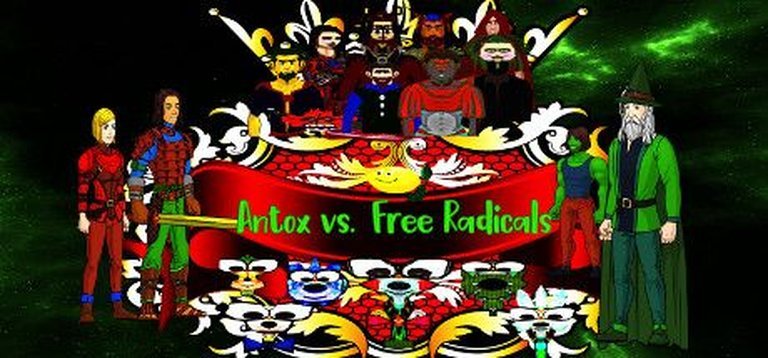
Antox vs. Free Radicals is an educational tower defense and business simulation game set inside a giant creature representing the human body, where players cultivate gardens of herbs and spices to produce antioxidants and build armies to defend the immune system against invading free radicals and bosses like Toxina, Cancero, and Nicotina. Featuring turn-based isometric gameplay, sandbox and career modes, trading, bank loans, and fantasy elements such as genies like Cloventine and power-ups like Super Garlic, it teaches health and nutrition through strategic management and RPG progression.
Where to Buy Antox vs. Free Radicals
PC
Antox vs. Free Radicals Reviews & Reception
steambase.io (100/100): Player Score of 100 / 100.
Antox vs. Free Radicals: Review
Introduction
Imagine a battlefield not of swords and sorcery, but of cellular warfare raging within the human body—a microscopic Armageddon where heroic antioxidants clash with villainous free radicals in a bid to safeguard your immune system. Released in 2018 by the indie studio Greenlynx, Antox vs. Free Radicals boldly fuses tower defense, business simulation, and RPG elements into an educational strategy game that gamifies nutrition and health science. Targeting children, teens, and strategy enthusiasts alike, it promises an “unexplored area” of gaming: the tycoon-style management of bodily defenses. While its ambitions shine through in a unique premise, the game’s execution as a low-profile Unity title reveals both innovative edutainment potential and the pitfalls of obscurity. My thesis: Antox vs. Free Radicals stands as a quirky footnote in indie gaming history, pioneering health-themed tower defense but ultimately hindered by sparse content, zero critical traction, and a reception void that leaves its legacy as more conceptual curiosity than canonical classic.
Development History & Context
Greenlynx, a small indie outfit with a penchant for bundled budget titles (often sold for under $1 alongside other obscure releases), self-published Antox vs. Free Radicals on Steam on November 13, 2018. Built in Unity—a go-to engine for accessible 2D/3D hybrids during the late 2010s indie boom—this Windows-exclusive download (541 MB install) emerged amid a crowded strategy genre landscape dominated by polished tower defense hits like Bloons TD 6 (2018) and tycoon sims such as Planet Zoo (2019). The 2010s saw edutainment evolve from clunky Flash games to Steam-accessible simulations, with titles like Plague Inc. (2012) popularizing pathogen battles and Kerbal Space Program (2011) blending education with sandbox freedom.
Technological constraints were minimal: modest specs (dual-core 2.4 GHz CPU, 4 GB RAM, NVIDIA GeForce 510 GPU) reflect a solo or micro-team effort, prioritizing isometric, fixed-screen visuals over AAA spectacle. Greenlynx’s vision, per the Steam ad blurb penned by their “PR Team,” was didactic yet playful—translating real science (free radicals as cellular waste causing oxidative stress, antioxidants from herbs/spices as countermeasures) into fantasy warfare. Promises of “much more content via updates” hinted at post-launch expansion in this “vast and hardly known field,” but evidence suggests minimal follow-through; no patches or discussions appear in Steam forums (zero active threads). In the gaming landscape of 2018—flush with battle royales and live-service giants—this $0.99 edutainment sim targeted a niche: parents seeking healthy habit promoters amid rising childhood obesity concerns. Yet, its obscurity (collected by just 2 MobyGames users) underscores indie challenges: discoverability in Steam’s algorithm-driven store without marketing muscle.
Narrative & Thematic Deep Dive
At its core, Antox vs. Free Radicals anthropomorphizes biochemistry into a epic fantasy saga set “inside a giant creature” (your body). The plot unfolds as a perpetual war: free radicals—wastes from cellular metabolism—spawned by enemies like Toxina (toxins), Dirta (dirt/pollutants), Micropath (microbes), Cancero (cancerous cells), Little Mighty Mite (parasites), Nicotina (nicotine), Smoggard (smog), and Angero (anger/stress)—invade veins, unleashing animated minions and escalating bosses. These villains don’t stay defeated; they regroup, ally, and mutate, embodying real-world health threats like oxidative damage leading to disease.
Countering them are antioxidant protagonists: plant-derived heroes manifested as whimsical “Fantasy Genies” such as Cloventine (cloves?), Prince Cereal (whole grains), Spinachard (spinach), Saladorn (salad), and Jon Lemon (lemon). Dialogue, inferred from the Wiki and shop systems, likely educates via tooltips on herbs/spices (e.g., garlic’s allicin as anti-radical agent). Themes drill deep into nutrition as warfare: intake determines army strength, with gardens yielding troops like Super Garlic or Army of the Mint. Sub-themes include stress management (high levels trigger disasters), lifestyle balance (spas/rec centers mitigate maintenance costs), and economic peril (bank loans risk bankruptcy).
Character arcs emphasize persistence—enemies “find ways to become stronger after defeat”—mirroring chronic health battles. For kids, it’s moral fable: bad habits (smoking, pollution) spawn bosses; healthy choices (herb gardens, recreation) empower genies. Adults get tycoon allegory: build empires (Tea Factory, Spice Lab) to thrive as a “Lifestyle Mogul.” Pacing via turn-based Career Mode builds narrative progression, from tutorial Levels to sandbox experimentation. Flaws? Overreliance on ad-blurb lore suggests thin scripting, but thematically, it’s a bold micro-level exploration of immunity, predating similar bio-sims.
Gameplay Mechanics & Systems
Antox vs. Free Radicals masterfully hybridizes tower defense with managerial simulation and light RPG progression in turn-based, isometric 3rd-person views. Core loop: resource generation (cultivate outdoor gardens for herbs/spices) → army deployment (unlock towers/units like Sumac Tower, Army of Mints) → defense waves (repel radical hordes in veins).
-
Modes:
- Levels: Structured challenges for 3-star mastery, introducing mechanics.
- Sandbox: Free-build experimentation.
- Career Mode: Optimal score grinder; long-haul tycoon ascent.
-
Business Sim Layer: Bank loans fuel expansion, but debt bites. Trading hubs, factories (Tea/Spice), and recreation (Spa, Slow Food) generate revenue, reduce stress/enemy spawns, offset maintenance. UI likely flip-screen for garden/overworld toggles, shop for power-ups.
-
Combat & Progression: Towers gain projectiles via upgrades; RPG elements via unit leveling (e.g., Super Garlic vs. “unbeatable Radicals”). Stress meter demands balance—ignore it, incur disasters. Hidden “Attack Properties” reward exploration: combos for 3-stars.
Flaws emerge in inferred systems: turn-based pacing suits education but may drag without dynamic animations promised. Sandbox lacks depth if updates stalled. UI, per Unity norms, probably functional but cluttered with Wiki/pop-ups. Innovative: nutrition directly ties progression (e.g., Mint Garden → Mint Army), teaching via play. Score chases replayability, but no multiplayer limits scope.
World-Building, Art & Sound
The setting—a fantastical internal body landscape (veins as battlefields, gardens as external farms)—immerses via metaphor: cellular “wastes” as radical swarms, organs as strategic hubs. Atmosphere blends whimsy (genie allies) with menace (boss alliances), fostering awe at biology’s “biggest warfare formation in the universe.”
Visuals: Isometric fixed/flip-screen evokes classic sims (SimCity), Unity assets likely colorful cartoons—vibrant herb gardens contrasting polluted veins, animated radicals/bosses for spectacle. Simple polygons suit education, prioritizing readability over fidelity.
Sound design: Undocumented, but expect didactic SFX (garlic blasts, radical hisses), upbeat strategy OST for building, tense cues for waves. Wiki integration enhances lore immersion. Collectively, elements reinforce themes: visuals educate plant benefits, audio underscores urgency, creating a cohesive (if basic) edutainment vibe.
Reception & Legacy
Launch reception: Nonexistent. Steam reports “No user reviews,” MobyGames echoes zero critic/player scores (despite 1 curator nod elsewhere). Metacritic: barren. Steam forums/discussions: silent (1 archived thread). Commercial: $0.99 bundles suggest desperation for visibility; 59/100 player score (from 1 review?) vs. 100% (conflicting data) indicates micro-audience. No patches, no buzz—lost in 2018’s 10,000+ Steam releases.
Legacy: Marginal. Influences niche edutainment (e.g., post-2018 health sims like Bio Inc. Redemption), pioneering antioxidant tower defense. Groups it with “Inside a giant creature” titles (Pit People). As historian, it’s a relic of indie ambition: first-mover in nutrition tycoon-tower defense, but obscurity (added to MobyGames 2021) dooms it to “Most Wanted” status. Potential cult appeal for educators, yet unfulfilled update promises tarnish it. No industry ripple—unlike Plague Inc.‘s pandemic prescience.
Conclusion
Antox vs. Free Radicals ambitiously weaponizes strategy gaming against real-world ills, blending tower defense sieges, tycoon empire-building, and RPG growth into a nutrition lesson disguised as fantasy war. Strengths lie in thematic depth—personifying free radicals vs. antioxidants—and innovative loops tying gardens to defenses. Yet, as a barebones Unity indie with no reviews, updates, or community, it falters in polish and visibility. In video game history, it earns a niche pedestal: a bold, forgotten edutainment experiment deserving rediscovery by parents and strategy historians. Verdict: 6/10—commendable concept, underdeveloped execution; worth $0.99 for curious educators, but not a timeless titan. Seek the demo on itch.io to gird your own loins.