
- Release Year: 2017
- Platforms: Windows
- Publisher: Warfare Studios
- Developer: Warfare Studios
- Genre: Role-playing (RPG)
- Perspective: Diagonal-down
- Game Mode: Single-player
- Gameplay: Japanese-style RPG (JRPG)
- Setting: Fantasy
- Average Score: 67/100
Description
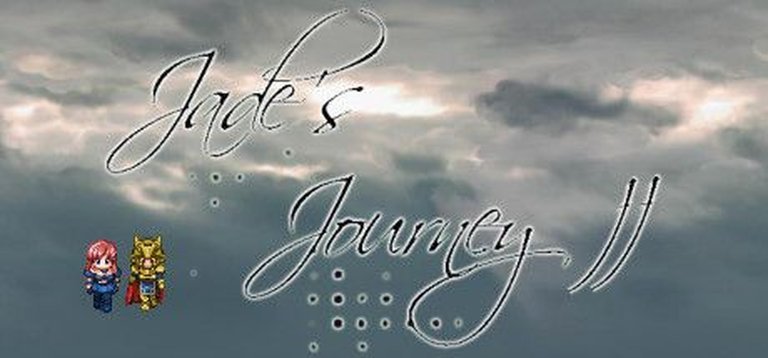
Jade’s Journey 2 is a fantasy Japanese-style RPG (JRPG) set in a 2D scrolling world with diagonal-down perspective, where protagonist Jade, embracing her destiny as the Chosen One, leaves her father to embark on a heroic quest to stop the villainous Morgana and uncover the truth behind her sinister plans, encountering Sora, the previous Chosen One, along the way.
Gameplay Videos
Where to Buy Jade’s Journey 2
PC
Jade’s Journey 2: Review
Introduction
In the bustling indie scene of the mid-2010s, where RPG Maker tools democratized JRPG creation for solo developers and tiny teams, Jade’s Journey 2 emerges as a poignant sequel that captures the earnest spirit of classic Japanese-style role-playing games. Building on the legacy of its predecessor (an obscure entry in the Aldorlea Games orbit), this 2017 Windows title from Warfare Studios follows young heroine Jade as she grapples with destiny, thrusting players into a fantasy world of prophecy, villainy, and self-discovery. While it lacks the polish of AAA contemporaries like Persona 5, its heartfelt narrative and nostalgic mechanics make it a hidden gem for retro RPG enthusiasts. My thesis: Jade’s Journey 2 is a testament to indie perseverance, delivering a compact, trope-filled adventure that shines in its intimate storytelling but stumbles under RPG Maker’s technical limitations, cementing its place as a cult curiosity rather than a genre-defining masterpiece.
Development History & Context
Warfare Studios, a modest indie outfit likely operating as a one-person or small-team operation led by creator Raphael Delmaschio, released Jade’s Journey 2 on May 12, 2017, exclusively for Windows via Steam download. This was the era of Steam’s post-Greenlight explosion, where RPG Maker games flooded the platform, enabling creators worldwide to bypass traditional publishing barriers. Delmaschio handled core creation, with scripting support from DerVVulfman—a veteran RPG Maker scripter known for enhancing engines in titles like the Vagrant Hearts series. Music came from Megatronx and Shizu Verbinnen, contributors to similar indie RPGs, while special thanks went to Shade The Mystic and Eridani, underscoring the collaborative, community-driven ethos of the RPG Maker scene.
Technological constraints were defining: Built on RPG Maker (likely VX Ace or MV, given the 2D scrolling and diagonal-down perspective), the game targets low-spec hardware—1.6 GHz processor, 128 MB RAM, DirectX 9 graphics—making it accessible on era-appropriate laptops but visually tethered to tile-based assets and pre-fab sprites. The 2017 gaming landscape was dominated by open-world behemoths (The Legend of Zelda: Breath of the Wild) and live-service grinders, yet indie JRPGs thrived in niches, echoing Final Fantasy clones amid a retro revival fueled by Undertale and Stardew Valley. Warfare Studios positioned it as commercial fare at $9.99 (now perpetually $0.99 on sale), part of the Aldorlea Games franchise ecosystem, linking it to micro-RPGs like Freedom Cry and Vagrant Hearts. This context paints Jade’s Journey 2 as a passion project amid Steam’s deluge, where visibility hinged on trading cards, achievements, and word-of-mouth rather than marketing muscle.
Narrative & Thematic Deep Dive
At its core, Jade’s Journey 2 weaves a classic Chosen One saga with emotional depth, centering on Jade’s evolution from reluctant hero to resolute guardian. The plot kicks off post-first game: Having awakened her powers, Jade confronts the mantra “with great power comes great responsibility” (echoing Spider-Man but rooted in JRPG prophecy tropes). She bids a tearful farewell to her father, embarking solo (later with allies) to thwart Morgana, a scheming antagonist whose “plans” promise world-altering revelations. En route, Jade encounters Sora, the prior Chosen One, injecting mentorship dynamics and lore expansion—Sora’s backstory likely unpacks cycles of duty, failure, and legacy, questioning if heroism is fated or forged.
Characters are archetypal yet intimate: Jade embodies youthful determination, her internal monologues (via dialogue boxes) exploring separation anxiety and maturation; her father represents grounded normalcy, a poignant anchor amid fantasy excess; Morgana looms as a shadowy manipulator, her motives teased as more nuanced than cartoonish evil (perhaps tied to power imbalances or past betrayals); Sora adds gravitas, serving as foil and guide, their interactions delving into generational handoffs. Dialogue, scripted by DerVVulfman, favors straightforward, earnest exchanges—think Dragon Quest simplicity over Tales of verbosity—punctuated by choice-driven branches that subtly affect affinity or endings.
Themes probe deeply: Responsibility vs. personal bonds (Jade’s paternal goodbye symbolizes sacrifices); predestination (Chosen One mantle critiques passive heroism); truth-seeking (Morgana’s “plans” unveils systemic corruptions in the fantasy realm). Subtle feminist undertones shine through Jade’s female-led quest, aligning with 2010s indie pushes for diverse protagonists. Pacing suits its ~3-hour runtime (per RAWG data), balancing linear quests with side lore, culminating in a truth-revealing climax that ties Jade’s arc to broader lore. Flaws emerge in exposition dumps and underdeveloped sidekicks, but the narrative’s sincerity elevates it beyond boilerplate fan-games.
Gameplay Mechanics & Systems
As a diagonal-down 2D scrolling JRPG with direct control, Jade’s Journey 2 adheres to Maker staples: top-down exploration, random encounters, turn-based combat. Core loop—explore fantasy locales, battle foes, level up, advance plot—is tight and addictive for short bursts, supporting gamepad, keyboard, or mouse.
Combat is standard ATB/turn-based: Select actions (attack, skills, items) for Jade and party, emphasizing elemental affinities and status effects. Progression via EXP yields stat boosts and skill unlocks, with gold (achievements for 1000/5000G, 12km walked) funding gear. Innovative? Custom scripts (DerVVulfman’s specialty) likely add QoL like auto-battle or enhanced menus, mitigating Maker grind.
Exploration & Progression: World map traversal leads to towns/dungeons; puzzles lean simple (switches, NPCs). UI is functional but dated—clunky inventories, repetitive menus—exacerbated by Maker’s limits. Achievements (8 total, e.g., 1/5-hour playtime) encourage replays. Flaws: Repetitive encounters, shallow strategy (tags include “Strategy,” but it’s light), abrupt difficulty spikes. Strengths: Responsive controls, concise loops suit casual play, partial controller support shines on Steam Deck.
| Mechanic | Strengths | Weaknesses |
|---|---|---|
| Combat | Fluid turns, skill variety | Predictable AI, grindy |
| Progression | Meaningful leveling, gold economy | Linear, few builds |
| UI/Controls | Multi-input friendly | Bloated menus, no remapping |
| Length | Bite-sized (3-5 hrs) | Lacks post-game |
Overall, mechanics evoke Golden Sun lite—engaging yet unrefined.
World-Building, Art & Sound
The fantasy setting—a patchwork of villages, forests, ruins—evokes JRPG comfort food, with Morgana’s schemes implying a prophecy-riven realm. Atmosphere builds via lore snippets (Sora’s history fleshes prophecy cycles), fostering immersion despite scale.
Visuals: 2D scrolling employs RPG Maker tilesets—charming pixel art sprites for Jade (dynamic expressions?), enemies, environments. Diagonal perspective aids navigation, but recycled assets betray budget; parallax scrolling adds minor depth. Color palette: Vibrant yet cohesive, evoking GBA-era SNES revivals.
Sound Design: Megatronx and Shizu Verbinnen’s OST blends orchestral synths with chiptune flair—looping town themes, epic boss motifs, subtle field ambiences. SFX are crisp (sword clashes, magic whooshes), enhancing tactical pauses. No voice acting keeps it authentic, with English text-only interface.
These elements synergize for cozy nostalgia: Art/sound amplify solitude-to-triumph arcs, though repetition undercuts longevity.
Reception & Legacy
Launch reception was muted: No MobyGames/Metacritic scores (critics absent; “Be the first!”), Steam “Mixed” (68% positive from 50 reviews, 36/54 favorable). Players praised brevity, story charm, value ($0.99); critiqued bugs, short length, Maker jank (e.g., discussions query “RPGMaker, huh?”). Collected by ~10 MobyGames users, low visibility persists—Steam charts negligible, RAWG unrated.
Legacy: Marginal yet influential in micro-JRPG niche. Warfare team ties to Vagrant Hearts/Freedom Cry seeded Aldorlea’s ecosystem, inspiring budget fantasy RPGs. No direct successors, but embodies 2017 indie wave (post-To the Moon), proving viability of female-protagonist tales. Wikidata/SteamDB logs preserve it; trading cards/achievements sustain minimal community. Evolved rep: Cult pick for completionists, undervalued amid oversaturation.
Conclusion
Jade’s Journey 2 distills JRPG essence into a 3-hour paean to duty and discovery, with Jade’s arc a standout amid competent mechanics and nostalgic aesthetics. Warfare Studios’ indie grit shines, but RPG Maker’s shackles—repetitive systems, sparse polish—cap its heights. In video game history, it occupies a footnote as a sequel sustaining a micro-franchise, ideal for Vagrant Hearts fans or quick nostalgia hits. Verdict: 7/10—Recommended for JRPG purists seeking unpretentious charm, but skip if craving depth. A small step for Warfare, a fond echo of genre roots.