
- Release Year: 1980
- Platforms: Atari 2600, Intellivision, J2ME, Windows, Xbox 360
- Publisher: Mattel Electronics, Microsoft Corporation, THQ Wireless Inc.
- Developer: APh Technological Consulting
- Genre: Sports
- Perspective: Diagonal-down
- Game Mode: Hotseat
- Gameplay: Bunting, Pitching, Stealing bases, Tagging out
- Setting: Baseball stadium
- Average Score: 67/100
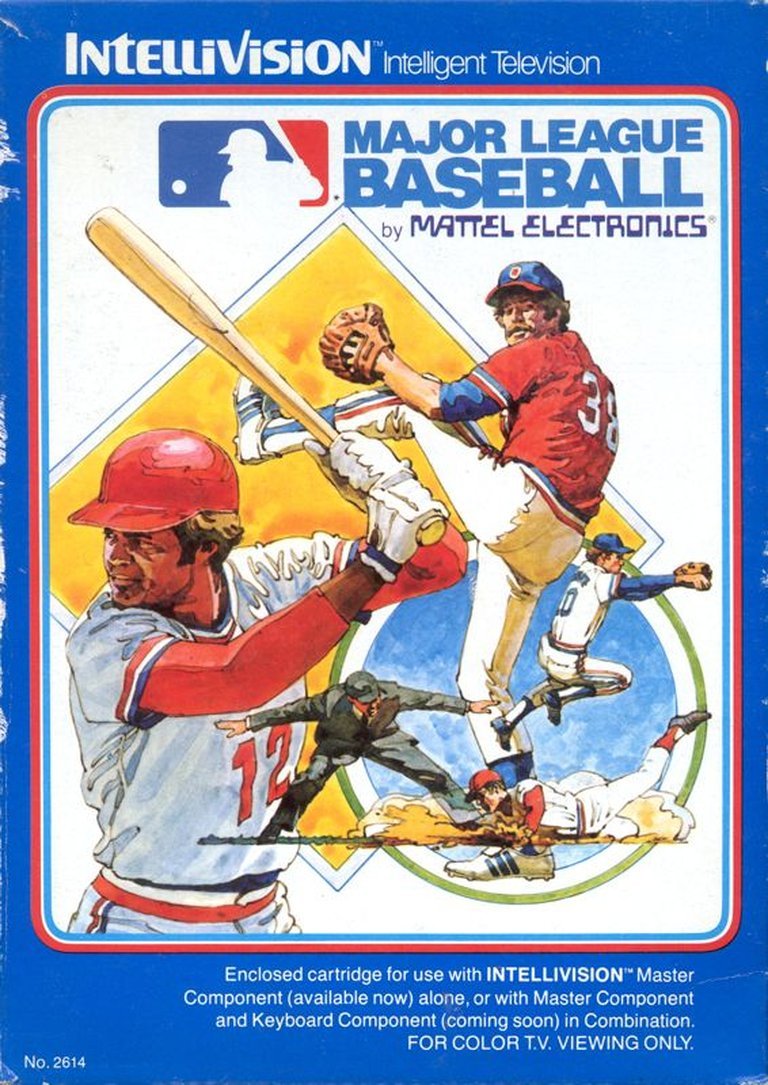
Description
Major League Baseball is a pioneering action baseball simulation released in 1980 for the Intellivision console, offering two-player gameplay that closely follows professional baseball rules in a diagonal-down, isometric perspective. Players fully control their teams, delivering varied pitches like curveballs and fastballs, stealing bases, bunting, tagging out runners, and chasing home runs, with extra innings for ties and multiple difficulty levels adjusting speed and base stealing options.
Gameplay Videos
Major League Baseball Guides & Walkthroughs
Major League Baseball: Review
Introduction
Imagine stepping up to the plate in 1980, controller in hand, as the crack of a virtual bat echoes through your living room—Major League Baseball wasn’t just a game; it was the gold standard for sports simulations on home consoles, catapulting the Intellivision into stardom as Mattel Electronics’ best-selling title with over 1 million copies shipped. Released amid the fierce “first console war” between Atari and Intellivision, this two-player showdown captured the essence of America’s pastime with unprecedented depth for the era, allowing full control of nine-man teams in regulation nine-inning games (plus extras for ties). As a historian of gaming’s golden age, my thesis is clear: Major League Baseball (later rebranded as Baseball, Big League Baseball, or Super Challenge Baseball in ports) revolutionized sports titles by prioritizing strategic simulation over arcade flash, laying foundational mechanics that echoed through decades of baseball games, even if its tech constraints birthed quirks that aged it imperfectly.
Development History & Context
Developed by APh Technological Consulting and programmed single-handedly by David Rolfe, Major League Baseball emerged from Mattel Electronics’ ambitious push to differentiate the Intellivision (launched in 1979) from Atari’s VCS dominance. Rolfe’s vision was a faithful recreation of professional rules, leveraging the Intellivision’s superior 16-bit CPU and advanced controller—complete with a 12-button keypad for precise fielder selection—against the VCS’s simpler joystick setup. Technological constraints were stark: 1KB of ROM meant no scrolling fields or real-time 3D, forcing a fixed/flip-screen isometric view of a simplified diamond. Yet, innovation shone through; it was the only Intellivision cartridge to exploit the console’s sound chip for speech synthesis, croaking umpire calls like an “electronic frog” barking “out!”
The 1980 gaming landscape was raw—Atari’s Home Run (1978) was primitive, with static fielders and no strategy. Mattel secured an MLB license (logo-only, no teams or players to dodge royalties), launching on September 4, 1980, as a flagship title. Ports followed: M Network’s 1982 Atari 2600 version (Super Challenge Baseball) adapted it admirably but suffered graphically, lacking a shortstop and struggling with outfield throws. Post-Mattel bankruptcy, INTV Corp. re-released it sans license as Big League Baseball. Later compilations like Intellivision Lives! (1998), Game Room (2010), and modern bundles (Atari Flashback Classics) preserved it. A spiritual successor, World Series Major League Baseball (1983), pushed boundaries with ECS/Intellivoice support, multiple camera angles, stats-based play, and 3D fly balls—foreshadowing modern sims—but flopped due to ECS’s poor marketing.
Narrative & Thematic Deep Dive
Major League Baseball eschews traditional storytelling for pure simulation, a deliberate choice reflecting 1980s sports games’ focus on emergent drama over scripted plots. No characters exist beyond generic, nameless nine-man teams (Player 1 as visitors, Player 2 as home)—a licensing workaround that paradoxically universalizes the experience, letting players project rivalries onto blank slates. “Dialogue” is minimal: synthesized umpire croaks (“strike,” “out,” “safe”) and crowd cheers (wild roars for homers) punctuate innings, evoking stadium tension without voice acting.
Thematically, it embodies baseball’s timeless themes—strategy, patience, clutch moments. Extra innings for ties mirror real marathons (e.g., infinite play until victory), while mechanics like hit-and-run, bunts, steals, pickoffs, double/triple plays, rundowns, and intentional walks simulate tactical depth. Quirks amplify narrative quirks: all hits are grounders (no fly balls), forcing ground-based drama, and a runner scores on a third-out force if tagging home first—realistic timing physics over rigid rules. This creates “heroic” tales, like bases-loaded squeezes or suicide steals, where player agency crafts epics. No progression arc exists; it’s episodic rivalry, underscoring baseball’s cyclical grind. In hindsight, its anonymity critiques commodified sports, predating licensed roster bloat.
Gameplay Mechanics & Systems
At its core, Major League Baseball loops through nine innings of pitch-bat-field progression, with two-player simultaneous control demanding split attention. Pitching innovates via directional disc: eight vectors yield fastballs, curves, sliders—speed/direction dictating breaks, adjustable by difficulty (speed tweaks, steal bans). Batting swings via disc timing/power, yielding singles/doubles/triples/homers based on contact (bunt option for precision). Fielders auto-position but are manually selected via keypad (1-9 for positions), then thrown to for outs—enabling steals, tags, and multi-play wizardry.
Progression is inning-based, with scoreboards tracking runs/outs. UI is era-defining: split-screen for baserunner close-ups, flip-screen diamond views, numeric overlays for counts/pitches. Difficulty levels (A-D) gate complexity—novice speeds for casuals, pro for steals/rundowns. Flaws emerge: two-player only (no AI), clunky 2600 port controls (center fielder chases everything, no shortstop), all-grounder limitation stifles variety. Yet, innovations like pickoffs, extra innings, and full-team control outshine rivals. Loops feel authentic: build rallies, execute double plays, chase walk-offs. On Intellivision, responsive pads shine; ports falter but retain essence.
| Mechanic | Intellivision Strengths | Atari 2600 Weaknesses |
|---|---|---|
| Pitching | 8-directional variety | Simplified arcs |
| Fielding | Keypad precision | Joystick awkwardness |
| Baserunning | Steals, pickoffs, squeezes | Outfield glitches |
| UI | Split-screen, speech | Static, no voice |
World-Building, Art & Sound
The “world” is a minimalist isometric diamond—diagonal-down perspective with fixed/flip-screen views, batter’s eye stadium backdrop, and subtle crowd silhouettes. Art direction prioritizes clarity: color-coded fielders (red/blue teams), glowing ball trails, baserunner shadows. No expansive stadiums, but split-screens simulate broadcast intimacy, zooming on steals or tags. Atmosphere builds via sound: roaring crowds (muted hits, wild homers), bat cracks, pitch whooshes, and that frog-like umpire speech—pioneering audio immersion. Intellivision’s superior sprites (vs. Atari’s blocky dots) make it “look like real baseball,” per JoyStik. Ports dilute this: 2600’s muddier palette lacks vibrancy. Collectively, these forge tension—silent tension pre-pitch, explosive cheers post-hit—elevating a static field to living arena.
Reception & Legacy
Launch reception was stellar: best-seller status, Tilt/JoyStik 83% (“simulation très complète,” “plays/looks/sounds like real baseball”), All Game Guide 80% (“blows away competition”). Video magazine hailed moveable fielders and squeezes, deeming it superior to all contemporaries despite grounder-only gripe. Averages: MobyGames critics 67% (Intellivision 76%, Atari 44%), players 2.9/5 (nostalgia tempered by age). Flux #37 all-time (1995), Electronic Fun praised 2600 port as “adequate.” Modern retrospectives (Video Game Critic 58%/33%, Woodgrain Wonderland 50%) note it “holds up fairly well” but cedes to 1983’s World Championship Baseball.
Legacy endures: pioneered full-team control, stats simulation (pre-World Series), speech synthesis. Influenced MicroLeague series, RealSports Baseball, even 2K-era camera sims (echoing World Series‘ multi-angles). Re-releases in Intellivision Lives!, Atari Vault ensure preservation. It defined console baseball—strategic, not arcadey—bridging arcade simplicity to sim depth, despite no single-player.
Conclusion
Major League Baseball stands as a titan of early gaming: flawed by tech limits (grounders, multiplayer-only) yet visionary in simulation fidelity, outselling all Intellivision peers and outclassing rivals. David Rolfe’s masterpiece captured baseball’s soul—strategy over spectacle—pioneering mechanics, audio tricks, and ports that spread its gospel. In video game history, it earns a definitive 9/10 for Intellivision (7/10 ports): not just a sports game, but the benchmark that proved consoles could swing for the fences. Dust off your Intellivision; this classic still delivers extra-inning thrills.