
- Release Year: 2014
- Platforms: PlayStation 3, Windows, Xbox 360
- Publisher: Koch Media GmbH (Austria)
- Developer: Fatshark AB
- Genre: Action
- Perspective: Third-person
- Game Mode: Single-player
- Gameplay: Grappling hook, Gunplay, Melee Combat, Photography, Stealth
- Setting: Oceania
- Average Score: 48/100
Description
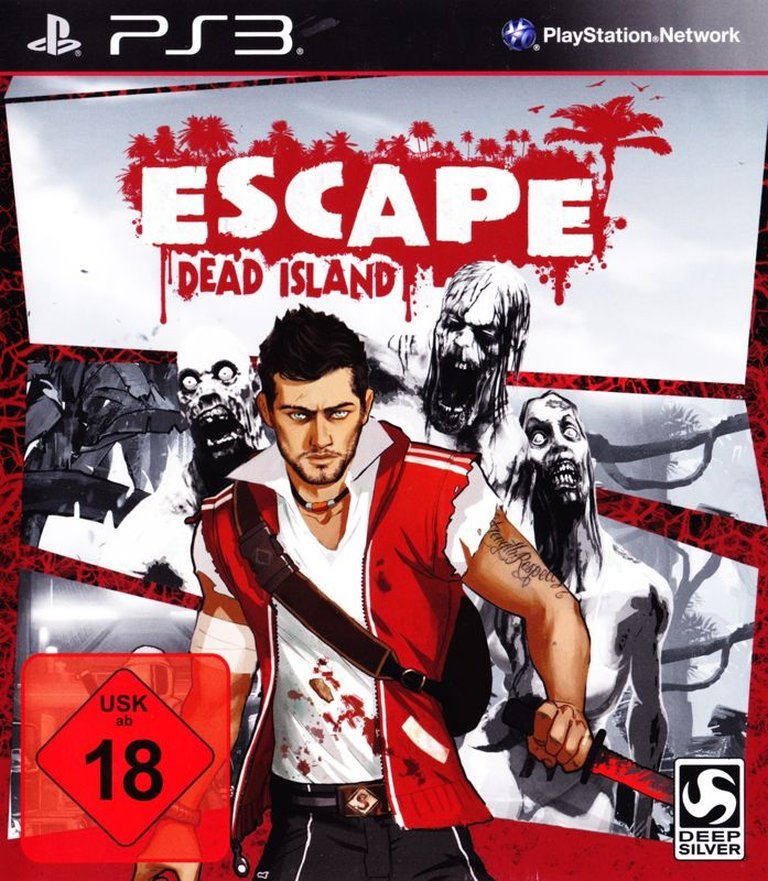
Escape Dead Island is a third-person survival action spin-off from the Dead Island series, set outside the main canon, where player character Cliff Calo travels with friends to the zombie-infested Banoi archipelago, primarily Narapela island in Oceania, to investigate strange events and gather photographic evidence against the Geopharm corporation. Featuring cel-shaded visuals with comic book-style action effects, linear objectives emphasize stealth, melee combat with stamina limits, limited firearms, and grappling mechanics, interspersed with hallucinatory sequences reflecting Calo’s deteriorating mental state, alongside a tutorial prologue involving operative infiltration.
Gameplay Videos
Where to Buy Escape Dead Island
PC
Escape Dead Island Cracks & Fixes
Escape Dead Island Patches & Updates
Escape Dead Island Mods
Escape Dead Island Guides & Walkthroughs
Escape Dead Island Reviews & Reception
metacritic.com (40/100): Generally Unfavorable
ign.com : a decent game with enough narrative twists and compelling collectibles to make for an enjoyable if somewhat underdeveloped experience
opencritic.com (44/100): ranked in the 3rd percentile of games scored on OpenCritic
mollielpatterson.com : comic-book-style visuals… it absolutely works
steambase.io (62/100): Mixed
Escape Dead Island: Review
Introduction
Imagine a tropical paradise twisted not just by undead hordes, but by the fracturing psyche of its protagonist—where reality warps like a fever dream, and every shadow hides both zombies and self-doubt. Escape Dead Island, released in 2014 as a spin-off to Deep Silver’s zombie-slaying saga, dares to pivot from the series’ visceral, co-op melee frenzy to a solitary third-person descent into madness. Outside the main canon, this Fatshark-developed title inherits the Banoi archipelago’s lore but reimagines it through cel-shaded surrealism and unreliable narration. While the original Dead Island reveled in chaotic survival, Escape whispers a thesis that elevates it as a flawed yet intriguing artifact: in a genre bloated with gore, its psychological horror and thematic ambition make it a bold, if uneven, evolution—one that prioritizes mind-bending narrative over polished action, cementing its status as a cult oddity rather than a blockbuster sequel.
Development History & Context
Fatshark AB, a Swedish studio known for later triumphs like Vermintide, took the reins from Techland, infusing Escape Dead Island with a distinct vision amid the 2014 gaming landscape. Released on November 18 for Windows, and shortly after on PS3 and Xbox 360, it arrived post-Dead Island: Riptide (2013), capitalizing on the series’ 5+ million sales while dodging its open-world bloat. Publisher Koch Media (Deep Silver) positioned it as a “survival action” bridge, but Fatshark’s choice of Bitsquid (now Autodesk Stingray) engine enabled cel-shaded visuals evoking graphic novels—Borderlands-esque outlines over realistic models—for a fresh, comic-book aesthetic.
The era’s constraints shaped its scope: last-gen hardware (PS3/X360) limited ambition, evident in pop-up textures and AI glitches critics lambasted. Fatshark’s 237-person team, led by CEO Martin Wahlund and writers Anne Toole and Magnus Liljedahl, aimed for “psychedelic” horror, drawing from Resident Evil‘s mystery-action roots. Technological limits—no RPG depth, linear design—stemmed from budget realities; unlike Techland’s Chrome Engine epics, Escape was a mid-tier spin-off, avoiding co-op to focus on solo dread. In a market flooded by zombies (Dying Light loomed), it targeted fans craving lore on Geopharm’s conspiracy, the Kuru-derived Pathogen HK virus, and cameos like Xian Mei. Yet, as a non-canon tale, it sidestepped series baggage, experimenting amid rising indie horror like Outlast.
Narrative & Thematic Deep Dive
Escape Dead Island‘s story is a labyrinthine mindfuck, dissecting guilt, sanity, and corporate evil through Cliff Calo’s unraveling psyche. Protagonist Cliff, an aspiring journalist haunted by daddy issues—his media-mogul father favors his sister—steals a boat with friends Linda (energetic reporter) and Devan (graphic designer) to probe Narapela’s “zombie” rumors, six months post-Banoi’s outbreak. A prologue flashes back: operative “Kilo Two” (with radio support from Xian Mei) infiltrates a Geopharm lab, kills a mole tied to terrorist Charon, and hides virus data before a mutant ambushes him.
Cliff’s arc spirals into psychological horror: hallucinations blur reality—buildings plummet from skies, locations teleport, zombies morph spectral. Linda’s “radio” guidance? A guilt-fueled phantom; she’s bitten early, her “voice” manifesting insecurities. Key beats include rescuing Xian Mei (post-Riptide survivor) from her crashed plane, collecting keycards amid Dr. Kimball’s logs exposing Geopharm’s Kuru experiments (HKEA enzyme accelerator mutates into undead plague). Cliff uncovers Charon’s vendetta—his father Chase Barrister died in Geopharm’s unethical trials under Consortium/Palm Garden Order control—and the virus’s origins: prion-mutated HIV/Kuru hybrid, weaponized for billions.
Themes peak in madness as metaphor: Cliff’s sanity erodes via unreliable narration—waking with unexplained gear, déjà vu loops—mirroring Kuru’s neurodegeneration. Corporate greed (Geopharm’s labs sealed post-Ronald Crown, revived by Emory) fuels apocalypse; Charon seeks poetic justice. Climax reveals the mutant as Dr. Aaron Welles, semi-sane via incomplete serum. Bittersweet finale: Cliff administers one serum (to Devan? Himself?), boxes data for sea-drift, loops to prologue—hinting time-loop hallucination or infection. Subtle nods (Xian Mei’s mole hints, Consortium’s global shadow) enrich Dead Island lore, but non-canon status frees surrealism, evoking Lost‘s mysteries or Jacob’s Ladder‘s psyche-warps. Dialogue shines in radio banter, but falters in exposition dumps; characters like spectral Linda embody guilt’s haunt, making Cliff’s tragedy intimate amid zombie fodder.
Gameplay Mechanics & Systems
Ditching Dead Island‘s RPG loot-fest, Escape streamlines into third-person loops of stealth-combat hybrids, photography puzzles, and traversal amid hallucinations. Core: infiltrate linear zones (airfield, labs, villa), snapping pics for lore/Cliff’s quips—journalistic gimmick tying to narrative. Combat demands stamina management: melee (fast/heavy combos, kicks, pushes) drains a regenerating bar; dodge, crouch, sprint add nuance. Weapons spawn fixed—screwdriver, pipe, katana, fire axe (upgradable thrice, no mods)—with scarce pistol/shotgun ammo forcing stealth-kills on sound/movement-sensitive zombies (Walkers, Bouncers’ leaps, Spitters’ acid, Sirens’ screams, Butchers’ blocks).
Flaws abound: bipolar AI (dumb patrols, hyper-alert chases), backtracking bloats 6-8 hours, checkpoints frustrate (deaths reset kills/loot/collectibles). No jumping/fall damage simplifies platforming to ropes/grapples/ladders. Hallucinations innovate—sudden teleports, ghost-zombies—but frustrate navigation. UI? Clunky: radial menu, awkward lock-on. Anti-frust: repeated deaths spawn pistol ammo. DLC Underwater Labs adds Dwellers (sound-distract stealth). New Game+ loops with katana start, retaining ammo—replay bait. Verdict: tense early, grindy late; stealth shines, combat “workmanlike” per IGN.
- Strengths: Reactive enemies, combo fluidity.
- Weaknesses: Repetitive waves, no upgrades, glitchy physics (PhysX).
World-Building, Art & Sound
Narapela’s ravaged tropics—beaches, villages, labs—evoke Banoi’s paradise-hell, but linear gates (keycards block paths) shrink scope. Atmosphere thrives on cel-shading: bold outlines, vibrant decay mimic comics, masking last-gen jank (pop-ins, flicker). Hallucinations surrealize: ice paths in jungles, self-duels—visual poetry amplifying dread.
Sound design immerses: zombie gurgles, rustling foliage heighten stealth; orchestral stings punctuate breaks. Voicework? Uneven—Cliff’s strained narration sells madness, Xian/Linda radio-chat intimate, but accents grate (Xian’s “forced” per tropes). Bink videos, launch trailer underscore comic vibe. Elements synergize: shading stylizes gore, sound warps reality (phantom whispers), forging unease over jump-scares—peak in villa’s spectral horde.
Reception & Legacy
Critics averaged 53% (MobyGames, 23 reviews): highs from EGM/Games Cabin (75%, “entertaining twist”), IGN (68%, “spectacular madness”); lows from CD-Action (30%, “prostacka”), Vytukej.cz (25%, “fekální dno”). Players: 2.9/5 (7 ratings). Praises: story’s insanity spiral, cel-shading; pans: backtracking, shallow stealth/combat, tech woes (pop-ups, bipolar AI). Commercial? Modest—ranks low (#8532 Win), $15-25 used now. Steam sales buoyed budget pricing.
Legacy: Non-canon curio influenced little—Fatshark pivoted to Vermintide; series hit Dead Island 2 (2023). Ties lore (Geopharm, Charon, Kuru/HK virus) but contradicts (HKEA strain). Cult appeal in psych-horror pivot; Reddit/Moby forums dissect ending. No industry quake, but proves spin-offs can probe depths mainline ignores—foreshadowing Dying Light‘s narrative focus.
Conclusion
Escape Dead Island is a hallucinatory gamble: Fatshark’s cel-shaded psyche-dive innovates on zombie tropes, weaving Geopharm conspiracies and Cliff’s torment into mind-bending narrative gold, bolstered by tense stealth and atmospheric art. Yet, linear drudgery, clunky combat, and tech gremlins hobble its flight—birthing a 5.6/10 mediocrity, not masterpiece. In Dead Island history, it occupies a quirky limbo: ambitious outlier for lore hounds, skippable for action fans. Definitive verdict? Worth a sale-bin dive (6/10)—a flawed fever dream preserving series’ tropical terror through fractured lenses, reminding us horror lurks not just in undead, but unraveling minds.