
- Release Year: 2018
- Platforms: Nintendo Switch, PlayStation 4, Windows
- Publisher: Arc System Works Asia Branch, Arc System Works Co., Ltd., H2 Interactive Co., Ltd.
- Developer: Neilo Inc.
- Genre: Adventure
- Perspective: 1st-person
- Game Mode: Single-player
- Gameplay: Puzzle elements
- Average Score: 60/100
Description
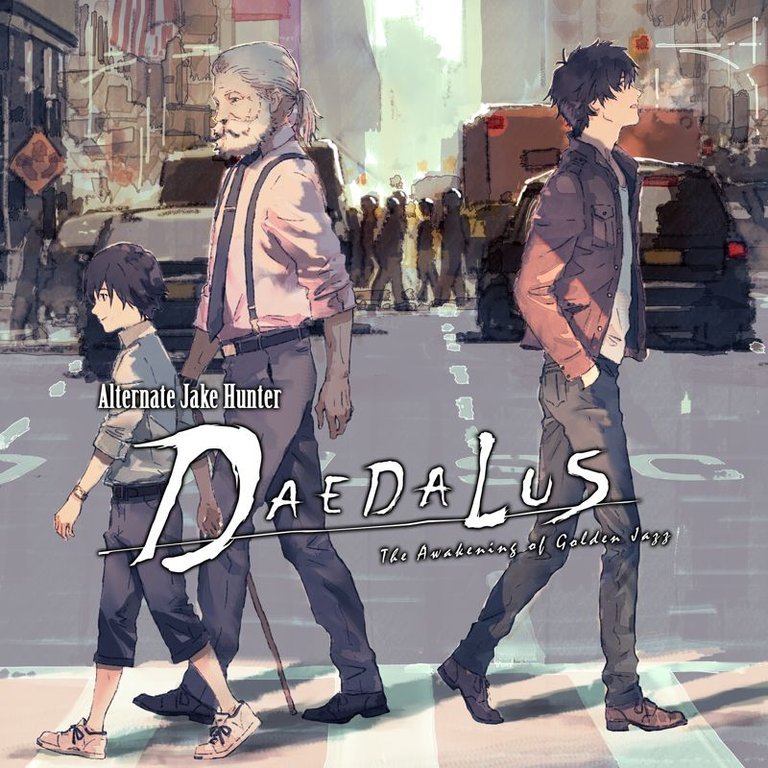
Alternate Jake Hunter: Daedalus – The Awakening of Golden Jazz is a prequel to the acclaimed Tantei Jingūji Saburō (Jake Hunter) detective series, presented as a first-person visual novel adventure blending puzzle-solving and narrative-driven mystery. Players embody the young detective Saburo Jinguji as he investigates the enigmatic ‘Awakening of Golden Jazz’ amid a noir atmosphere filled with intrigue, memorable characters, and jazz-inspired storytelling.
Gameplay Videos
Where to Buy Alternate Jake Hunter: Daedalus – The Awakening of Golden Jazz
PC
Alternate Jake Hunter: Daedalus – The Awakening of Golden Jazz Cracks & Fixes
Alternate Jake Hunter: Daedalus – The Awakening of Golden Jazz Reviews & Reception
purenintendo.com (60/100): While the mystery in Alternate Jake Hunter: DAEDALUS The Awakening of Golden Jazz is entertaining, the rhythm felt off with multiple lulls and heavy dialogue that hampered the experience of the story overall.
samanthalienhard.com : I like the idea [of freely rotating the camera to look around a 3D area and select an area to investigate].
seafoamgaming.com : this game, story focused as it is, really did not do it for me.
Alternate Jake Hunter: Daedalus – The Awakening of Golden Jazz: Review
Introduction
Imagine a young detective prodigy stepping off a plane in the neon haze of New York City, haunted by his grandfather’s dying whisper: “Daedalus.” This is the gripping hook of Alternate Jake Hunter: Daedalus – The Awakening of Golden Jazz, a prequel that peels back the layers of the iconic Tantei Jingūji Saburō (Jake Hunter) series, which has captivated Japanese audiences since 1987. As the origin story of Saburo Jinguji—reverting to his original Japanese name here after Western localizations anglicized him as Jake—this 2018 visual novel-adventure from Neilo Inc. and Arc System Works transplants the hard-boiled sleuth’s formative years into a moody, jazz-infused Manhattan mystery. Amid a landscape of filtered panoramas and philosophical mind games, it promises a fresh take on detective fiction. My thesis: While Daedalus masterfully evokes noir atmosphere and character depth through innovative presentation, its narrative brilliance is undermined by repetitive gameplay loops, uneven pacing, and localization hiccups, cementing it as a compelling but flawed gateway for series newcomers and a nostalgic treat for veterans.
Development History & Context
Daedalus emerged from a deliberate revival of the Tantei Jingūji Saburō franchise, a staple of Japanese adventure gaming spanning over 30 years and two dozen titles across platforms from NES to modern mobiles. Developed by Neilo Inc. and published by Arc System Works—fresh off acquiring the IP rights post-WorkJam’s 2011 closure—the game slotted between the 2012’s Fukushū no Rondo and the 2017 3DS remake Ghost of the Dusk. Director Takaomi Kaneko sought to overhaul the series’ stagnant DS-era mechanics, introducing 360-degree exploration and a “genius experience” to instill player accomplishment.
Writer Hirotaka Inaba, returning from the 1998 prequel Yume no Owari ni (to which Daedalus directly serves as a spiritual predecessor), pitched a New York-set origin tale after a rejected subplot in prior work. He argued NYC captured Jinguji’s “cool essence,” blending urban grit with jazz vibes. Development proved arduous; producer Yuda grappled with “extremely difficult” concepts like the mind orchard system. The title evolved wildly—some iterations omitted the detective name entirely—reflecting its spin-off ambiguity, as young Saburo isn’t yet a pro sleuth.
Launched December 13, 2018, in Japan for PS4 and Switch (Windows followed in 2019), it hit Western shores May 16, 2019, amid a visual novel boom but detective niche slump. Technological constraints favored static panoramas over full 3D, suiting the era’s hybrid VN-adventure trend (Danganronpa, Ace Attorney). In a market favoring fast-paced action, Daedalus leaned into deliberate, cerebral pacing, echoing classics like Sherlock Holmes games while innovating UI for modern consoles.
Narrative & Thematic Deep Dive
Plot Synopsis and Structure
Structured across chapters blending present-day investigation with childhood flashbacks, Daedalus chronicles Saburo Jinguji’s journey from orphaned teen to nascent detective. One month post-grandfather Kyosuke’s (a famed PI) New York murder—his last word: “Daedalus”—Saburo arrives in Manhattan, reuniting with camp friends Ben (goofy everyman), Abbie (sharp observer), and Leo (aloof mayor’s son). Flashbacks reveal Kyosuke’s deductive training (“tend the orchard of your mind”) and a childhood counselor disappearance, weaving personal growth into a conspiracy-laden murder probe involving “Daedalus”—a shadowy project tying corruption, old friendships, and betrayal.
Yoko Misono (Yulia Marks in prior localizations) debuts as a timid ally, hinting at future partnerships. Multiple endings hinge on “flags” from stance choices and quizzes, rewarding replay via chapter select—though no manual saves frustrate.
Character Analysis
Saburo (voiced by Yuichi Nakamura) evolves from naive youth to hard-boiled heir, his “mind orchard” symbolizing intellectual growth. Kyosuke looms as mentor-philosopher, imparting logic amid nostalgia. Supporting cast shines: Leo’s hidden depths culminate in twists (spoiler-free: his arc recontextualizes friendships); femme fatales like Olivia add noir seduction; suspects (Joshua, Hal, Melissa) embody Christie-esque misdirection. Dialogue probes morality, loss, and deduction’s toll—e.g., “Remember, Saburo: tend the orchard of your mind”—elevating beyond whodunits.
Themes: Noir, Memory, and Genesis
Thematically, Daedalus dissects origins amid decay: Saburo’s “awakening” mirrors jazz’s improvisational genius against NYC’s seedy underbelly (corrupt cops, hidden agendas). Memory as unreliable narrator critiques detection; flashbacks parallel adult cases, blurring past/present. It nods Chandler’s cynicism (femme fatales, moral ambiguity) and Christie’s logic puzzles, with Japanese twists—youthful pervy humor jars but humanizes. Pacing lulls early (telegraphed twists) but crescendos, rewarding patience with emotional payoff, though underdeveloped friendships dilute impact.
Gameplay Mechanics & Systems
Core Loops: Investigation and Dialogue
Hybrid VN-adventure eschews menus for 360-degree panoramas: Pan (WASD/mouse/stick/touch) real-photo backdrops (watercolor-filtered), zoom hotspots for 2D point-and-click. Exhaust objects/characters to unlock dialogue trees—not linear lists, but radial prompts requiring precision. Map-hopping advances chapters; hints mode highlights unexplored areas via “white flakes.”
Stance system innovates: Shift aggressive/submissive/neutral mid-talk, altering responses/outcomes (e.g., extract secrets or bad-end). Mind Orchard visualizes clues as a growing tree; chapter-end Elucidation quizzes link facts to deductions—errors retry, but flags affect endings.
Progression, UI, Strengths/Flaws
No combat/levels; progression is narrative-gated. UI refreshingly immersive (pan during talks), but flaws abound:
– Repetition: Re-examine objects post-dialogue; scenes reload with redundant narration (“I arrived at the supermarket”).
– Pacing Tedium: Backtracking sans log (dialogue only); obscure triggers (chat first, then inspect).
– Controls: Touch viable on Switch, but menu navigation erratic (non-intuitive directions).
Innovative (POV realism, quizzes foster “genius” feel), yet busywork-heavy—logical but grindy, alienating non-VN fans.
| Mechanic | Innovation | Flaw |
|---|---|---|
| 360° Pan | Immersive clue-hunting | Missable details loop |
| Stance Change | Dynamic dialogue | Subtle impacts confuse |
| Mind Orchard/Quizzes | Symbolic deduction | Retry leniency reduces tension |
| Chapter Replay | Ending hunting | No saves = full replays |
World-Building, Art & Sound
Setting and Atmosphere
Manhattan (bars, City Hall, camps) pulses noir: honking traffic, shadowy alleys evoke Chandler’s LA transplanted East. Silver Snow adds pastoral contrast; “Daedalus” unveils conspiratorial undercurrents, blending real landmarks (stylized) with fiction for lived-in grit.
Visual Direction
Panoramic artistry dazzles: 360° photos posterized/watercolored yield Monet-esque vibrancy, anime portraits overlay seamlessly (mostly)—though uncanny feet/perspective warps amuse/distract. Stiff animation (mouths/arms) and distant views mute expressions; mismatches (unwounded post-assault) break immersion. Switch holds up portably.
Sound Design
Jazz soundtrack awakens the title: piano/orchestral swells build tension, short loops repetitive but moody. Japanese VO (Nakamura, Fujimura et al.) adds gravitas—full-cast elevates drama—subtitled English. Ambient NYC noise immerses; music’s improvisational flair mirrors deduction.
Collectively, elements forge hypnotic noir, presentation trumping polish.
Reception & Legacy
Critical and Commercial Response
MobyGames aggregates 70% (14 critics): highs like Switch Effect’s 100% (“thrilling mystery, amazing soundtrack”) and Cubed3’s 90% (“best-written detective adventure this gen”) praise narrative/art; lows include Seafoam Gaming’s 40% (“lackluster story, obvious culprits”) and eShopper’s 42% (“atrocious pacing”). Famitsu lauded (31/40); IGN Japan slammed (4/10: bland story/visuals). Steam: Mostly Negative (34%, 43 reviews)—pacing/translation gripes. Switch ranks #1,557; niche sales, but $4.79 Steam price aids accessibility.
Evolving Reputation and Influence
Lauded for series revival, origins-filling (pre-Yume no Owari ni), but Western inconsistency (names/settings) confuses. Influences VN-detectives (Paranormasight echoes quizzes); panoramas inspire hybrids. Legacy: Cult prequel bridging 30-year saga to modern era, urging Prism of Eyes localization. Niche endurance via ports/remakes.
Conclusion
Alternate Jake Hunter: Daedalus – The Awakening of Golden Jazz tantalizes with noir poetry—a jazz-suffused origin etching Saburo’s genius amid NYC shadows—bolstered by panoramic immersion and thematic depth. Yet repetition, pacing drags, and rough edges (translation, UI) temper its shine, suiting patient VN fans over casuals. As video game history’s node, it revitalizes a 1987 legend, earning 7/10: Essential for Jake Hunter faithful, intriguing primer for mystery buffs, but demanding tolerance for its deliberate flaws. In gaming’s detective pantheon, Daedalus awakens potential, if not perfection—tend your mind’s orchard wisely.