
- Release Year: 2003
- Platforms: Windows
- Publisher: Digital-XL
- Developer: Engine Software B.V.
- Genre: Driving, Racing, Simulation
- Perspective: 1st-person
- Game Mode: LAN, Online PVP, Single-player
- Gameplay: Character customization, Time Trial, Track racing, Vehicle simulation
- Setting: Indoor kart tracks
Description
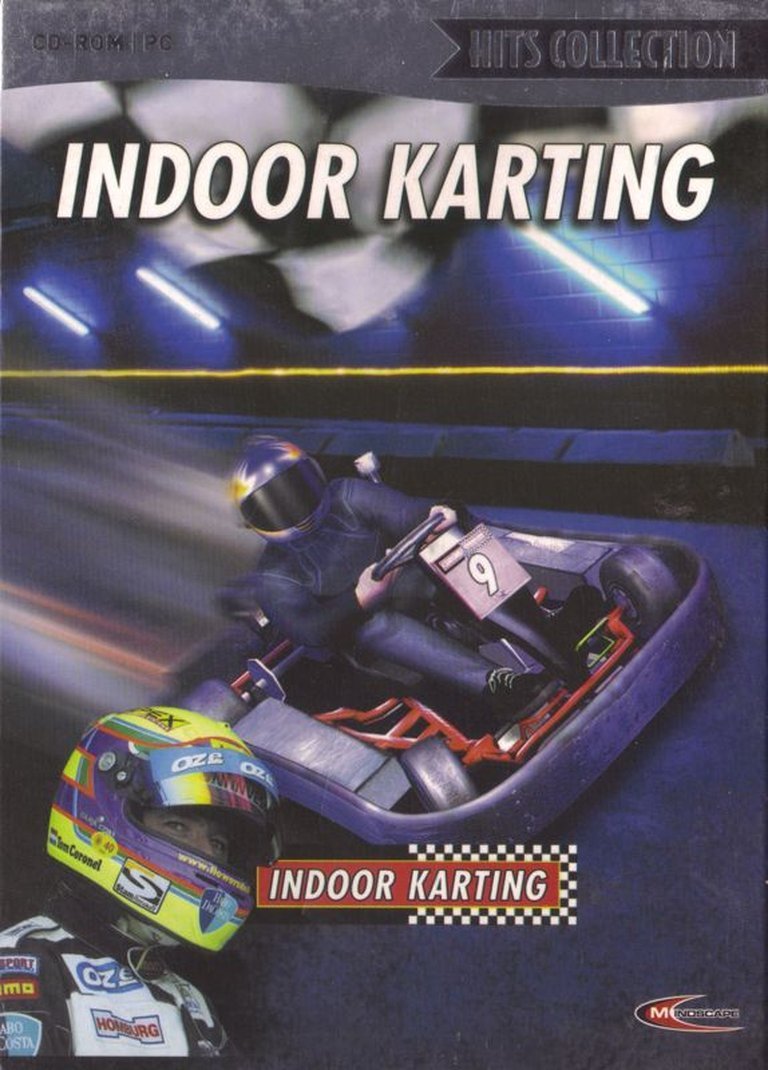
Coronel Indoor Kartracing is a realistic karting simulation inspired by the indoor kart tracks of renowned Dutch racing driver Tom Coronel, featuring precise replicas of famous circuits like Francorchamps, Le Mans, Monaco, and Suzuka. Aimed at dedicated karting fans, the game emphasizes achieving the fastest lap time within a fixed heat duration rather than simply finishing first, with modes including Single Race, Tournaments (A and B), Time Trial, and multiplayer over LAN/Internet, plus customizable characters, various kart models, interactive 3D menus, and unlockable tracks via tournament victories.
Gameplay Videos
Coronel Indoor Kartracing Free Download
Coronel Indoor Kartracing Cracks & Fixes
Coronel Indoor Kartracing Patches & Updates
Coronel Indoor Kartracing Mods
Coronel Indoor Kartracing: Review
Introduction
Imagine hurtling through a pixel-perfect replica of Suzuka’s Spoon Curve in a snarling go-kart, not chasing a checkered flag, but battling an unyielding timer for the single perfect lap. Released in 2003, Coronel Indoor Kartracing—a licensed simulation tied to Dutch racing icon Tom Coronel’s real-world indoor kart tracks—eschews the chaotic wheel-to-wheel brawls of mainstream racers for a laser-focused purity. In an era dominated by arcade thrills like Need for Speed Underground and sim heavyweights like Gran Turismo 4, this unassuming Windows title carves a niche for karting purists. Its legacy? A forgotten artifact of early-2000s European indie development, preserved on abandonware sites and evoking nostalgia for the golden age of track-day simulations. My thesis: Coronel Indoor Kartracing endures not as a blockbuster, but as a testament to simulation design’s core ethos—precision over spectacle—rewarding mastery with addictive, time-attack depth that still resonates in modern retro circles.
Development History & Context
Engine Software B.V., a modest Dutch studio founded in the late 1990s, helmed Coronel Indoor Kartracing under the publishing wing of Digital-XL, another Netherlands-based outfit specializing in localized sports titles. The project’s vision crystallized around Tom Coronel, a real-life touring car ace and twin brother of Tim Coronel, whose family-run indoor karting empire in Holland provided the authentic backbone. Executive Producer Ruud van de Moosdijk—also handling art, storyboarding, and intro editing—orchestrated a 30-person team (23 developers, 7 thanks), with Jeroen Schmitz pulling double duty as Producer and Lead Programmer, overseeing UI, multiplayer, and core logic. Specialists like Jan-Lieuwe Koopmans (AI), Thom Zwagers and Han Monsees (physics subprogramming), and 3D modelers Marco Willemsen (tracks) and Arjen van Haren (objects/UI) infused the game with technical rigor.
Launched on September 18, 2003, for Windows CD-ROM amid a post-GTA Vice City boom, the game grappled with era-specific constraints: DirectX 8.1 dependency, Pentium III 500 MHz minimum (64MB RAM, 32MB VRAM), and 16x CD-ROM speeds. This was the twilight of hardware-limited PC gaming, pre-Half-Life 2‘s Source engine revolution, where sim racers like Richard Burns Rally (2004) emphasized realism via bespoke physics. Coronel‘s indoor karting angle differentiated it from F1 sims (F1 Career Challenge) or arcade karts (Mario Kart: Double Dash!!), targeting “true karting fans” via licensed tracks from Coronel’s venues—replicas of Spa-Francorchamps, Le Mans, Monaco, and Suzuka adapted for tight, indoor-style circuits. Multiplayer (LAN/Internet) nodded to burgeoning online play, while modest scope reflected indie budgets: no voice acting, basic assets, yet innovative heattime mechanics born from real karting’s qualifying heats.
The 2003 landscape? PC racing splintered between hyper-real sims (NASCAR SimRacing) and arcadey romps (FlatOut), with karting underserved beyond V-Rally. Engine Software’s prior works (uncredited here but linked via MobyGames to titles like StateShift) honed their chops in vehicle sims, making Coronel a passion project leveraging local motorsport fame amid Europe’s grassroots racing scene.
Narrative & Thematic Deep Dive
Coronel Indoor Kartracing forgoes overt storytelling for emergent narrative through progression and personalization, embodying themes of dedication, precision, and motorsport meritocracy. No scripted plot or voiced characters exist; instead, you’re thrust into Tom Coronel’s world as a customizable avatar—clothing, helmet, and name tailored via an interactive 3D menu. This “racer-builder” fosters role-playing: craft “Jasper Schikhof” (a credited driver) homage or your alias, etching a personal legend into the Hall of Fame.
Thematically, it champions karting purism over casual racing. Official descriptions hammer: “aimed at the true karting fans… Races are not about finishing first but about racing the fastest lap time.” Tournaments A and B form a loose arc—rookie heats to championship glory—unlocking bonus tracks as “milestones of mastery.” Dialogue is absent, but implied lore permeates: tracks homage F1 legends (Francorchamps’ Eau Rouge, Suzuka’s 130R) shrunk to indoor fury, symbolizing accessible excellence. Drivers like credited performers (Bart Roijmans, Ralph Hellburg) add meta-authenticity, blurring sim and reality.
Undercurrents explore competition’s solitude: heattime format isolates you against the clock/AI laps, mirroring karting’s introspective grind. Progression from Single Race trial-and-error to Multiplayer rivalry evokes rising through ranks, with Hall of Fame as eternal scorecard. Flaws? Minimal depth—no rival backstories or career mode—renders it vignette-like, yet this restraint amplifies its thesis: in karting, your lap is the story.
Gameplay Mechanics & Systems
At its core, Coronel Indoor Kartracing redefines racing loops around heattime victories: fixed-duration races where fastest lap crowns the winner, demanding apex perfection over positioning chaos. Core loop—select mode/kart/track, launch, iterate laps—thrives on replayability, with physics (Zwagers/Monsees) simulating kart grip, suspension, and tire wear for realistic slides.
Modes Breakdown:
– Single Race: Instant gratification; test karts (varied models for handling tweaks) on four base tracks.
– Time Trial: Pure leaderboard assault, ghost laps implied for benchmarking.
– Tournaments A/B: Progression gates; conquer to unlock extras, gating content meritocratically.
– Multiplayer (LAN/Internet): Peer heattimes foster rivalry, with Hall of Fame syncing scores.
Systems Excellence/Flaws:
– Physics/Vehicle Handling: Subtle differentiations (kart models affect accel/braking) reward experimentation; behind-view/1st-person toggles aid line-hunting.
– Progression: Unlockables extend longevity without grind.
– UI/Controls: Interactive 3D menu shines—navigate helmets/karts fluidly—but keyboard/”other” inputs (joypads/steering wheels per Archive.org) feel dated sans remapping. PCGamingWiki notes widescreen fixes for modernity.
– Innovations: Heattime flips genre norms, prefiguring TrackMania‘s time attacks; customization adds ownership.
– Flaws: AI programmers (Koopmans) yield competent but predictable foes; no dynamic weather/traffic limits spectacle.
Input supports keyboard/joystick, with stable 60 FPS cap. Loop addictiveness peaks in lap-shaving: tenths matter, evoking sim purity.
World-Building, Art & Sound
Settings fuse real-world reverence with indoor intimacy: Francorchamps, Le Mans, Monaco, Suzuka miniaturized for kart-scale, retaining kerbs, chicanes, and straights under artificial lights. Atmosphere evokes Coronel’s Dutch tracks—claustrophobic pits, humming fluorescents—building immersion via fidelity (Willemsen’s track models, van Haren’s objects). No open world; tracks are self-contained arenas, heightening tension.
Visual Direction: Early-2000s 3D—crisp textures, dynamic lighting (pit shadows), customizable liveries/helmets (Roijmans/van de Moosdijk art). Cameras (chase/cockpit) emphasize lean/rotation; particles modest, prioritizing framerate. Retro Replay praises “meticulous recreations,” stable in multiplayer.
Sound Design: Undocumented deeply, but inferred engine snarls, tire squeals, and ambient track hums align with sim ethos. No orchestral score; functional effects underscore precision—no bombast distracts from lap times. Contributions amplify tension: intro movie (van de Moosdijk edit) sets tone, multiplayer chatter implied via LAN.
Collectively, elements forge clinical authenticity—viscerals serve simulation, not flash—immersing purists in karting’s raw pulse.
Reception & Legacy
Launch reception? Meteoric obscurity. No Metacritic critics; MobyGames logs 2.9/5 from two player ratings (zero reviews), MyAbandonware’s 5/5 (four votes) anecdotal. Dutch/French releases (2005/2006) yielded no buzz amid Colin McRae Rally 04 dominance. Commercial? Niche sales via CD-ROM, forgotten post-patchless life.
Reputation evolved via preservation: MobyGames (added 2003 by van de Moosdijk), Archive.org ISO, MyAbandonware downloads. PCGamingWiki mods (widescreen/FOV) revive it on Win10+. Influence? Subtle—prefigures KartKraft‘s lap-focus, bolsters go-kart genre (cf. Indoor Kart Racing 2005). Team’s diaspora (Roijmans 52+ games, Koopmans 46+) seeded broader sims. Legacy: abandonware cult classic, symbolizing indie sims’ ephemerality; six MobyGames collectors affirm quiet endurance.
Conclusion
Coronel Indoor Kartracing distills karting to essence: heattime mastery on iconic tracks, customization-fueled progression, multiplayer ladders. Strengths—innovative mechanics, authentic physics, purist focus—outweigh dated visuals/UI, cementing it as 2003’s unsung sim. Flaws (sparse content, no reviews) relegate it to obscurity, yet retro fixes breathe life. Verdict: 7.5/10—niche masterpiece for sim aficionados, a historical footnote rewarding rediscovery. In video game history, it claims space as European indie’s precision pinnacle, whispering “lap times over trophies” to eternity’s Hall of Fame.