
- Release Year: 2018
- Platforms: Windows
- Publisher: Luzstardom
- Developer: Luzstardom
- Genre: Adventure
- Perspective: 1st-person
- Game Mode: Single-player
- Gameplay: Visual novel
- Average Score: 74/100
Description
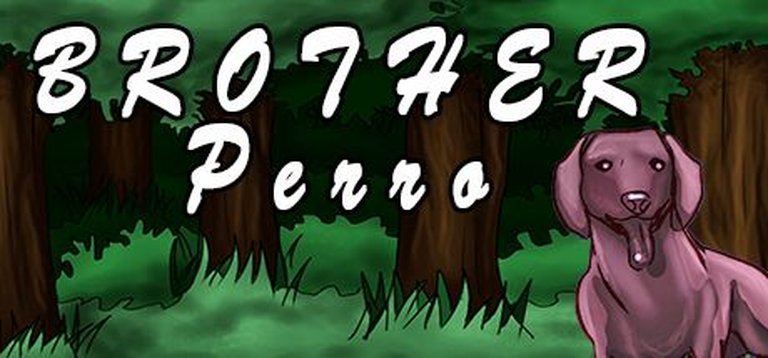
Brother Perro is a linear visual novel blending mystery, thriller, and supernatural elements, where players control ‘P.’, a enigmatic character awakened by their mother to go to school only to discover everyone in the house has vanished except for their friend Toronto, the untrustworthy dog. Set within a dream-like, eerie household environment, the game unfolds in first-person perspective as players explore, make choices, and uncover the truth behind the haunting events over 1-2 hours of gameplay.
Gameplay Videos
Where to Buy Brother Perro
PC
Brother Perro Reviews & Reception
steambase.io (74/100): Mostly Positive
store.steampowered.com (74/100): Mostly Positive
Brother Perro: Review
Introduction
Imagine waking up to your mother’s voice urging you to school, only to find your home eerily empty—save for a single companion who may not be what they seem. This disorienting premise hooks you immediately in Brother Perro, a 2018 free-to-play visual novel that lingers like a half-remembered nightmare. Developed and published by the obscure Brazilian studio Luzstardom, this bite-sized indie title has flown under the radar, collected by just a dozen players on MobyGames and amassing only 50 Steam reviews. Yet, in an era dominated by sprawling epics, its 1-2 hour runtime delivers a potent cocktail of mystery, psychological horror, and supernatural unease. My thesis: Brother Perro is a flawed but fascinating artifact of the late-2010s visual novel boom, excelling in atmospheric dread and thematic ambiguity but stumbling on narrative clarity, cementing it as a cult curiosity rather than a genre-defining masterpiece.
Development History & Context
Luzstardom, a one-person or micro-team operation likely helmed by a Brazilian developer (given the Portuguese-Brazil localization), entered the scene in 2018 with Brother Perro—their apparent debut, built using the accessible Visual Novel Maker engine. Released on April 26, 2018, exclusively for Windows via Steam at no cost, it targeted the burgeoning free-to-play indie market amid Steam’s algorithm favoring low-barrier discoveries. The mid-2010s indie explosion—fueled by tools like Ren’Py and Visual Novel Maker—saw a flood of short-form VNs tackling psychological horror, from Doki Doki Literature Club (2017) to Yume Nikki clones. Brother Perro fits snugly here, constrained by modest specs (1280×720 resolution, Pentium 4 minimum, 512MB RAM) that evoked early-2000s tech, prioritizing narrative delivery over graphical fidelity.
The gaming landscape was shifting: Steam’s free-to-play model exploded post-Dota 2 and Team Fortress 2, enabling passion projects like this. Luzstardom’s vision, per the Steam blurb, was a “linear visual novel with elements of mystery, thriller, and supernatural,” clocking in at 1-2 hours—perfect for impulse plays. No patches beyond a minor June 2018 update suggest a barebones production, possibly a solo effort amid Brazil’s growing indie scene (e.g., Dandara in 2018). Technological limits amplified its dreamlike haze: menu-driven interfaces and static scenes forced reliance on text and implication, mirroring the era’s VN renaissance where accessibility trumped AAA polish.
Narrative & Thematic Deep Dive
Brother Perro‘s story unfolds in fragmented, first-person whispers, centering on protagonist ‘P.’, a mystery figure roused by his mother for school. The house is abandoned—family vanished, reality fracturing into a ‘dream’ laced with supernatural dread. Only Toronto remains, a friend (or is he?) blamed via the accusatory opener: “Why all of this is happening? That’s all your fault, Toronto.” Exploration reveals clues: an accident, graves, identities blurring. Steam discussions pierce the fog—Pedro (Peter? Perro?) dies in a crash, with Alan visiting his grave in the finale. “Pedro, Peter, and Perro are the same person,” one player clarifies, positioning P./Pedro as a guilt-ridden specter trapped in limbo.
Plot Breakdown
The linear path—menu choices navigating rooms—builds dread incrementally:
– Act 1: Awakening and Absence. Mother’s voice fades; rooms echo with normalcy turned sinister. Toronto’s presence offers uneasy alliance.
– Act 2: Unraveling Mystery. Clues hint at tragedy—perhaps a car accident claiming Pedro. Supernatural creeps in: shifting perspectives, accusatory notes. Toronto, revealed as “the dog” (Perro=Spanish/Portuguese for dog), embodies betrayal. Themes of fractured identity emerge—P. as Pedro’s ghost?
– Act 3: Revelation and Escape. The ‘dream’ shatters; Alan (survivor?) mourns at Pedro’s grave. Ambiguity reigns: Was Toronto a manifestation of guilt? A malevolent entity? Dialogue is sparse, poetic, laced with Portuguese inflections, evoking unreliable narration.
Characters
– P./Pedro/Perro: Amnesiac everyman, his multiplicity (human/dog) probes identity and reincarnation.
– Toronto: Enigmatic companion—loyal friend or deceptive canine spirit? “Who to trust? Apparently, not the dog” subverts pet tropes.
– Mother/Family: Spectral absences fueling paranoia.
– Alan: Epilogue anchor, humanizing loss.
Themes
Guilt permeates: Toronto’s fault-line indicts companionship’s dark side. Psychological horror via gaslighting—dream vs. reality blurs into dissociation. Supernatural dogs (VNDB tag: Dogs 2.0) symbolize fidelity/betrayal, nodding Latin American folklore. Thriller pacing falters in confusion—players lament “I did not understand anything”—but this opacity invites replays, thematizing trauma’s elusiveness. Dialogue shines in brevity: fragmented, haunting, prioritizing mood over exposition.
Gameplay Mechanics & Systems
As a pure visual novel, Brother Perro eschews action for interaction: menu structures drive progression, with 1st-person exploration limited to house navigation. Core loop—read, choose, advance—is taut, 1-hour average playtime (VNDB: 1h 1m) ensuring no bloat.
Core Loops
– Exploration: Click hotspots in rooms (kitchen, bedroom) for dialogue triggers/clues. No inventory; progression is narrative-gated.
– Choices: Branching illusory—linear path masks replay for missed details.
– Progression: None traditional; ‘character growth’ via revelations. No combat, fitting detective/mystery narrative.
Innovations & Flaws
Visual Novel Maker yields crisp menus but dated UI—static sprites, auto-advance text. Resolution caps immersion on modern screens. Pacing excels: short bursts build tension without fatigue. Flaws: opacity frustrates—endings lack closure, alienating casuals. No achievements/save system hampers analysis. Strengths: psychological choices (trust Toronto?) heighten paranoia, innovative for free VN.
| Mechanic | Strength | Weakness |
|---|---|---|
| Exploration | Intuitive hotspotting | Limited scope (house-only) |
| Dialogue | Atmospheric delivery | Sparse, confusing |
| Pacing | Perfect 1-2h length | No replay hooks beyond ambiguity |
| UI | Clean menus | Low-res visuals |
World-Building, Art & Sound
Confined to a single house, Brother Perro‘s world is intimate claustrophobia incarnate—every creak, shadow amplifying isolation. Atmosphere: dreamlogic warps familiarity into horror, supernatural whispers bleeding reality.
Visual Direction
1280×720 sprites evoke early VN era: muted palettes (grays, sickly yellows) for unease. Static art—family photos, Toronto’s looming form—relies on composition. Dog motifs recur, blurring human/animal. Simple but effective; low-fi aesthetic enhances ‘dream.’
Sound Design
Full English audio (voices?) pairs subtitles in English/Portuguese-Brazil. Ambient drones, distant echoes craft tension—no bombast, just subtlety. Mother’s wake-up call lingers hauntingly. Sound sparse, amplifying silence’s terror—supernatural chills via implication.
These elements synergize: visuals unsettle, sound haunts, forging psychological immersion disproportionate to scope.
Reception & Legacy
Launch reception: “Mostly Positive” on Steam (74% of 50 reviews, 37 positive/13 negative)—praise for brevity/mystery, gripes over confusion (“so confusing… did not understand”). No MobyScore/critic reviews (Metacritic/MobyGames blanks); VNDB’s 4.50/10 (4 votes) reflects niche appeal. Commercial: Free, ~206K estimated owners (PlayTracker), peak concurrent low—cult status.
Evolution
Post-2018: Discussions persist (e.g., 2018 Steam thread decoding plot), fostering theorizing. No sequels, but Luzstardom’s site hints ambition. Influence: Marginal—echoes in short horror VNs (My Brother Rabbit, 2018)—but exemplifies free indie VNs democratizing psychological tales. In history: Footnote in 2018’s free-to-play surge, predating viral shorts like Iron Lung.
Conclusion
Brother Perro distills visual novel essence into a 1-2 hour enigma: masterful atmosphere, daring ambiguity, but narrative opacity risks alienating. Luzstardom crafts a free gem rewarding patient unravelers, its dogged mystery etching a peculiar niche. Verdict: Essential for VN historians and horror aficionados—8/10, a haunting obscurity reclaiming its place in indie canon. Download it; the dream awaits.