
- Release Year: 2015
- Platforms: Linux, Macintosh, Windows
- Genre: Adventure
- Perspective: 1st-person
- Game Mode: Single-player
- Gameplay: Multiple endings, Visual novel
- Average Score: 93/100
Description
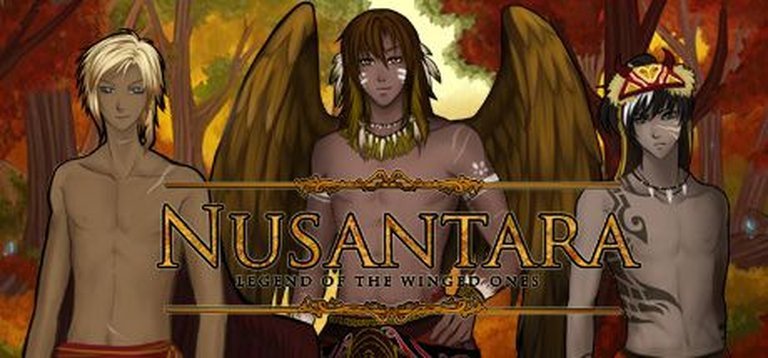
Nusantara: Legend of the Winged Ones is an otome visual novel set in a mythical world of ancient folklore, where a strong, independent human girl uncovers the forgotten legend of humans with wings and skin tougher than steel. Stemming from the Goddess’s Blue Crystal—a dual blessing and curse—the story unfolds through branching dialogues, romance with three love interests (Mitra, Rama, Reksa), comedy, adventure, and six endings amid themes of birth, death, peace, war, and love.
Gameplay Videos
Where to Buy Nusantara: Legend of The Winged Ones
PC
Nusantara: Legend of The Winged Ones Guides & Walkthroughs
Nusantara: Legend of The Winged Ones Reviews & Reception
steambase.io (95/100): Player Score of 95 / 100… rating of Positive.
store.steampowered.com (91/100): 91% of the 24 user reviews for this game are positive.
sweetchiel.itch.io (94/100): Rated 4.7 out of 5 stars.
Nusantara: Legend of The Winged Ones: Review
Introduction
In a genre dominated by Japanese-inspired tales of schoolgirls and supernatural suitors, Nusantara: Legend of The Winged Ones soars in like a Javan Hawk-Eagle, blending ancient Indonesian folklore with the intimate romance of otome visual novels. Released in 2015 by solo Indonesian developer Cecilia Sabrina Susanto (aka SweetChiel), this free-to-play gem catapults protagonist Tamara Kurniawan into a prehistoric world of winged Avians and reptilian Komodos, locked in a war that threatens humanity’s very origins. What begins as a desperate escape from modern despair evolves into a tapestry of love, loss, and cultural revival. Amidst flashing lights, blood-soaked rituals, and whispers of suicide, Nusantara dares to ask: Can one human girl broker peace between mythical tribes, or will romance rewrite history? My thesis: This ambitious debut not only pioneers Southeast Asian representation in visual novels but endures as a heartfelt cult classic, its flaws forgiven for its passionate fusion of fantasy, comedy, and cultural authenticity.
Development History & Context
SweetChiel’s journey into game dev epitomizes indie grit. A self-taught artist and writer from Indonesia, Cecilia crafted Nusantara as her first visual novel, initially using the Novelty engine before migrating to the more robust Ren’Py for broader compatibility (Windows, Mac, Linux). Launched December 13, 2015, on itch.io as a “name-your-price” title—with a soundtrack DLC at $9.99—it later hit Steam in 2018 for $4.99, adding achievements and script polish based on player feedback. Credits list 50 contributors, but Cecilia handled artwork, script, and core design solo, sourcing royalty-free sound effects from sites like Freesound.org and crediting a global chorus of audio artists.
The 2010s indie VN scene was exploding via itch.io and Lemma Soft forums, fueled by Ren’Py’s accessibility. Otome games, often Japanese imports, rarely ventured beyond anime aesthetics; Nusantara bucked this with Indonesian roots amid a sparse local scene. Technological constraints loomed large: early versions suffered GUI glitches, persistent file bugs (locking good endings like Reksa’s), and Mac compatibility woes post-Catalina. The gaming landscape? Mobile dominance and AAA blockbusters overshadowed short VNs, but platforms like Steam Greenlight democratized releases. SweetChiel’s vision—infusing Nusantara (archipelagic Indonesia) mythology like Bali’s Omed-Omedan ritual and Flores’ Caci dance—responded to Western otome fatigue, offering fresh tribal romance. Updates through 2020 (e.g., Steam port, soundtrack pack) reflect ongoing iteration, birthing sequels like Nusantara: Bermuda Triangle (2024).
Narrative & Thematic Deep Dive
Plot Overview
Tamara, a 19-year-old Indonesian girl with blunt bangs and a ponytail, spirals into despair after personal losses. A goddess’s servant thrusts her via a blue crystal into prehistory, tasking her with averting Avians-Komodos war to save humanity (Avians as human ancestors). Stranded in Loma Village (Avian treetop haven), she navigates tribal politics, budding romances, and time-loop paradoxes.
Core Characters
- Tamara Kurniawan: No damsel—sarcastic, independent, quick to learn the tribal tongue (via latent Indonesian roots). Her “density about herself” sparks comedy, but resilience shines in crises.
- Mitra (22, brown-haired leader, Javan Hawk-Eagle motif): Kind protector, scarred warrior. His route: Fluffy romance, gentlemanly courtship (feather gifts, cooking).
- Rama (20, blond carefree mask, Cenderawasih bird motif): Trauma-haunted by lost love Ayu; distrustful, suicidal tendencies. Hardest route—demands exclusive focus; explores grief, forgiveness.
- Reksa (20, black-white haired Komodo warrior): Distrustful tsundere, protective growler. Fan-favorite for angst-steam balance; tattooed, whip-wielding underdog vs. father Chief Silva.
Side cast enriches: Arrogant Purba (Komodo antagonist), kids like Dani (comic relief). Six endings (good/bad per LI) hinge on affection, with cross-route consequences (e.g., unsaved Rama suicides).
Themes
Nusantara weaves birth/death cycles (crystal’s blessing/curse), war vs. peace (tribal rituals symbolize goodwill turned brutal), and love as salvation (romance heals divides). Indonesian depth shines: Avian treehouses evoke Bali, Komodo whips nod Manggarai Caci (friendship dance twisted warlike). Mini-encyclopedia unlocks lore (e.g., Rama’s Papua batik). Dark undertones—suicide loops, depression—contrast comedy, probing cultural taboos. Time-multiverse theory (clarified in Bermuda) resolves paradoxes: Tamara’s interventions spawn loops preserving humanity. Critiques? Juvenile dialogue occasionally undercuts gravity; Rama’s wall persists even in good ends.
Gameplay Mechanics & Systems
As a Ren’Py visual novel, core loop is read-choose-branch: 1st-person perspective, anime-style art, point-and-click menus. Branching dialogue (visit LI? Lie for Reksa?) builds affection flags, unlocking 20+ CGs across routes. Recommended order: Mitra (easy intro), Rama (lore build), Reksa (climax).
| Mechanic | Strengths | Flaws |
|---|---|---|
| Choices | Exclusive LI focus yields good ends; bad ends add replay (e.g., Reksa rejects without pink crystal). | Limited “real” agency—early choices illusory; main plot rails rigid, devolving to skippable filler post-Mitra. |
| Progression | Encyclopedia rewards curiosity; CG gallery, autosave. | Bugs (persistent files lock Reksa good end); basic GUI mismatches art. |
| UI/Controls | Intuitive skip/fast-forward; Steam achievements (route unlocks). | Draggy non-LI scenes; no robust save states early on. |
Innovations: Culture-integrated progression (learn rituals via Tamara). Flaws stem from solo dev—replay value high (9h total), but demands walkthroughs (Lemma Soft forums).
World-Building, Art & Sound
Nusantara’s realm mesmerizes: Loma’s Bali-inspired treetops clash Komodo’s Flores-esque scarred villages amid jungles teeming Indonesian fauna (Komodo dragons, eagles). Atmosphere: Tense war simmers under rituals—Omed-Omedan water fights turn courtship; Caci whips symbolize honor/brutality. Visuals contribute immersion: Cecilia’s anime-manga style (dark-skinned LIs, wings/tattoos) boasts dynamic CGs (Reksa’s nuzzling steals hearts). Sprites roughen intentionally (Rama’s “prune” unkemptness mirrors psyche), but inconsistencies (smudges) show polish limits. 20+ CGs reward routes.
Sound elevates: Royalty-free OST (pleasant menu loops, tense battles) pairs tribal percussion with fantasy whimsy. Effects (whip cracks, wing flutters) from global sources enhance; credits song ethereal yet lyrics-obscured. Flaws: No voice acting; some tracks forgettable. Collectively, elements forge a vibrant, respectful homage—players rave “Indonesian aesthetic drew me in.”
Reception & Legacy
Launch reception: Itch.io 4.7/5 (601 ratings)—fans gush Reksa (“hot tsundere”), world-building (“cured boredom”); critiques hit choices (“lack real agency”), bugs. Steam: 91% positive (24 reviews), praising uniqueness (“insanely good”). No MobyGames scores; VNDB tags it short otome (9h). Commercial? Modest—free itch.io thrives via passion; Steam sustains via sequels.
Evolution: Cult following endures (replays years later); devs active in comments, fixing bugs. Influence: Pioneers Indonesian otome amid Western/Japanese dominance—inspires fanfic (Harry Potter crossovers), boosts cultural VNs. Nusantara series expands (Bermuda 2024, cameos Tamara’s LIs); Saving Grace teased. Industry ripple: Validates solo Ren’Py devs blending folklore (e.g., tribal honor clashes echo global indies).
Conclusion
Nusantara: Legend of The Winged Ones is no flawless epic—juvenile quips, rigid rails, and tech hiccups mar its shine—but SweetChiel’s soulful debut transcends. Tamara’s odyssey, laced with batik motifs and Caci whips, delivers fluffy tsundere heat (Reksa reigns), gut-wrenching angst (Rama’s scars), and cultural revelation amid time-warped romance. Its legacy? A beacon for underrepresented voices, proving indie otome can enchant globally. Definitive verdict: Essential for folklore fans; 8.5/10 in VN history—a winged legend that refuses to fade. Play Mitra-Rama-Reksa order; savor the encyclopedia. SweetChiel’s heart soars eternal.