
- Release Year: 2007
- Platforms: Windows
- Publisher: FreshGames, LLC
- Developer: Custom Red Software AB, FreshGames, LLC
- Genre: Puzzle, Tile matching puzzle
- Perspective: Side view
- Game Mode: Single-player
- Gameplay: Falling block puzzle, Tile matching puzzle
- Average Score: 100/100
Description
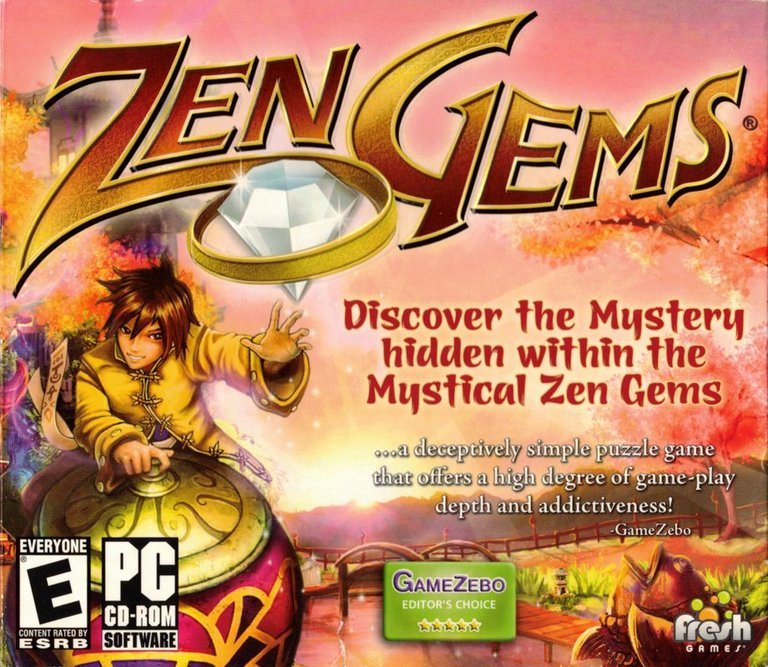
ZenGems is an addictive Asian-themed color-matching puzzle game where players use a mouse-controlled ball shooter to fire spheres into a grid, forming groups of three or more matching colors to clear obstacles, jewels, and power-ups before they reach the top. Featuring three modes—Arcade, where you battle rising water; Adventure, following boy Hoshiko as he retrieves stolen medallions of virtue hidden in puzzles by magician thieves; and Strategy, an endless survival challenge—the game blends familiar tile-matching mechanics with unique twists like fireballs, ColorBursts, and energy balls.
ZenGems Reviews & Reception
retro-replay.com : ZenGems strikes a satisfying balance between relaxed puzzle solving and nail-biting urgency.
gamezebo.com : a simple yet addictive Asian-themed puzzle game from FreshGames, happens to be a particularly spectacular example.
ZenGems: Review
Introduction
In the golden age of casual gaming, when match-three puzzles like Bejeweled and Tetris-inspired clones dominated browser portals and shareware downloads, ZenGems emerged as a radiant gem—pun fully intended. Released on August 9, 2007, by FreshGames, this unassuming Windows title transformed the rote act of sphere-matching into a symphony of strategic depth, mythical storytelling, and power-up pandemonium. Drawing inspiration from Hayao Miyazaki’s Spirited Away, it crafts a mythical Asian world that feels both intimately familiar and refreshingly original. As a historian of video games, I see ZenGems not merely as a product of its era but as a pinnacle of puzzle innovation, proving that even in a saturated genre, creativity could shatter expectations like a plummeting jewel. My thesis: ZenGems endures as a masterclass in casual design, marrying addictive mechanics with thematic enlightenment to elevate match-three from diversion to transcendent experience.
Development History & Context
ZenGems was born from FreshGames, LLC—a nimble studio helmed by Executive Producer Stephan Smith—seeking to crack the code of “familiar yet unique” casual gaming amid the mid-2000s boom. The casual market was exploding: portals like Gamezebo, Big Fish Games, and PopCap’s empire were flooding PCs with accessible downloads, capitalizing on post-Tetris puzzle mania and the shareware model’s freemium allure. By 2007, the industry had recovered from the early 1980s crash, with PC gaming thriving via broadband and CD-ROMs, while consoles like the Wii hinted at broader casual appeal. Yet puzzles reigned supreme on desktops, where quick sessions fit harried lives.
Development spanned a luxurious couple of years—far longer than the typical months-long casual sprint—due to a custom engine build and meticulous level tuning. Custom Red Software AB handled programming, while FreshGames managed production under Kevin McCann and QA lead Marlon Lawson. A dream team of level designers converged: Lee Krasnow, Andreas Aronsson, Jimmy Öman, Marlon Lawson, and notably Hal Barwood, the LucasArts legend behind Star Wars and Indiana Jones adventures. Barwood’s narrative chops infused puzzles with purpose. Art came from Charles Hailstones and Gameport, evoking watercolor whimsy; audio from Studio X Labs, Somatone Interactive Audio, and Reflective Audio.
Smith’s vision crystallized around reinventing match-three: not just grouping gems, but toppling diamonds via physics and power-ups. The PusherBall—a curved-arrow sphere that shoves rows sideways—sparked intense iteration, requiring three major tweaks after beta feedback. Levels (nearly 200 across 13 worlds) took months to balance, as the team avoided clichés like Mayan or Egyptian tropes, opting for a “cliché-free enlightenment” theme inspired by Miyazaki. Technological constraints were minimal—mouse/keyboard input on Windows suited the fixed/flip-screen grid—but the era’s Flash-heavy casual scene demanded polish to stand out as shareware. Beta testers like Susan Keiser and Tina Smith refined it, ensuring semi-intuitive appeal. Scriptwriters Andrew Todhunter, Sean Patrick Fannon, Tommy Tordsson Björk, Edward Lee Murray, and Susan Swinford wove a light story, positioning ZenGems as a bridge between arcade simplicity and adventure depth.
Narrative & Thematic Deep Dive
ZenGems‘ narrative shines brightest in Adventure mode, the sole story-driven pillar amid its puzzle triptych. Young hero Hoshiko, aided by his wise grandfather, embarks on a quest to reclaim the stolen Medallions of Virtue from the mischievous Yama-O-Rakas—magician thieves who’ve concealed the artifacts’ pieces within devious grids. Each temple puzzle, once cleared of spheres, yields a golden fragment, progressively filling the medallion’s silhouette in a satisfying ritual. This culminates in celebratory vignettes, transforming raw puzzle-solving into heroic restoration.
Thematically, ZenGems pursues enlightenment without preachiness, echoing Spirited Away‘s ethereal wonder. Hoshiko’s journey symbolizes growth: from novice shooter to master strategist, mirroring the player’s mastery of mechanics. Dialogue—sparse, text-based interludes between grandfather-grandson chats—is charmingly earnest, blending folklore with humor. The Yama-O-Rakas aren’t villains but playful tricksters, their magic manifesting as caged balls and rising rows, forcing clever adaptation over brute force.
A supplemental worldbook deepens lore: temple histories, medallion significances, power-up mythologies (e.g., ColorBursts as alchemical jars). Themes of harmony (matching colors), destruction (shattering jewels), and momentum (pushing lines) evoke Zen balance—chaos yielding order. No voiced cutscenes or sprawling arcs; instead, narrative integrates seamlessly, each board a micro-quest. This restraint avoids bloat, making story a gentle enhancer rather than distraction, a rarity in casual games where plots often feel tacked-on.
Gameplay Mechanics & Systems
At its core, ZenGems is a side-view, mouse-controlled shooter atop a descending grid, evoking Columns or Puzzle Bobble but with tile-matching flair. Fire spheres horizontally to form three-or-more combos (vertical/horizontal), triggering cascades as gaps fill from above—wait, no: gravity pulls downward, with new rows rising from below like an inexorable tide. Game over if they breach the top. UI is pristine: point-and-select interface shows upcoming shots (right-click swaps), mode stats, and progress unobtrusively.
Three modes deconstruct loops brilliantly:
Arcade Mode
Half-submerged grid demands clearing balls, obstacles, and jewels above the waterline before tides rise. Urgent, combo-focused—perfect for 10-minute blasts.
Adventure Mode
195 levels across 13 worlds layer progression: early tutorials teach basics (cracking jewels via 1-2 space falls), mid-game combines caged spheres (match to free), stones (Fireball-only), late-game demands PusherBall orchestration. Clear all spheres per board to claim medallion pieces.
Strategy Mode
Endless survival from any Adventure world; escalating refill speeds test endurance, rewarding power-up chaining.
Power-ups innovate exhaustively:
– Jewels: Crack (1 fall), shatter (2+), primary clear targets.
– Fireball: Horizontal line-blast (ineffective vs. jewels).
– PusherBall: Divisive star—pushes rows left/right on landing, enabling combos or jewel drops but risking pile-ups. Iterated for intuitiveness.
– ColorBurst: Jars recolor neighbors.
– Energy Ball: Column-clears same-color spheres/boxes.
Progression is skill-based—no XP trees, but mastery unlocks strategies (e.g., Pusher + Fireball cascades). Flaws? Minor visual similarity between ColorBursts/normal balls; no color-blind mode. Yet balance shines: relaxed early, frantic late, with chain reactions delivering dopamine hits. Replayability soars via mode variety and higher difficulties.
World-Building, Art & Sound
ZenGems conjures 13 mystical Asian realms—temple ruins, misty forests, caverns—via hand-painted watercolor backdrops with subtle parallax depth. Fixed/flip-screen keeps focus grid-ward, but stationary scenes evoke storybook immersion, Hoshiko’s world alive with ethereal glows.
Visuals prioritize function: vivid spheres (clear outlines aid visibility), particle fireworks (fireball flames, ColorBurst swirls, Energy beams), jewel crunches with sparkles. Animations—rippling water, falling cascades—feel tactile, sustaining long sessions without fatigue.
Sound design amplifies tactility: glass-shatter crunch for jewels, glissando whooshes for chains, serene chimes for medallion fills. Studio X Labs/Somatone’s score blends meditative flutes with upbeat percussion, syncing tension (rising rows’ ominous bubble) to triumph. No voicework, but effects create ASMR-like satisfaction, underscoring themes of harmonious destruction.
Collectively, these forge atmosphere: puzzles feel like ritual purification, blending serene aesthetics with pulse-pounding stakes.
Reception & Legacy
Launch reception sparkled: Gamezebo awarded a perfect 100%/5 stars, praising its “spectacular” reinvention of match-three as “simple yet addictive.” MobyGames echoes 100% (one critic). Commercial success as shareware/download (ESRB Everyone, single-player) fit the casual surge, though sales figures elude records—likely strong via portals like FreeRide Games.
Player reviews scarce but glowing; Retro Replay lauds its “satisfying rhythm” and “just one more round” pull. No major awards, but ties to talents like Barwood nod industry cred. Legacy? ZenGems influenced casual match-three evolution, prefiguring power-up heavyweights like Candy Crush (2012) with PusherBall’s spatial twists. In puzzle history—from Tetris (1984) to modern Matchington Mansion—it exemplifies 2000s shareware polish, preserving accessibility amid genre fatigue. Cult status grows via emulation sites, a testament to enduring design in an ephemeral era.
Conclusion
ZenGems is no mere relic; it’s a cornerstone of casual puzzle mastery, distilling match-three to its essence while innovating through modes, power-ups, and enlightenment narrative. From development’s patient craft to mechanics’ elegant chaos, art’s whimsical allure, and sound’s crisp feedback, every facet coheres into addictive transcendence. Flaws are nitpicks amid perfection—20 years on, it claims a definitive place: essential for genre historians, irresistible for players. Verdict: Eternal 9.5/10. Fire up an emulator; rediscover enlightenment, one shattered jewel at a time.