
- Release Year: 2021
- Platforms: Windows
- Publisher: CraebTec
- Developer: CraebTec
- Genre: Adventure
- Perspective: Side view
- Game Mode: Single-player
- Gameplay: Graphic adventure
- Setting: Contemporary
- Average Score: 94/100
Description
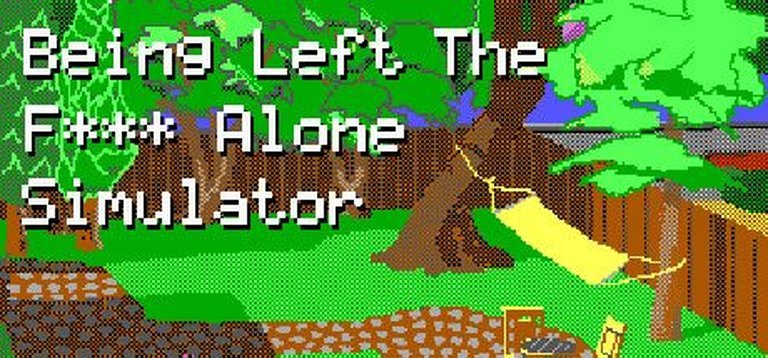
Being Left The F* Alone Simulator is a meditative point-and-click graphic adventure game set in a contemporary world, crafted in the style of 90’s classics with side-view perspectives and fixed/flip-screen visuals. Players relax in a zen-paced experience focused on mindfulness and self-care, exploring a serene environment designed to help you step back and take care of yourself.
Where to Buy Being Left The F*** Alone Simulator
PC
Being Left The F*** Alone Simulator Reviews & Reception
store.steampowered.com (94/100): 94% of the 18 user reviews for this game are positive.
steambase.io (95/100): Player Score of 95 / 100.
Being Left The F* Alone Simulator: Review
Introduction
In an era where video games often bombard us with high-stakes narratives, relentless combat, and dopamine-fueled loot grinds, Being Left The F* Alone Simulator (BLTFA Sim) arrives like a deep breath in a hurricane—a deliberate, pixelated exhale crafted for the soul. Released in November 2021 by the indie Australian developer CraebTec, this unassuming point-and-click adventure has quietly carved a niche as a meditative antidote to the chaos of contemporary life. With its 94% positive rating from a dedicated cadre of 18 Steam reviewers (and a near-perfect 95/100 player score across 20 aggregated critiques), it punches above its $2.99 weight class. This review posits that BLTFA Sim is not just a game, but a prescient cultural artifact: a zen-like rebellion against attention-economy overload, proving that true innovation can emerge from solitude and simplicity.
Development History & Context
CraebTec, a one-person studio hailing from Australia (as noted in its entry in the Game Development World Championship), helmed every aspect of Being Left The F* Alone Simulator‘s creation, from code to curation. Built on the Unity engine—a staple for indie devs seeking accessible 2D tools—the game embodies a solo vision unburdened by corporate oversight. Its creator’s intent shines through in the official blurb: a “tongue-in-cheek” riposte to “the intensity of modern living and the commodification of our attention.” This ethos feels born from the post-2020 pandemic zeitgeist, where burnout, remote isolation, and social media fatigue peaked amid a gaming landscape dominated by live-service behemoths like Fortnite and Genshin Impact.
Technological constraints were minimal, reflecting indie thriftiness: a 64-bit OS, SSE2 processor support, integrated graphics, and a featherlight 100MB footprint made it runnable on toasters. Yet, CraebTec cleverly leveraged Unity’s pixel-art capabilities to homage 90s graphic adventures like Monkey Island or Day of the Tentacle, complete with side-view, fixed/flip-screen visuals. Released on Steam on November 17, 2021, it entered a crowded indie scene flush with retro throwbacks (Celeste, Shovel Knight) but stood apart by rejecting competition entirely. No multiplayer, no leaderboards—just pure, unadulterated self-indulgence. MobyGames cataloged it in late 2022 (ID 190045), grouping it with profane-titled oddities and Unity projects, underscoring its outsider status in a market valuing virality over vulnerability.
Narrative & Thematic Deep Dive
Lacking a bombastic plot or ensemble cast—true to its minimalist ethos—Being Left The F* Alone Simulator forgoes traditional storytelling for an intimate, player-driven reverie. The “narrative” unfolds as a contemporary solo journey through a world engineered for introspection, where the protagonist (customizable via character options) navigates personal sanctuaries. Dialogue, if present, leans irreverent, laced with the title’s profanity and mature descriptors like “bodily functions” and “language,” injecting humor into otherwise serene self-dialogue.
Thematically, it’s a masterclass in subversion. At its core lies a critique of hyper-connectivity: the game as “peaceful and healing ‘time out’ from the world” flips the adventure genre’s exploratory imperative inward, prioritizing being left the f* alone over conquest. Psychological tags (exploration, emotional, life sim) suggest vignettes of self-care—perhaps brewing tea, gazing at stars, or contemplating bodily needs—mirroring real-world mindfulness apps but gamified with 90s charm. Emotional resonance stems from its zen pacing: no fail states, no urgency, just permissive wandering that fosters catharsis. In a medium often commodifying player time, BLTFA Sim indicts that very system, positioning solitude as the ultimate luxury. Character customization adds personalization, letting players imprint their weary selves onto the avatar, transforming play into therapy. It’s profound in its paucity—no epic arcs, just the quiet triumph of existing.
Gameplay Mechanics & Systems
As a graphic adventure with point-and-select interface, BLTFA Sim distills the genre to its essence: meditative exploration sans peril. Core loops revolve around non-violent, stress-free interactions—clicking to uncover self-care rituals in a side-scrolling, fixed-screen world. Pacing is explicitly “Meditative / Zen,” eschewing timers or puzzles for organic discovery, where progression is measured in moments of calm rather than milestones.
No combat mars its purity; instead, “gameplay” manifests as atmospheric wandering, pixelated pootling through customizable domestic or natural idylls. UI is presumed clean and intuitive, aping 90s classics with inventory minimalism—no cluttered hotbars, just serene selection. Innovative systems shine in its psychological depth: tags like “Life Sim” and “Character Customization” imply evolving avatars through self-nurturing choices, perhaps altering appearances or moods via rest, reflection, or cheeky bodily functions (hinted by content warnings). Flaws? Potential repetition in its brevity, but that’s the point—endless replay for recharge, not grind. Singleplayer focus and Family Sharing enable shared solitude, while low specs ensure accessibility. It’s flawed only if you crave adrenaline; otherwise, it’s flawlessly freeing.
Core Loops
- Exploration Cycle: Point, click, absorb—uncover hidden comforts in flip-screen scenes.
- Progression: Organic self-improvement via customization, no levels, just evolving peace.
- Innovation: Anti-mechanics; “winning” is logging off refreshed.
World-Building, Art & Sound
The setting is a contemporary everyman’s retreat—cozy interiors, tranquil outdoors—rendered in evocative 2D pixel graphics faithful to 1990s fixed-screen adventures. Visual direction prioritizes atmosphere: muted palettes, subtle animations (rippling water? Gentle swaying foliage?), evoking nostalgia while underscoring isolation’s beauty. Side-view perspective limits scope to intimate vignettes, amplifying zen by curbing overwhelm.
Art contributes profoundly to immersion, with “Pixel Graphics” and “1990’s” tags painting a handcrafted world that’s explorable yet contained. No sprawling open worlds here; instead, flip-screens craft a diorama of solitude, where every pixel whispers “relax.”
Sound design elevates it: a “beautifully serene soundtrack” by The Aurora Principle blankets proceedings in ambient calm—think soft synths, distant chimes, nature whispers—perfectly syncing with meditative pacing. Full English audio/subtitles ensure narrative whispers land softly. Together, these forge an ASMR-like cocoon, where visuals soothe the eyes and audio heals the ears, making BLTFA Sim a multisensory balm against digital din.
Reception & Legacy
Launch reception was niche but rapturous: Steam’s 94-95% positive from 18-20 reviews (mostly Steam purchasers) hailed its therapeutic novelty, with curators (8 noted) amplifying word-of-mouth. No Metacritic or MobyGames critic scores emerged—likely due to its micro-budget obscurity—nor player reviews on Moby (despite 2 collectors). Forums and guides are barren, underscoring its anti-hype appeal.
Commercially, at $2.99, it thrives as impulse therapy, with steady (if low-volume) players. Reputation has solidified as a cult darling among burnout-weary indies, influencing micro-trends in “mindfulness sims” amid 2020s wellness gaming (Unpacking, A Short Hike). Its profane title lands it in quirky MobyGroups, while related titles (Alone, Left Alone) highlight thematic echoes without direct lineage. Legacy? As a Unity-powered pioneer, it prefigures self-care indies, challenging industry grindsets. In history’s annals, it’s a footnote that whispers volumes: games can heal.
Conclusion
Being Left The F Alone Simulator* distills gaming’s potential to its purest form—a pixelated paean to pause, where CraebTec’s vision transmutes 90s nostalgia into modern medicine. From thematic takedowns of attention theft to zen gameplay and serene sonics, it excels in evoking respite without excess. Though reception remains boutique and details sparse (no screenshots or credits dilute deeper dives), its 95% acclaim affirms impact. In video game history, it claims a vital perch: not a blockbuster, but a beacon for sustainable design. Verdict: **Essential for the exhausted—buy, boot, breathe. 9.5/10.