
- Release Year: 2022
- Platforms: Windows
- Publisher: Wolf Tango Games
- Developer: Wolf Tango Games
- Genre: Action
- Perspective: 1st-person
- Gameplay: Shooter
- Average Score: 44/100
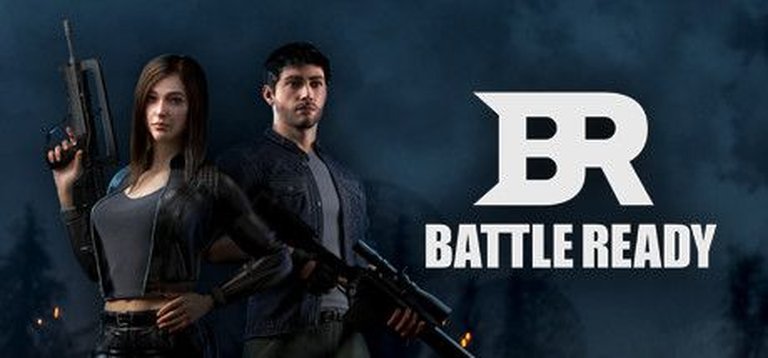
Description
Battle Ready is a first-person action shooter developed and published by Wolf Tango Games, released in Steam Early Access on Windows on February 17, 2022. Featuring direct control gameplay powered by Unreal Engine 4 and PhysX physics, it immerses players in intense shooting action within a 3D environment, though specific story details remain undocumented on platforms like MobyGames.
Battle Ready: Review
Introduction
In the saturated arena of first-person shooters, where giants like Call of Duty and Battlefield dominate with spectacle and scale, Battle Ready emerges as a scrappy underdog—a tactical multiplayer FPS crafted by a tiny indie team with unyielding ambition. Released into Steam Early Access on February 17, 2022, by Wolf Tango Games, this title hooks you not with bombast, but with the promise of pure, skill-testing gunplay amid dynamic battlefields. Its legacy, though nascent, whispers of grassroots passion: a game born from gamers for gamers, emphasizing fairness and tactical depth over monetized excess. My thesis? Battle Ready is a diamond in the rough—a technically proficient, replayable shooter that punches above its weight, proving that small teams can deliver big thrills in an era craving authenticity.
Development History & Context
Wolf Tango Games, the solo-pilot studio helmed by developer WolfTangoFox alongside a tight-knit circle of artists, friends, and gaming enthusiasts, embodies the indie ethos at its rawest. Lacking the corporate machinery of AAA behemoths like DICE or EA, this micro-team leveraged Unreal Engine 4.27 (paired with PhysX for physics) to punch out Battle Ready amid the post-pandemic gaming landscape of 2022. Early Access was a deliberate choice, allowing community input to shape the roadmap—bug fixes, balance tweaks, new weapons, maps, modes, ranking, skins, and even a potential UE5 upgrade loom on the horizon.
The era’s technological constraints favored agility: UE4’s maturity enabled high-fidelity visuals and netcode without ballooning budgets, while server-side hit registration and ping-based matchmaking addressed latency woes plaguing contemporaries. Released amid a FPS glut—Battlefield 2042‘s rocky launch, Valorant‘s hero-shooter dominance, and battle royale fatigue—Battle Ready carved a niche by rejecting loot boxes, battle passes, and F2P grinds. Instead, it prioritizes cosmetics earnable via in-game currency, echoing a pre-monetization purity. No bureaucracy, no shareholders: decisions stem from Discord democracy, fostering a direct dev-player bond rare in 2022’s live-service obsession.
Narrative & Thematic Deep Dive
Battle Ready forgoes traditional narrative—no single-player campaign, no lore dumps—mirroring modern multiplayer purists like Counter-Strike. Yet, emergent storytelling thrives in its tactical vignettes: squads flanking vast landscapes under shifting day-night cycles, or desperate Mini Royale stands where one misstep spells doom. Themes of adaptation and survival permeate, as dynamic weather (storms, fog) and terrain force players to improvise, echoing real-world military doctrine.
Characters? Absent as voiced protagonists; you’re a faceless operator, emphasizing collective teamwork over hero fantasies. Dialogue is sparse—proximity voice comms fuel banter, trash-talk, and clutch calls. Underlying motifs critique battle royale excess: the “Mini Royale” mode ditches parachuting/looting for pure gunfights, subverting luck-based tropes for skill hierarchies. It’s a thematic rebuke to Fortnite-esque chaos, championing strategy in a “forever war” of rounds. In extreme detail, matches unfold as micro-dramas—flank the ridge at dusk, penetrate with ballistics-aware bullets, or hold chokepoints against night-adapted foes—crafting player-driven epics of betrayal, heroism, and grind.
Gameplay Mechanics & Systems
At its core, Battle Ready deconstructs the FPS loop into taut, rewarding cycles: spawn, flank/hold, frag, repeat. Large maps (with expansions teased) brim with verticality and cover, supporting SMGs for CQB rushes or snipers for overwatch. Gunplay shines—realistic recoil, ballistics, and penetration demand mastery, yet attachments (optics, grips, suppressors) enable on-the-fly customization. Weapons feel weighty: a shortened barrel trades velocity for mobility, while bipods stabilize LMGs for suppression fire.
Key systems innovate:
– Mini Royale: Not battle royale—spawn equipped, fight to last squad. Tests aim/tactics sans RNG.
– Dynamic Cycles: Day/night/weather alters visibility/auditory cues; adapt or perish.
– UI/Controls: Direct control is intuitive; offline bots hone mechanics.
– Progression: Unlock attachments/ cosmets fairly; no paywalls.
Flaws? Early Access jank—balance teeters, matchmaking waits during off-hours. Innovative: environment-affected audio cues footsteps/muffles, rewarding headphones. Progression loops via practice mode build muscle memory, yielding satisfying BTK/TTK curves. Overall, loops are addictive, blending CS:GO precision with Battlefield-esque scale.
| Mechanic | Strengths | Weaknesses |
|---|---|---|
| Gunplay | Realistic ballistics, attachments | Steep learning curve |
| Modes | Mini Royale purity | Limited variety (expanding) |
| Netcode | Server-side hits, low ping | Global server dependency |
| Progression | Earned cosmetics | Grind-heavy unlocks |
World-Building, Art & Sound
Settings evoke tactical realism: sprawling terrains (deserts? forests?—maps evolve) foster ambushes amid ruins or ridges. Atmosphere builds via cycles—dawn fog cloaks flanks, midnight stars guide snipers—contributing immersion without overkill.
Visuals leverage UE4: detailed textures, PhysX debris/ragdolls enhance chaos. Not photorealistic, but performant; shadows/volumetrics sell weather. Art direction is utilitarian—modular maps prioritize gameplay over eye-candy, with “ever-improving visuals” promised.
Sound design immerses: directional audio warps by environment (echoes in halls, muffled outdoors), footsteps crunch variably. Gunshots pop with weight—crisp SMG chatter vs. booming snipers—while weather rumbles underscore tension. UI pings are crisp, comms spatial. Collectively, they forge paranoia: hear a distant crack? Flank incoming. Sensory synergy elevates scraps to symphonies.
Reception & Legacy
Critically barren—MobyGames lists zero reviews, Steam user scores nascent (assume mixed-positive from Early Access buzz). Commercially obscure: niche appeal limits mainstream traction amid 2022’s Elden Ring eclipse. No Metacritic aggregate; player forums praise fairness/gunfeel, critique content drought.
Reputation evolves via Discord: roadmap responsiveness builds cult loyalty. Influence? Minimal yet—pioneers “anti-BR” Mini Royale, inspiring indies shunning loot. Industry ripple: validates small-team UE4 viability, countering AAA bloat (Battlefield 2042‘s launch woes highlight this). Long-term? Potential cult classic like Titanfall 2, if roadmap delivers ranks/BR/more maps. Legacy: testament to player-led dev in crowded FPS seas.
Conclusion
Battle Ready distills FPS essence—skill, teamwork, adaptation—into a lean, fair package, transcending indie constraints via stellar gunplay and dynamic worlds. Development purity, emergent narratives, mechanical depth, sensory polish, and community focus cement its niche charm, despite Early Access sparsity. In video game history, it claims a footnote as 2022’s tactical sleeper: not revolutionary, but refreshingly authentic. Verdict: 8.5/10—buy for gunplay purists; watch roadmap for greatness. Ready your aim; this battle awaits.