
- Release Year: 2019
- Platforms: Nintendo Switch, PlayStation 4, Windows Apps, Windows, Xbox One
- Publisher: 505 Games S.p.A.
- Developer: Remedy Entertainment Oyj
- Genre: Action
- Perspective: Third-person
- Game Mode: Single-player
- Gameplay: Crafting, Exploration, Levitation, Shield, Shooting, Telekinesis
- Setting: Fantasy, North America
- Average Score: 84/100
Description
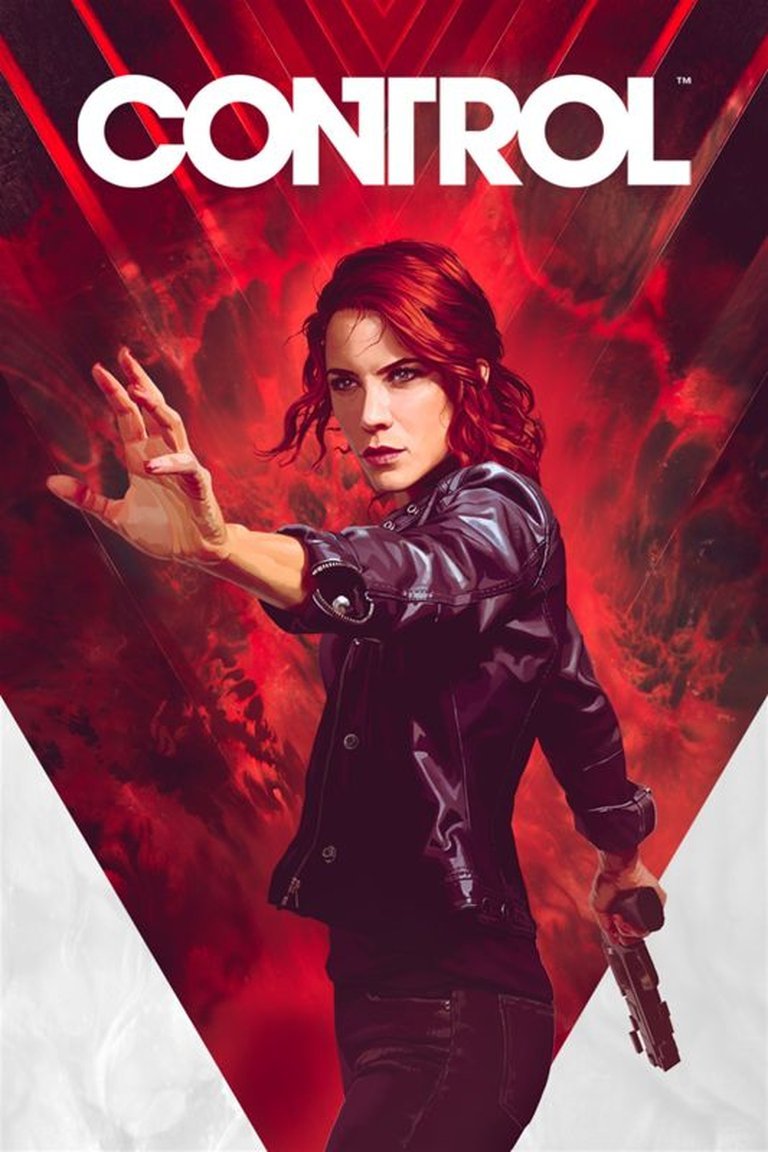
Control is a single-player third-person action game where Jesse Faden arrives at the Federal Bureau of Control, a secretive U.S. government agency investigating paranormal phenomena, and unexpectedly becomes its new Director upon discovering the mysterious Service Weapon. Set in the ever-shifting Brutalist headquarters known as the Oldest House in North America, Jesse battles the invading supernatural force called the Hiss, explores interconnected sectors filled with lore, and unlocks powers like telekinesis, levitation, and energy shields while uncovering secrets about her past.
Gameplay Videos
Where to Buy Control
Control Free Download
Control Cracks & Fixes
Control Patches & Updates
Control Mods
Control Reviews & Reception
metacritic.com (82/100): Control is the pinnacle of Remedy games indeed: thanks to its exceptional art design, solid gameplay and great storytelling
ign.com : engrossing, oddball worlds with an incredible sense of place
imdb.com (80/100): incredibly satisfying gameplay are what make it one of the most unique games I’ve played in a while
regulargamerreviews.wordpress.com (90/100): the gameplay is incredible with the movement feeling nice and sturdy
Control: Review
Introduction
Imagine stumbling into a nondescript brutalist skyscraper in New York City, only to find its labyrinthine interiors defying physics, time, and sanity—endless corridors that loop impossibly, concrete walls bleeding otherworldly resonance, and everyday objects pulsing with extradimensional power. This is the inescapable allure of Control, Remedy Entertainment’s 2019 masterpiece that thrusts players into the heart of the Federal Bureau of Control (FBC), a clandestine agency battling paranatural incursions. As Jesse Faden, a woman haunted by her past, you wield the Service Weapon and unravel a conspiracy woven from cosmic horror, bureaucratic absurdity, and personal redemption. Control builds on Remedy’s legacy of narrative-driven action—Max Payne‘s noir grit, Alan Wake‘s literary dread, Quantum Break‘s temporal puzzles—while shattering linearity for a Metroidvania-style exploration of dread and wonder. My thesis: Control is Remedy’s triumphant evolution, a genre-defying triumph where world-building, supernatural combat, and “new weird” storytelling forge an unforgettable symphony of chaos and control, securing its status as one of the decade’s defining titles.
Development History & Context
Remedy Entertainment, the Finnish studio behind genre-redefining hits like Max Payne (2001) and Alan Wake (2010), entered Control‘s development amid pivotal shifts. Post-Quantum Break (2016), Remedy severed ties with Microsoft exclusivity, going public in 2017 and partnering with 505 Games for a €30 million budget—modest for a AAA title, completed in just three years versus Quantum Break‘s five. Codename “Project 7” (P7), it was directed by Mikael Kasurinen (Alan Wake lead gameplay designer), with Sam Lake (credited as Sami Järvi) as lead writer and concept originator, emphasizing a “world-driven” narrative over cinematic set pieces.
The vision crystallized from Remedy’s Northlight Engine, iterated from Quantum Break, now augmented with Nvidia PhysX for destructible environments and real-time ray tracing—the first major game to showcase RTX hardware fully, bundled with Nvidia cards. Kasurinen sought nonlinearity: a semi-open “Metroidvania” structure in the shifting Oldest House, inspired by SCP Foundation lore (paranormal object catalogs) and “new weird” fiction (Jeff VanderMeer, H.P. Lovecraft). Brutalist architecture—evoking Cold War-era fortresses like NYC’s 33 Thomas Street—contrasted mundane offices with impossible geometries, enabling telekinetic chaos without visual clutter.
Released August 27, 2019, for PS4, Windows, Xbox One (Epic exclusivity on PC via €9.49M deal), amid a landscape dominated by open-world behemoths (Red Dead Redemption 2) and battle royales, Control bucked trends. No multiplayer, no microtransactions—just pure single-player immersion. Technological constraints like console performance hiccups were offset by post-launch Ultimate Edition (2020), expansions (The Foundation, AWE), and next-gen upgrades (PS5/XSX 2021). Remedy’s efficient pipeline—fewer cinematics, player-led discovery—yielded replayability, foreshadowing the Remedy Connected Universe (RCU) linking to Alan Wake II (2023).
Narrative & Thematic Deep Dive
Control‘s narrative is a fractal tapestry of personal trauma, institutional paranoia, and cosmic insignificance, delivered through environmental storytelling, collectibles (case files, audio logs, FMVs), and Jesse’s introspective monologues. Protagonist Jesse Faden (Courtney Hope, evoking quiet ferocity) arrives at the Oldest House seeking her brother Dylan (Sean Durrie), kidnapped 17 years prior during the Ordinary AWE—a Maine town where a slide projector Object of Power (OOP) summoned horrors, vanishing adults and binding Jesse to Polaris, a benevolent resonance entity visualized as golden fractals.
Jesse claims the Service Weapon from suicide-victim Director Zachariah Trench (James McCaffrey), earning Board sanction in the Astral Plane—a black pyramid collective unconscious oracle. The Hiss, a malevolent resonance plague chanting “We got resonance,” possesses FBC agents, reshapes reality. Jesse aids survivors like Emily Pope (Antonia Bernath), security chief Simon Arish (Ronan Summers), and enigmatic janitor Ahti (Martti Suosalo, Finnish tango-singing extradimensional?), while decoding Dr. Casper Darling’s (Matthew Porretta) HRA tech.
Plot crescendos reveal Dylan as Prime Candidate 6, groomed for directorship but Hiss-corrupted; Trench, Hiss-influenced, unleashed it via a burned slide from Ordinary. Jesse navigates thresholds (Ashtray Maze, Slidescape-36), destroys Hedron (Polaris’ anchor), resists mental loops, and binds Polaris anew, comatosing Dylan. Expansions deepen: The Foundation exposes Board manipulations via Helen Marshall (Brig Bennett); AWE crosses with Alan Wake, pitting Jesse against Dark Presence-Hiss hybrids.
Themes probe control’s illusion: FBC bureaucracy as dread (endless paperwork amid apocalypse), Jesse’s agency versus predestination (Board pawn?), resonance as collective unconscious weaponized. Dialogue crackles—absurd (“Take the control, Jesse”), poetic (Jesse’s “poster on the wall” metaphor for denial). Characters shine: Darling’s FMV lectures blend mad science and pathos; Ahti’s cryptic Finnish riddles hint multiversal guardianship. Multi-layered—surface thriller, subsurface SCP homage, RCU nexus—Control rewards lore dives, leaving enigmas (Board’s agenda? Ahti’s origins?) for sequels like Control 2 (full production 2025).
Gameplay Mechanics & Systems
Control‘s core loop—explore-shoot-upgrade-repeat—in a semi-open brutalist labyrinth innovates third-person action. Jesse’s arsenal centers the morphing Service Weapon (Grip pistol, Spin shotgun, Pierce sniper, etc.), energy-recharging ammo demanding mobility. Powers scale Metroidvania-style: Launch (telekinesis hurling debris/chunks), Shield (energy barricade), Seize (mind-control foes), Evade (dodge bursts), culminating in Levitate (flight, verticality unlocks).
Combat arenas erupt dynamically via Encounter Director AI, scaling Hiss thralls (ranged Soldiers, melee Screamers, floating Seekers, tanky Anchors) and bosses (mold clusters, Former). Physics shine—shatter toilets for projectiles, grind rails mid-air. Progression bifurcates: Ability Trees (three modular boards for synergies), Weapon Workshop (mods/forms via enemy goo), Personal Mods (stats). Control Points enable upgrades, fast travel; Bureau Alerts/Board Countermeasures add roguelite challenges.
UI is minimalist genius—no HUD clutter, mission log/audio cues guide. Flaws persist: checkpoint respawns frustrate (player reviews gripe “tedious backtracking”), map’s opacity confounds (German critics: “nix taugt”), launch bugs (framerate dips). Yet innovations abound—sandbox destruction (Nvidia PhysX), photo mode, Expeditions (procedural endgame). Replayability soars via NG+, side quests (e.g., Kojima-voiced dream logs), mastery of “spin-grind-launch” combos yielding godlike flow.
| Mechanic | Strengths | Weaknesses |
|---|---|---|
| Combat | Fluid, power-fantasy escalation; destructible arenas | Clunky early-game; repetitive Hiss waves |
| Exploration | Nonlinear sectors, ability-gated secrets | Confusing navigation; backtrack fatigue |
| Progression | Modular trees/mods; resource economy | RNG mods; grindy late-game |
| UI/Controls | Immersive minimalism | Poor map; finicky aiming |
World-Building, Art & Sound
The Oldest House—a Place of Power larger-inside, shifting via Hiss—epitomizes Control‘s genius: brutalist canvas (Boston City Hall, Scarpa stairwells) scarred by resonance, pneumatic tubes/janitorial closets juxtaposed with astral spikes/mold thresholds. Sectors (Executive, Research, Containment, Foundation) pulse lore—Panopticon cells house SCP-like Altered Items (screaming rubber ducks), FMVs (Threshold Kids puppets) satirize isolation.
Art direction (Janne Pulkkinen) mesmerizes: RTX reflections on marble, volumetric fog, particle chaos. Ray-traced destruction renders battles visceral—chunks embed in walls, lingering scars. Soundscape elevates: Petri Alanko/Martin Stig Andersen’s score swells dissonant (industrial drones, choral Hiss chants); Wwise engine spatializes resonance (whispers, hums). Poets of the Fall’s “Take Control” dynamizes Ashtray Maze. Voicework—Hope’s vulnerability, McCaffrey’s gravel—immerses; Finnish tango adds eccentricity. Collectively, they birth dread-soaked wonder, every chunk-throw echoing existential weight.
Reception & Legacy
Control launched to acclaim: Metacritic 82-85 (PC/PS4/XO), MobyGames 8.1/10 (86% critics). EGM/Giant Bomb awarded perfect 100%, praising “Refined gameplay… unforgettable characters”; PC Gamer (88): “Mystery, wonder, glorious combat.” Faults: “Clunky combat” (player: DaddyisDead), “Bad map” (David Genserovsky), performance woes (Gameluster: “Severe issues”). Sales soared—2M (2020), 5M+ (2025), 19M+ players via Game Pass; GOTY nods (IGN, EGM, GI), TGA Best Art/Audio wins, DICE Action/Art Direction.
Reputation evolved: Ultimate Edition/expansions quelled gripes; PS5 Pro patch (2025) enhanced visuals. Influence profound—pioneered RTX/DLSS, RCU blueprint (Alan Wake II, FBC: Firebreak 2025 spin-off), “new weird” blueprint (SCP echoes in indies). Remedy reclaimed IP (2024), eyed adaptations (Annapurna). Legacy: Remedy’s pinnacle, proving narrative worlds trump spectacle.
Conclusion
Control masterfully entwines Jesse’s odyssey with the Oldest House’s enigmas, delivering euphoric combat, lore-drenched exploration, and thematic profundity in a brutalist fever dream. Innovations outweigh flaws; its resonance endures. Verdict: A pantheon entry—Remedy’s magnum opus, essential for action-adventure history, beckoning endless revisits in gaming’s strangest corridors. Score: 9.5/10