
- Release Year: 2021
- Platforms: Linux, Macintosh, Nintendo Switch, PlayStation 4, PlayStation 5, Windows
- Publisher: Draknek Limited
- Developer: Draknek Limited
- Genre: Puzzle
- Perspective: 3rd-person
- Game Mode: Single-player
- Gameplay: Box manipulation, Puzzle, Voxel art
- Average Score: 82/100
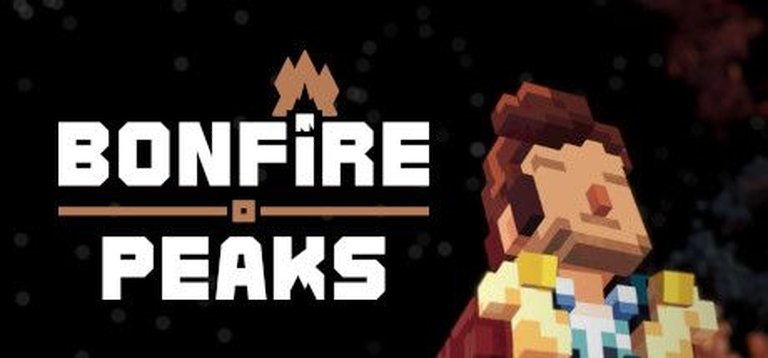
Description
Bonfire Peaks is a contemplative puzzle game where players navigate a serene yet melancholic voxel-based world, guiding a protagonist to burn their personal belongings atop mountain peaks. Set across diverse landscapes, the game challenges players with intricate block-pushing puzzles that require logic and spatial reasoning. Its minimalist art style and ambient soundtrack evoke a reflective atmosphere, complemented by subtle storytelling. Critics praise its clever design, accessibility, and emotional depth, making it a rewarding experience for puzzle enthusiasts seeking both mental engagement and quiet introspection.
Gameplay Videos
Where to Buy Bonfire Peaks
PC
Bonfire Peaks Cracks & Fixes
Bonfire Peaks Guides & Walkthroughs
Bonfire Peaks Reviews & Reception
opencritic.com (79/100): An atmospheric world with deep, absorbing puzzles, Bonfire Peaks is thoughtful and charming-but without establishing its tricks, it risks leaving less fluent puzzlers behind.
metacritic.com (81/100): An atmospheric world with deep, absorbing puzzles, Bonfire Peaks is thoughtful and charming—but without establishing its tricks, it risks leaving less fluent puzzlers behind.
keengamer.com (90/100): Burn it. Burn it all! Your belongings, that is. New puzzler Bonfire Peaks sees you navigating dozens of levels to reduce your possessions to ash.
pcgamer.com (79/100): An atmospheric world with deep, absorbing puzzles, Bonfire Peaks is thoughtful and charming—but without establishing its tricks, it risks leaving less fluent puzzlers behind.
Bonfire Peaks: A Cathartic Ascent Through Fire and Reflection
Introduction
In the crowded landscape of puzzle games, Bonfire Peaks (2021) stands as a beacon of quiet brilliance. Developed by Corey Martin and co-produced by Draknek & Friends—the minds behind A Monster’s Expedition and Cosmic Express—this indie gem transforms the simple act of burning belongings into a metaphor for emotional release. With its minimalist narrative, meticulously crafted puzzles, and striking voxel art, Bonfire Peaks is a masterclass in blending melancholic themes with cerebral gameplay. This review explores how the game leverages its constraints to create an experience that lingers long after the final bonfire fades.
Development History & Context
Studio Vision & Origins
Corey Martin, a Montreal-based indie developer, conceived Bonfire Peaks during Ludum Dare 43 (2018), a game jam themed “sacrifices must be made.” The prototype’s core mechanic—burning possessions to ascend a mountain—resonated deeply, leading to a three-year development cycle. Partnering with Alan Hazelden of Draknek & Friends, Martin expanded the game’s scope to over 200 puzzles, refining its puzzles to strike a balance between accessibility and depth.
Technological & Creative Constraints
Built in Unity with Magicavoxel, the game’s voxel-based design imposes a grid-like structure that echoes classic Sokoban puzzles while allowing for 3D spatial experimentation. The limited controls (move, turn, pick up) were deliberately restrictive, forcing players to engage with the environment creatively. As Martin noted, storytelling took a backseat: “In my opinion, storytelling is not really a strength of the medium of games, or what excites me most about it.” Instead, the narrative emerged through environmental cues and gameplay tension.
Release & Landscape
Debuting in September 2021 across PC, Switch, and PlayStation platforms, Bonfire Peaks entered a post-Baba Is You era, where indie puzzlers thrived on subverting expectations. Its release coincided with a wave of introspective games, yet its focus on mechanical purity set it apart.
Narrative & Thematic Deep Dive
A Story in Smoke
Bonfire Peaks tells its tale obliquely. A nameless protagonist arrives via swan-shaped pedalo at a mist-shrouded island, tasked with burning crates of belongings. Scattered vignettes—a crashed car, hospital equipment, a disassembled living room—hint at a life abandoned. The absence of dialogue or text transforms these fragments into Rorschach tests, inviting players to project their own interpretations of loss, regret, or renewal.
Themes of Attachment & Closure
The act of burning possessions evolves from mundane to metaphysical. Early puzzles feel transactional, but as difficulty escalates, the ritual takes on weight. The mountain itself becomes a purgatory, demanding players relinquish not just objects but preconceived solutions. Reviewers like PlayStation Universe noted how the game’s “subtle emotion” pairs with its puzzles to evoke catharsis, likening the ascent to Celeste’s metaphorical climb.
Gameplay Mechanics & Systems
Sokoban, Reimagined
At its core, Bonfire Peaks is a block-pushing puzzle game. Each diorama-like level tasks players with maneuvering crates to a bonfire, often requiring precise stacking, bridging gaps, or manipulating environmental hazards like conveyor streams and arrow traps. The brilliance lies in its iterative design: mechanics introduced as obstacles (e.g., pressure plates) later become tools, rewarding player adaptability.
The Overworld as Meta-Puzzle
Progress hinges on solving puzzles in a nonlinear overworld, where completed levels grant crates used to navigate the island. This recursive structure—solving puzzles to unlock more puzzles—creates a satisfying loop. Notably, only ~50% of puzzles are mandatory, allowing players to bypass roadblocks and return later.
Flaws & Frustrations
While the undo/reset system alleviates frustration, some critics (PC Gamer, Multiplayer.it) noted occasional opacity in mechanics. For example, long crates’ dual role as bridges or battering rams isn’t always clear, leading to trial-and-error stagnation. The Switch version’s lack of hints, compared to PlayStation, drew criticism for exacerbating these moments.
World-Building, Art & Sound
A Voxel Meditation
Mari Khaleghi and Zach Soares’ art direction turns low-resolution voxels into a hauntingly beautiful world. Moss-clad ruins, shimmering waterfalls, and snow-capped peaks evoke a melancholic serenity, while lighting effects—embers glowing in the dark, dawn breaking over the summit—anchor the game’s reflective tone. The overworld’s dioramas, reminiscent of The Witness’s environmental storytelling, reward careful observation.
Soundscapes of Solitude
Corey Martin’s synth-heavy soundtrack amplifies the isolation, oscillating between ambient drones and gentle piano motifs. While some found the music repetitive (Out of Lives), its minimalism complements the gameplay’s contemplative pace. The crackle of bonfires and rustle of leaves underfoot further immerses players in the protagonist’s solitary journey.
Reception & Legacy
Critical Acclaim & Contention
With a Metacritic average of 81 (PC) and 86 (PS5), Bonfire Peaks earned praise for its design and atmosphere. Edge Magazine hailed it as “soulful,” comparing its climax to Celeste’s emotional payoff. However, outlets like Jeuxvideo.com critiqued its occasional control jank, particularly when pivoting with crates. The Nintendo Switch version, lacking hints, divided audiences further.
Industry Impact
Nominated for Best Indie Game at the 2021 Golden Joystick Awards, Bonfire Peaks reinforced Draknek & Friends’ reputation for elevating puzzle genres. Its influence is evident in contemporaries like Patrick’s Parabox, which similarly iterates on Sokoban principles. The 2023 DLC Lost Memories expanded the experience, cementing its cult status.
Conclusion
Bonfire Peaks is a triumph of restraint. By marrying austere mechanics to a deeply human narrative, it transforms crate-pushing into a meditation on letting go. While its difficulty spikes may deter casual players, those who persevere will find a game that resonates on emotional and intellectual levels. In an industry often obsessed with scale, Bonfire Peaks proves that the smallest flames can cast the longest shadows.
Final Verdict: A puzzle masterpiece that burns brightly in the pantheon of indie greats.