
- Release Year: 2013
- Platforms: Windows
- Publisher: Anuman Interactive SA
- Developer: Studios Bloobuzz Inc.
- Genre: Simulation, Strategy, Tactics
- Perspective: 3rd-person
- Game Mode: Single-player
- Gameplay: Business simulation, Managerial, Time management
- Setting: Egypt (Ancient)
- Average Score: 84/100
Description
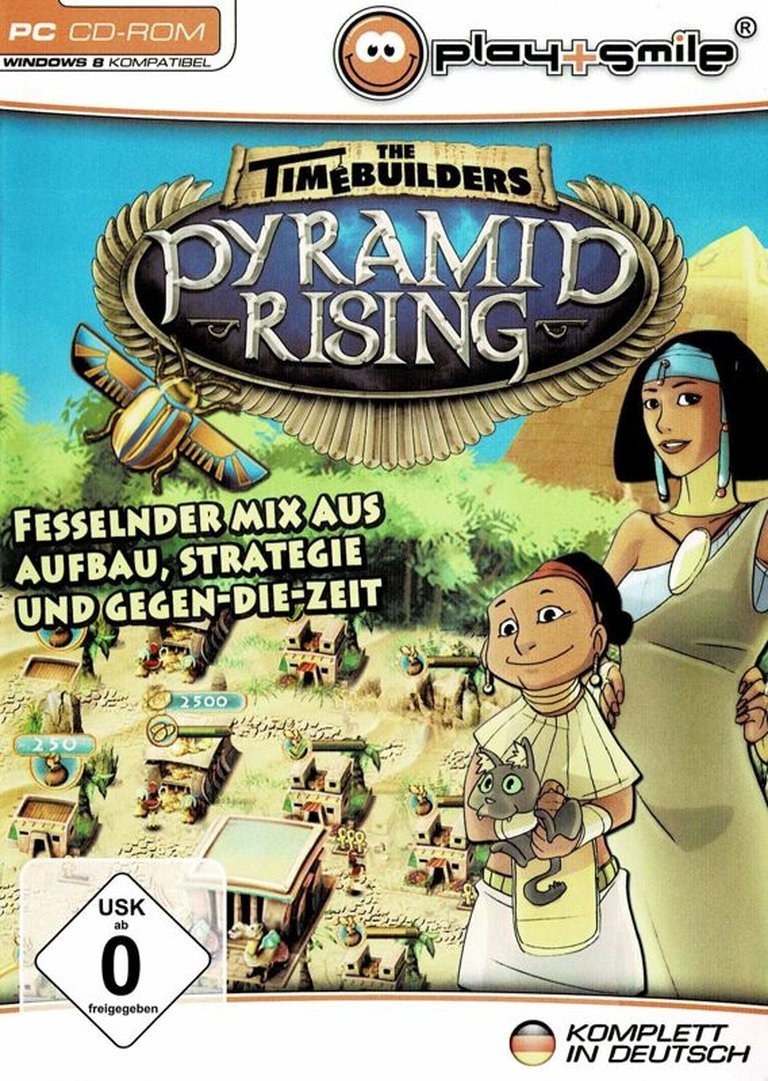
The Timebuilders: Pyramid Rising is a real-time strategy and managerial simulation game set in ancient Egypt. Players are tasked with building eight majestic temples to prevent the catastrophic end of Egypt’s eighteenth dynasty, as foretold in an ancient scroll. The game combines elements of time management and resource management, challenging players to strategically plan and execute their construction efforts while dealing with various obstacles and opportunities.
Gameplay Videos
The Timebuilders: Pyramid Rising Cracks & Fixes
The Timebuilders: Pyramid Rising Reviews & Reception
jayisgames.com (84/100): quite frantic, but done very well in this instance!
gamezebo.com : Unfortunately the game proves that it is not always good enough to simply mimic a successful format.
absolutist.com : amazing atmosphere of ancient Egypt, its beautiful music and graphics can be named as one of the most intriguing time management games, I have ever played.
The Timebuilders: Pyramid Rising: A Monumental Task or a Stack of Missed Opportunities?
Introduction
In the crowded pantheon of time-management games, The Timebuilders: Pyramid Rising (2013) stands as a curious artifact—a title that leverages the mystique of ancient Egypt to deliver a by-the-numbers strategy experience. Developed by Studios Bloobuzz Inc. and published by Anuman Interactive, the game tasks players with rebuilding Egypt under the wrath of the sun god Amun-Ra, blending resource management with mythological stakes. While its premise promises grandeur, the game’s legacy is more akin to a modest tomb than a towering pyramid. This review argues that Pyramid Rising is a mechanically solid but creatively safe entry in its genre, offering fleeting satisfaction for casual players but little innovation for veterans.
Development History & Context
Released on February 6, 2013, for Windows, The Timebuilders: Pyramid Rising emerged during a golden age for casual time-management games, competing with titles like Royal Envoy and Kingdom Tales. Studios Bloobuzz Inc., a lesser-known developer, aimed to capitalize on the popularity of historical settings, particularly Egypt’s allure, which had proven successful in games like Pharaoh (1999) and Cleopatra: Queen of the Nile (2000).
The game was built within the constraints of the early 2010s casual market, prioritizing accessibility over complexity. Its fixed/flip-screen 2D visuals and point-and-click interface were designed for low-spec PCs, catering to an audience more interested in quick play sessions than technical ambition. While Anuman Interactive’s publishing heft ensured visibility on platforms like Big Fish Games and Shockwave, Pyramid Rising faced stiff competition from genre heavyweights, ultimately relegating it to niche status.
Narrative & Thematic Deep Dive
The game’s plot revolves around the divine punishment of Amun-Ra, who threatens to plunge Egypt into eternal darkness unless the player—acting as apprentice to the royal architect Senmut—rebuilds villages and temples. Historical figures like Hatshepsut, Egypt’s female pharaoh, make appearances, but their roles are underdeveloped, serving as narrative window dressing rather than meaningful characters.
Themes of unity through architecture and divine appeasement are present but thinly explored. Dialogue is functional, limited to mission briefings and godly ultimatums, with no character arcs or moral dilemmas. The story’s primary purpose is to justify the gameplay loop: reconstructing huts, villas, and monuments to meet level objectives. While the setting taps into Egypt’s mythological richness, it lacks the depth of narrative-driven strategy games like Age of Mythology, opting instead for a cheerful, family-friendly tone.
Gameplay Mechanics & Systems
Pyramid Rising follows a familiar time-management formula:
- Core Loop: Players build and upgrade houses (huts, villas, manors, palaces) to generate gold, mine stone quarries for resources, and trade at markets or ports. Each house can be upgraded three times (marked by ankh symbols), increasing rent output.
- Worker Management: Two types of workers exist—builders and tax collectors—with AI that prioritizes proximity for task assignment, a minor but praised QoL feature.
- Obstacles: Nomads demand bribes, crocodiles block paths (repelled by camels/elephants), and thieves steal gold, adding light strategic friction.
- Bonuses: Golden scarabs, earned by completing levels quickly, unlock decorative elements for a customizable city hub.
The game’s 40 levels escalate in complexity, introducing banks (for interest), temples (for gold storage), and bonus objectives like harvesting fruit trees. However, its systems lack depth compared to contemporaries. For example, the market’s stone-to-gold exchanges feel rote, and worker upgrades are linear. The walkthrough reveals meticulous micro-management in later levels (e.g., Level 43’s temple construction), but the UI’s simplicity keeps the experience accessible—albeit repetitive.
World-Building, Art & Sound
Pyramid Rising’s aesthetic is its strongest asset. The hand-drawn 2D art captures Egypt’s vibrancy, with golden sands, azure rivers, and hieroglyph-adorned menus. Buildings animate when upgraded, and the fixed-screen perspective ensures clarity amid chaos. However, the visuals lack the polish of peers like Zeus: Master of Olympus, with generic character models and recycled assets.
Sound design shines, featuring a soundtrack of ambient drums and flutes that evoke the Nile’s tranquility. While voice acting is absent, the music compensates, creating an immersive backdrop. Environmental sounds—workers chiseling stone, camels braying—add charm, though their repetition grows stale over long play sessions.
Reception & Legacy
Critics and players greeted Pyramid Rising with muted praise. Reviewers on JayIsGames and Gamezebo awarded it ~4.2/5, complimenting its addictive gameplay but criticizing its lack of innovation. Gamezebo’s David Becker called it a “bland, copycat version of Royal Envoy,” while Absoluteist praised its “amazing atmosphere.” Commercial performance remains unrecorded, but its presence on multiple digital storefronts suggests moderate success.
The game’s legacy is negligible. It spawned a sequel, The Timebuilders: Caveman’s Prophecy (2013), but neither title influenced the genre significantly. Its modest fanbase recalls it fondly as a comfort food game, yet it’s overshadowed by deeper strategy experiences like Frostpunk or Cities: Skylines.
Conclusion
The Timebuilders: Pyramid Rising is a competent time-management game that excels in accessibility but falters in ambition. Its Egyptian theme and cheerful presentation make it a pleasant diversion, yet its derivative mechanics and shallow narrative prevent it from standing among the genre’s greats. For casual players seeking a stress-free builder, it’s a worthwhile expedition. For historians and strategists craving depth, it’s a relic best left unearthed.
Final Verdict: A charming but forgettable entry in the time-management canon—worth a playthrough for genre enthusiasts, but no revolution in game design.