
- Release Year: 2022
- Platforms: Windows, Xbox One, Xbox Series
- Publisher: Desert Water Games LLC, Grin Robot
- Developer: Grin Robot
- Genre: Action
- Perspective: Side view
- Game Mode: Single-player
- Gameplay: Platform, Puzzle elements
- Setting: Fantasy
- Average Score: 40/100
Description
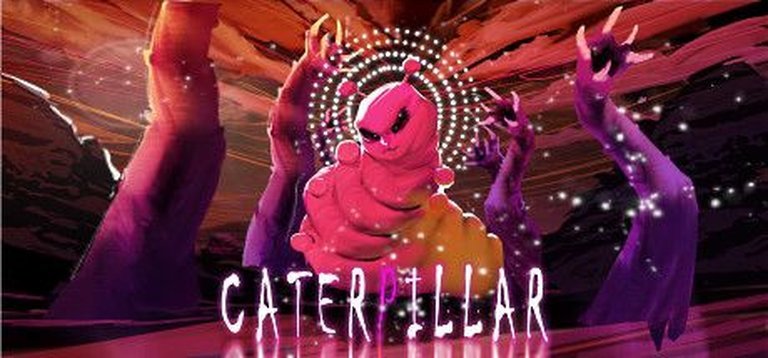
Caterpillar is a 2D side-scrolling platformer with puzzle elements, set in a fantasy world. The game, developed by Grin Robot and published by Desert Water Games LLC, was released in June 2022. Players control a caterpillar navigating through various levels, solving puzzles, and overcoming obstacles in a direct control interface. The game is known for its engaging and challenging gameplay, making it a standout title in the action genre.
Gameplay Videos
Where to Buy Caterpillar
PC
Caterpillar Cracks & Fixes
Caterpillar Mods
Caterpillar Reviews & Reception
thexboxhub.com (40/100): There’s only really one cohort of gamers Caterpillar is aimed at – those looking to give their Xbox Gamerscore figures a quick boost.
Caterpillar: A Metamorphosis of Ambition or a Crawl Through Mediocrity?
Introduction
In the saturated landscape of indie platformers, Caterpillar (2022) emerges as a curious specimen—a game that wears its simplicity like a badge of honor while simultaneously inviting scrutiny for its lack of depth. Developed by Grin Robot and published by Desert Water Games LLC, this 2D side-scroller presents itself as a meditative journey of transformation, following a caterpillar’s quest to become a butterfly. Yet, beneath its whimsical facade lies a divisive experience: a title praised by achievement hunters for its effortless Gamerscore but derided by critics as a hollow shell of gameplay. This review dissects Caterpillar’s legacy, interrogating whether it symbolizes earnest indie charm or the commodification of gaming’s completionist culture.
Development History & Context
The Studio Behind the Cocoon
Grin Robot, the developer of Caterpillar, is no stranger to minimalist design. Known for titles like Butterfly and Synchro Hedgehogs, the studio has carved a niche in crafting bite-sized, achievement-heavy games tailored for Xbox’s Gamerscore ecosystem. Caterpillar fits neatly into this lineage, built using GameMaker Studio—a tool favoring accessibility over complexity. This choice reflects the studio’s pragmatic approach: prioritize quick development cycles and low budgets over mechanical innovation.
A Crowded Ecosystem
Released on June 2, 2022, Caterpillar entered a market saturated with indie platformers. Its $0.74 price tag on Steam positioned it as an impulse purchase, competing not with AAA titans but with a sea of similar micro-titles designed for brief engagement. The game’s rollout across Xbox One, Xbox Series X|S, and Windows further cemented its identity as a cross-platform curio, leveraging Microsoft’s Smart Delivery system to reach achievement-hungry players.
Narrative & Thematic Deep Dive
A Paper-Thin Allegory
Caterpillar’s narrative is minimalistic to a fault. The premise—a caterpillar’s journey to metamorphose into a butterfly—is less a story and more a mechanical excuse for progression. Dialogue is absent, character development nonexistent, and emotional stakes reduced to a series of flower-gobbling checkpoints. While the Steam description vaguely alludes to “enemies and obstacles” as metaphors for growth, these elements lack thematic cohesion, reducing the caterpillar’s quest to a rote checklist.
Missed Opportunities
Contrast this with the other 2022 Caterpillar—a horror RPG Maker project by pianotm—which explores darker themes of identity and monstrosity as a caterpillar yearns to become human. Grin Robot’s version, by comparison, feels devoid of subtext, content to mimic the structure of a children’s fable without its heart.
Gameplay Mechanics & Systems
The Crawl of Progress
At its core, Caterpillar is a platformer stripped of complexity. The titular insect cannot jump; instead, it crawls horizontally and ascends walls Spider-Man-style. Players navigate 40 levels, eating flowers to dissolve color-coded barriers (red and purple bricks) while avoiding bees and worms. Mechanics like the “Lightning Spade” (to banish worms) and “magic mushroom-faster” (a speed boost) introduce mild variety, but repetition sets in almost immediately.
Achievement Farming: The Real Game
TheXboxHub’s review aptly notes that Caterpillar’s true audience is Gamerscore enthusiasts. The first 10 levels award 100G each for mere participation, incentivizing rapid-fire completions. TrueAchievements even boasts a “100% Walkthrough Guide” promising 2,000G in five minutes. This design philosophy reduces gameplay to a transactional loop, prioritizing quantifiable rewards over engagement.
Flaws in the Chrysalis
The lack of challenge undermines any sense of accomplishment. Bees can be exploited as springboards, worms are easily circumvented, and levels rarely demand more than rudimentary pathfinding. Combined with a grating, repetitive soundtrack, the experience feels less like a game and more like a productivity app for virtual trophies.
World-Building, Art & Sound
Aesthetic Ambivalence
Caterpillar’s visuals are serviceable but uninspired. The 2D side-scrolling environments—forests, dungeons, mountains—are rendered in flat, pastel tones, evoking a generic fantasy aesthetic. While the caterpillar’s animation is charmingly wiggly, backgrounds lack detail, and enemy designs (particularly the “bees,” which resemble wasps) feel hastily sketched.
Sound Design: A Buzzing Irritant
The audio landscape is equally lackluster. A loopy, saccharine soundtrack grates over time, and sound effects—like the crunch of eaten flowers—quickly lose their novelty. This sensory monotony accentuates the game’s shallowness, making prolonged play sessions a test of patience.
Reception & Legacy
Critical Dismissal
Caterpillar garnered scant attention from critics. TheXboxHub’s 2/5 review dismissed it as “a quick boost” for Gamerscore addicts, while Metacritic’s lone critic score of 40/100 underscored its lack of artistic merit. Player reviews are virtually nonexistent, suggesting minimal organic engagement beyond achievement circles.
A Fleeting Impact
Unlike cult indie darlings (Celeste, Hollow Knight), Caterpillar leaves no lasting imprint. Its legacy lies in its role as a case study in “achievement bait”—a product optimized for Microsoft’s Gamerscore system rather than player satisfaction. Grin Robot’s subsequent releases (Butterfly 2, 2 Synchro Hedgehogs) replicate this formula, cementing the studio’s reputation as purveyors of disposable experiences.
Conclusion
Caterpillar is a game at odds with itself. On one hand, it succeeds as a vehicle for effortless Gamerscore, offering a fleeting dopamine hit for completionists. On the other, it embodies the pitfalls of design-by-spreadsheet—a title so stripped of challenge, narrative, and innovation that it barely qualifies as a “game” in the traditional sense. Its place in video game history is secured not as a masterpiece but as a footnote in the ongoing dialogue about value, artistry, and the commodification of play. For achievement hunters, it’s a five-minute trophy; for everyone else, it’s a reminder that not all metamorphoses are beautiful.
Final Verdict: A mechanically anemic platformer that caters to Gamerscore farmers but offers little for discerning players. Approach only if your love of virtual badges outweighs your appetite for meaningful gameplay.