
- Release Year: 2008
- Platforms: Macintosh, PlayStation 3, Windows, Xbox 360
- Publisher: Ubisoft Entertainment SA
- Developer: Ubisoft Entertainment Inc.
- Genre: Sports
- Perspective: 1st-person Behind view
- Game Mode: LAN, Online Co-op, Online PVP, Single-player
- Gameplay: Open World, stunts, Tricks
- Setting: Europe, Futuristic), Japan (Modern, North America
- Average Score: 62/100
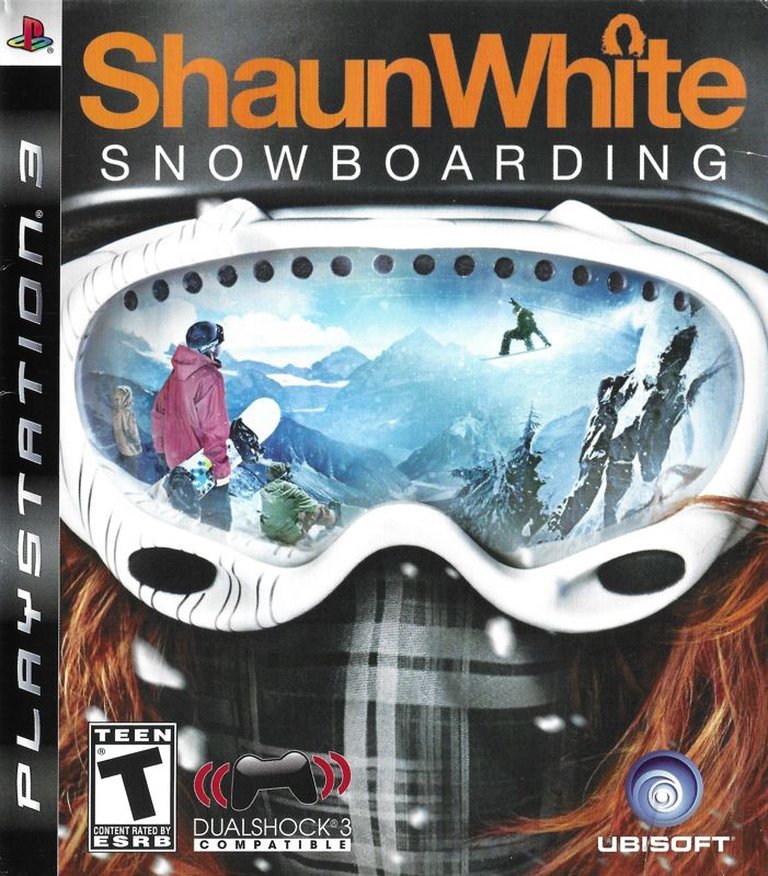
Description
Shaun White Snowboarding is an action-packed snowboarding game that allows players to create their own custom characters and hit the slopes in various global locations, including Europe, Alaska, Japan, and the fictional Park City. Guided by professional snowboarder Shaun White, players can perform tricks, compete in challenges, and earn money to upgrade their gear. The game features an open-world environment with multiple lifts and hidden areas to explore, as well as a multiplayer mode for online or LAN play.
Gameplay Videos
Shaun White Snowboarding Free Download
Shaun White Snowboarding Cracks & Fixes
Shaun White Snowboarding Patches & Updates
Shaun White Snowboarding Mods
Shaun White Snowboarding Reviews & Reception
metacritic.com (60/100): The game looked promising, as it employs the Assassin’s Creed engine and offers an expansive world to explore. But the intimidating controls and lack of direction will scare away anyone hoping for some quick and easy fun, and sports-game enthusiasts looking for the next SSX or a snow-themed Skate won’t find it here.
ign.com (64/100): You’re the slayer and the mountain is your dragon.
Shaun White Snowboarding Cheats & Codes
PlayStation 2
Type the following codes at the main menu.
| Code | Effect |
|---|---|
| R2, L2, R2, L2, O, Triangle, X, L1 | Unlock All Characters |
| R2[2] o triangle triangle x x L1 L2 | Buy All Boards For Free |
Shaun White Snowboarding: Review
Introduction
The snowboarding video game genre, once dominated by franchises like SSX and Amped, found a new challenger in 2008 with Shaun White Snowboarding. Developed by Ubisoft Montreal and bearing the name of Olympic gold medalist Shaun White, the game promised a blend of realism and arcade-style freedom set across sprawling mountain ranges. While its ambition to redefine the sports genre was evident, Shaun White Snowboarding ultimately stumbled on its own scope, delivering a mixed experience that polarized critics and players alike. This review delves into the game’s highs, lows, and legacy, arguing that while it failed to dethrone its predecessors, its innovations laid groundwork for future titles—particularly in its lesser-known Wii incarnation, Road Trip.
Development History & Context
Studio Vision & Technological Constraints
Ubisoft Montreal, fresh off the success of Assassin’s Creed (2007), aimed to leverage its Scimitar engine to create an immersive snowboarding simulator. The team prioritized an open-world design, allowing players to explore mountains freely—a stark contrast to the linear courses of SSX or Tony Hawk. However, this ambition came with technical hurdles. The PC port, criticized for poor optimization, suffered from resolution limits, compatibility issues with multi-core CPUs, and a notorious lack of polish. The Xbox 360 and PlayStation 3 versions fared slightly better, but framerate drops and clunky controls plagued even these iterations.
The Gaming Landscape
By 2008, the snowboarding genre had stagnated. Amped 3 (2005) was the last major release, leaving a gap for a next-gen contender. Ubisoft sought to fill this void with a title that combined the grounded physics of Skate with the spectacle of SSX. Yet, the decision to split development resources across seven platforms—including Wii, DS, and PSP—diluted focus. The Wii version, Road Trip, emerged as an outlier, built from the ground up with motion controls and a family-friendly tone.
Narrative & Thematic Deep Dive
Plot & Characters
Shaun White Snowboarding eschews a traditional narrative in favor of a progression-based career mode. Players create a customizable avatar and traverse four global locations—Alaska, Japan, Europe, and the fictional Park City—completing challenges to earn “respect” points and currency for gear upgrades. Shaun White himself serves as a mentor, offering tutorials and occasional commentary, though his presence feels more like a marketing tool than a meaningful character.
Themes
The game emphasizes freedom and self-expression, mirroring the ethos of snowboarding culture. However, its thematic depth is shallow. The open-world structure suggests a sandbox for creativity, but repetitive objectives (e.g., collecting coins, winning races) undermine this potential. The Wii version’s lighthearted tone, complete with exaggerated animations and goofy voice acting, aligns more closely with the series’ aspirational “lifestyle” branding.
Gameplay Mechanics & Systems
Core Mechanics
The control scheme borrows from Skate’s analog stick-driven trick system, requiring players to flick and rotate sticks for grabs, spins, and grinds. While intuitive in theory, execution falters due to imprecise input detection and floaty physics. The Wii’s motion controls, particularly with the Balance Board, received praise for innovation but were criticized for inconsistency.
Progression & Multiplayer
Earning money unlocks gear with stat boosts (e.g., speed, rotation), though differences between boards feel negligible. The multiplayer mode, a standout feature, allows seamless drop-in/drop-out sessions for up to 16 players (8 on consoles). Activities like “Death Race” (no-holds-barred downhill chaos) and “King of the Hill” shine in group play, though the lack of online leaderboards or robust matchmaking limited longevity.
Flaws
The single-player experience suffers from tedious traversal. Without fast travel, players must hike or ride lifts to event start points—a baffling design choice that drains momentum. The PC version’s restrictive DRM and reliance on outdated DirectX 9 further alienated players.
World-Building, Art & Sound
Visual Design
Ubisoft’s Scimitar engine delivered mixed results. Console versions boasted expansive, snowy vistas with day-night cycles and dynamic weather, though draw distances and texture quality varied. The Wii’s cel-shaded art style, while less realistic, aged better and enhanced performance. PC players, however, faced technical headaches, including crashes on systems with >8 CPU cores.
Soundtrack & Atmosphere
The game’s rock-heavy soundtrack, featuring tracks from Heart, Living Colour, and Social Distortion, complements its high-energy tone. Environmental sounds—crunching snow, whipping winds—add immersion, though repetitive voice lines from NPCs (“Duuuude!”) grate over time.
Reception & Legacy
Critical Response
Reception was lukewarm. The PS3 and Xbox 360 versions averaged 63% on Metacritic, with critics praising the open world but panning clunky controls and repetitive missions. The Wii edition fared better (78%), lauded for accessible motion controls and polished visuals. PC ports were panned for technical issues.
Commercial Performance
Despite mixed reviews, the game sold over 3 million copies by 2009, buoyed by Shaun White’s star power and holiday season timing. The Wii version outsold others, proving its appeal to casual audiences.
Influence on the Genre
While Shaun White Snowboarding failed to revive the snowboarding genre, its open-world structure and social multiplayer elements influenced later titles like Steep (2016). The Wii version’s Balance Board integration, though imperfect, hinted at motion controls’ potential in sports simulations.
Conclusion
Shaun White Snowboarding is a tale of two games: a technically ambitious but flawed console/PC experience and a surprisingly robust Wii adaptation. Its open-world design and multiplayer innovations were ahead of their time, yet hampered by ubisoft’s overreach and underpolished execution. Today, it remains a curious footnote in sports gaming—a title that dared to redefine its genre but fell short of greatness. For collectors and nostalgia seekers, the Wii’s Road Trip offers the most enjoyable ride; others may find its legacy better appreciated from afar.
Final Verdict: A snowball with promise that melted halfway down the mountain.