
- Release Year: 2008
- Platforms: Linux, Macintosh, Windows
- Publisher: Puppygames
- Developer: Puppygames
- Genre: Action
- Perspective: Top-down
- Game Mode: Single-player
- Gameplay: Boss battles, Power-ups, Shooter, Upgrades
- Setting: Futuristic, Sci-fi
- Average Score: 78/100
Description
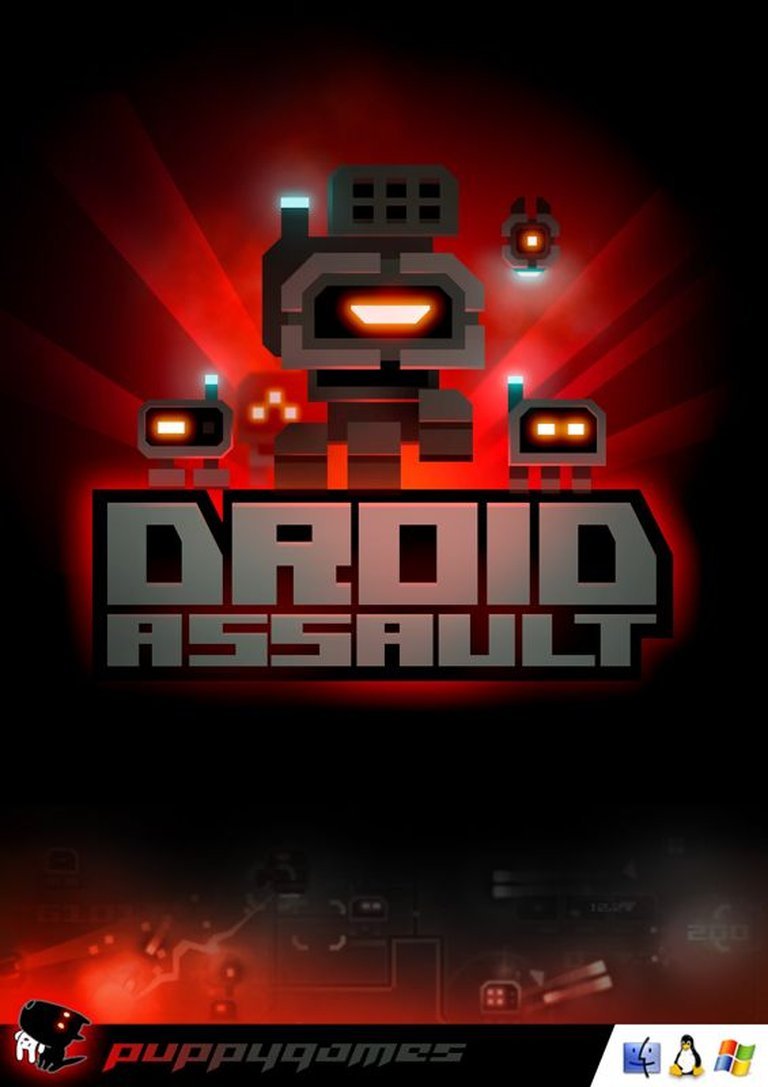
Droid Assault is a fast-paced multidirectional shooter set in a sci-fi industrial complex, where players lead a small army of robots to battle hostile machines. Inspired by classics like Paradroid, the game lets players hijack enemy droids using transfer points, build a squad of upgradable units, and strategically swap between them to overcome challenges. Each level involves clearing enemies to activate teleporters while avoiding mines and turrets, culminating in boss fights. With vibrant visuals, power-ups, and persistent robot upgrades, the game blends arcade action with tactical depth.
Where to Buy Droid Assault
PC
Droid Assault Free Download
Droid Assault Guides & Walkthroughs
Droid Assault Reviews & Reception
metacritic.com (75/100): Everyeye.it: Droid Assault is the perfect “coffee break” for the videogamer, a tasty indie game to drink and sip between an online multiplayer match and an intense session of your favourite MMO.
en.wikipedia.org : Droid Assault received mixed reviews from critics, praising its art style and gameplay but calling its length short.
steambase.io (82/100): Droid Assault has achieved a Steambase Player Score of 82 / 100. This score is calculated from 370 total reviews on Steam — giving it a rating of Very Positive.
steamcommunity.com : Droid Assault is smart, nerve-wracking, and intense.
Droid Assault: A Retro-Chic Masterclass in Robotic Chaos
Introduction
In the pantheon of indie games that pay homage to arcade classics, Droid Assault (2008) stands as a defiant love letter to the Paradroid legacy. Developed by UK-based Puppygames, this top-down shooter combines frenetic action with tactical depth, weaving a hypnotic loop of robot domination and explosive strategy. While not a commercial blockbuster, Droid Assault has cemented itself as a cult favorite among retro enthusiasts—a game that distills the essence of 1980s arcade shooters into a modern, minimalist package. This review explores how Puppygames crafted a title that balances nostalgia with innovation, even as it stumbles under the weight of its own ambition.
Development History & Context
Puppygames, a studio synonymous with “progretro” aesthetics, emerged in the late 2000s as part of an indie wave reinterpretating classic arcade mechanics. Founded by Caspian Prince, the studio prioritized tight gameplay and pixel-art charm over AAA polish. Droid Assault arrived during a transitional era for indie games, where digital distribution platforms like Steam and Humble Bundle began democratizing access to niche titles.
Technologically, the game leveraged Java’s cross-platform capabilities, ensuring accessibility on Windows, macOS, and Linux—a rarity at the time. Its design echoed Paradroid (1985) and Quazatron (1986), games celebrated for their robot-hacking mechanics. However, Puppygames streamlined the “transfer game” of its predecessors, focusing on squad management and rapid-fire action rather than convoluted puzzles. In an era dominated by bloated AAA titles, Droid Assault stood out for its simplicity and clarity of vision.
Narrative & Thematic Deep Dive
Droid Assault dispenses with traditional storytelling, opting instead for environmental lore. Players invade an industrial complex overrun by rogue robots implied to be rebelling against their creators—a subtle nod to themes of autonomy and control. The lack of explicit narrative serves the gameplay: the focus is on the visceral thrill of commandeering enemy units, a metaphor for turning oppression into empowerment.
Dialogue is nonexistent, but the robots’ designs and behaviors speak volumes. From spindly “Guardbots” to hulking “Battledroids,” each enemy’s silhouette communicates its role, reinforcing a world where functionality dictates form. The absence of human characters underscores the cold, mechanistic stakes—this is a war fought by machines, for machines.
Gameplay Mechanics & Systems
At its core, Droid Assault is a strategic shooter built on three pillars:
-
Robot Hijacking: The game’s defining mechanic allows players to “transfer” control of enemies using limited points. Larger droids cost more, creating risk-reward tension. Once recruited, bots become AI allies, automatically targeting foes.
-
Squad Management: Players cycle through eight slots of captured units, each persistent across levels. Upgrades—like armor-piercing lasers or devastating flamethrowers—reward experimentation, though the cap on squad size forces tough choices.
-
Combat & Progression: Levels escalate in chaos, with mines, turrets, and screen-filling bullet patterns. Boss battles punctuate the campaign, requiring pattern memorization and squad coordination.
Flaws: Repetition sets in by mid-game, as level objectives rarely evolve beyond “kill everything.” The control scheme’s reliance on mouse-and-keyboard also drew criticism, with some players craving gamepad support.
World-Building, Art & Sound
Puppygames’ signature “retro-chic” aesthetic shines here. The neon-soaked industrial corridors and chunky pixel art evoke a gritty, lived-in sci-fi universe. Environmental destruction adds dynamism—walls crumble under gunfire, revealing hidden power-ups.
Sound design is minimalist but effective: the hum of energy weapons and metallic clang of exploding droids create an ASMR-like rhythm. The synth-heavy soundtrack, while sparse, amplifies the tension, crescendoing during boss fights.
Reception & Legacy
Droid Assault earned mixed-to-positive reviews. Softpedia praised its “depth that can’t be shown in screenshots” (8.5/10), while 4Players.de critiqued its repetitive structure (66/100). Critics universally lauded its art style and addictive loop, even as they noted its brevity.
The game’s legacy lies in its influence on indie shooters. Its squad mechanics presaged titles like Heat Signature, and its retro ethos inspired Puppygames’ later hits like Ultratron. The 2019 Ultra Edition—a cassette-shaped USB release—cemented its cult status, blending nostalgia with tangible collectibility.
Conclusion
Droid Assault is not a perfect game. Its repetitive levels and control quirks reflect the constraints of its indie origins. Yet, like all great arcade experiences, its flaws dissolve under the weight of sheer fun. Few games capture the joy of building a robot army so viscerally, or with such stylish panache.
For fans of retro shooters, Droid Assault remains essential—a flawed gem that exemplifies Puppygames’ ability to marry past and present. It may not rewrite history, but it polishes its inspirations to a dazzling sheen. 8/10.