
- Release Year: 2002
- Platforms: Windows
- Publisher: d2 Digital by Design Ltd.
- Developer: d2 Digital by Design Ltd.
- Genre: Educational
- Perspective: 1st-person
- Game Mode: Single-player
- Gameplay: Drag and drop, Mouse-controlled mini games, Music creation, Sound and animation interaction
- Setting: Cottage, Farm, Pond
- Average Score: 28/100
Description
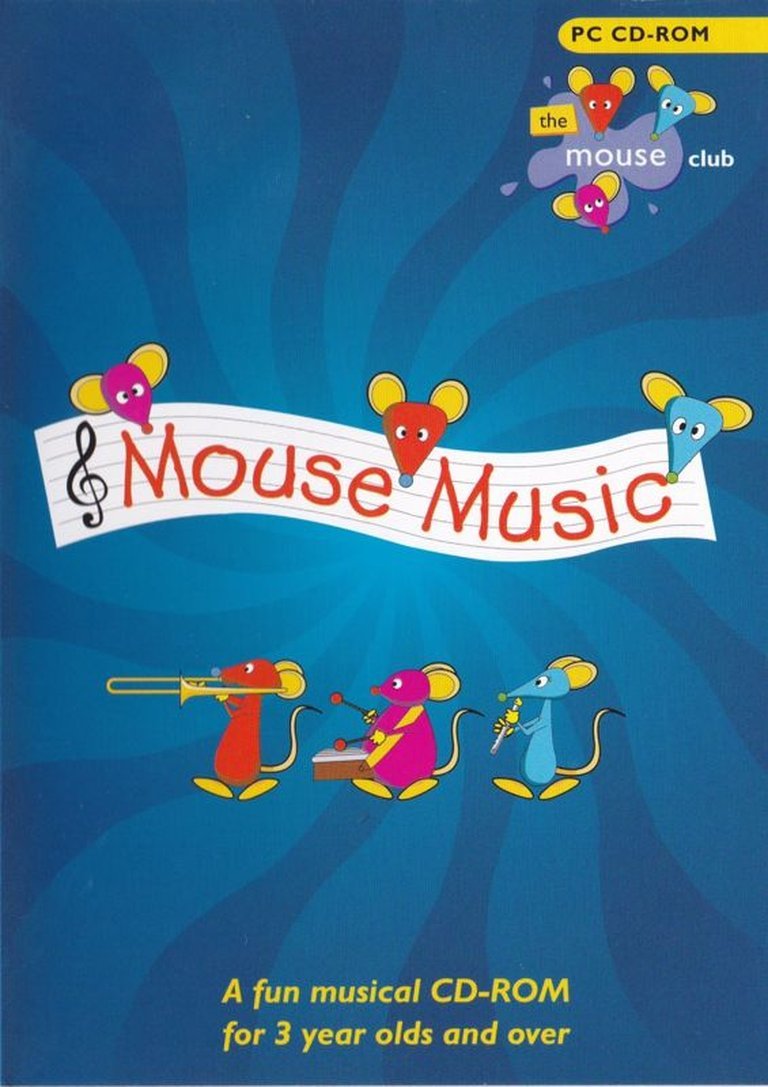
Mouse Music is a 2002 educational game designed for toddlers around three years old, offering four interactive mini-games that combine music and early learning. Set in a playful environment, it features activities like exploring Old MacDonald’s Farm with clickable animations, playing a simplified piano with adjustable instruments and classic tunes, matching body parts in dance sequences, and creating custom music tracks by arranging instruments. The entirely mouse-controlled interface encourages creativity and motor skill development through sound, animation, and music-based tasks.
Mouse Music Reviews & Reception
justapedia.org (28/100): The game received ‘unfavorable’ reviews according to the review aggregation website Metacritic.
Mouse Music: A Nostalgic Dive into Early 2000s Edutainment
Introduction
In the early 2000s, as the gaming industry began to expand beyond hardcore enthusiasts, educational titles like Mouse Music quietly carved out a niche for preschoolers. Developed by UK studio d2 Digital by Design Ltd. in 2002, Mouse Music is a charming relic of CD-ROM-era edutainment, designed to introduce toddlers to music, rhythm, and basic motor skills. While it lacks the bombast of mainstream franchises, its simplicity and earnest approach to early learning make it a fascinating artifact of a bygone era. This review explores how Mouse Music balanced limited technology with pedagogical intent—and why it remains a curious footnote in gaming history.
Development History & Context
Studio Vision & Constraints
d2 Digital by Design Ltd., a lesser-known UK developer, specialized in educational software during the late 1990s and early 2000s. Mouse Music emerged during a transitional period for gaming: CD-ROMs were standard, but hardware limitations still dictated minimalist design. Targeting Windows PCs, the game prioritized accessibility, relying entirely on mouse input to accommodate its young audience.
The Edutainment Landscape
The early 2000s saw a surge in preschool-focused titles like Reader Rabbit and JumpStart, but Mouse Music distinguished itself by centering on music rather than literacy or math. Its development aligned with contemporary research emphasizing music’s role in early cognitive development. However, unlike Sesame Street tie-ins or Baby Einstein products, Mouse Music lacked franchise backing, leaving it overshadowed by competitors.
Technological Limits
With no voice acting and rudimentary animations, Mouse Music leaned on MIDI-style tunes and basic interactions. The CD-ROM format allowed for crisp visuals and sound but restricted complexity—a trade-off that prioritized stability over innovation.
Narrative & Thematic Deep Dive
No Story, Just Play
Mouse Music foregoes narrative for pure interactivity. Its premise is simple: a digital playground where mice-themed minigames teach musical concepts. The absence of characters or plot reflects its utilitarian design—every element serves an educational purpose.
Themes of Exploration & Creativity
Each minigame encourages experimentation:
– Old MacDonald’s Farm lets children click on animals and objects to trigger sounds and animations, fostering cause-and-effect understanding.
– Mouse Piano introduces instrument tones and nursery rhymes, blending melody recognition with lyric comprehension.
– Picture Songs allows drag-and-drop composition, subtly teaching sequencing and pattern recognition.
Thematically, the game champions learning through play, a philosophy mirrored in its lack of failure states or penalties.
Gameplay Mechanics & Systems
Four Minigames, One Goal
1. Old MacDonald’s Farm: A point-and-click exploration where hotspots activate animations (e.g., ducks quacking, tractors rumbling). It’s a sensory sandbox, though repetitive for older users.
2. Mouse Piano: A one-octave keyboard with instrument-swapping (piano, harp, sound effects). The dial-based song selector (“London Bridge,” “Wheels on the Bus”) pairs melodies with lyrics, aiding sing-along learning.
3. Mouse Dancing: A rhythm-lite activity where kids click body parts (arms, ears) in time with prompts. Its “dance” sequences are rudimentary but effective for coordination practice.
4. Picture Songs: The most inventive mode, letting children arrange instruments into sequences played over backing tracks. It’s a proto-DAW for toddlers.
UI & Accessibility
The interface is intentionally sparse, with oversized buttons and bold colors. However, the lack of progression tracking or difficulty settings limits long-term engagement.
Flaws & Innovations
While innovative for its target age group, Mouse Music suffers from rigid structure. Minigames don’t evolve, and the fixed song/instrument options curb creativity. Yet its focus on open-ended play was ahead of its time, foreshadowing modern apps like Endless Alphabet.
World-Building, Art & Sound
Visual Design
The art style is whimsically utilitarian: bright, cartoonish mice and environments rendered in 2D. Animations are basic but functional (e.g., bouncing pigs, swaying trees), avoiding overstimulation.
Sound Design
The MIDI-backed soundtrack features crisp renditions of nursery rhymes, while sound effects (animal noises, instrument tones) are punchy and clear. Notably, the lack of voice acting puts the onus on parents/caregivers to guide play—a double-edged sword for solo use.
Atmosphere
Mouse Music radiates warmth and safety, with no high stakes or menacing elements. Its auditory and visual feedback loops (e.g., cheerful jingles after correct clicks) reinforce positive reinforcement.
Reception & Legacy
Commercial & Critical Silence
Despite its ambitions, Mouse Music left little cultural footprint. No critic reviews exist on aggregation sites, and its MobyGames entry lacks a score. This obscurity stems from narrow targeting, limited marketing, and competition from branded edutainment.
Influence on Later Titles
While not a trailblazer, Mouse Music exemplified early trends in music-based learning. Its emphasis on drag-and-drop composition presaged apps like GarageBand for Kids, and its focus on motor skills parallels modern touchscreen games.
Preservation Challenges
As a CD-ROM title, Mouse Music is functionally extinct outside abandonware circles—a fate shared by many edutainment gems of its era.
Conclusion
Mouse Music is neither a masterpiece nor a failure but a earnest product of its time. For parents in 2002, it offered a low-stakes introduction to music and computing. Today, it serves as a nostalgic time capsule, illustrating how developers navigated technical and pedagogical constraints to engage the youngest gamers. While overshadowed by flashier titles, Mouse Music’s legacy lies in its purity of purpose: to make learning joyful, one click at a time.
Final Verdict: A quaint artifact of early edutainment, Mouse Music is best remembered as a stepping stone in the evolution of interactive learning—a humble reminder that even the smallest games can leave gentle echoes.
This review is based on archival materials from MobyGames and contextual analysis of early 2000s edutainment trends. No critic reviews or sales data are publicly available.