
- Release Year: 2007
- Platforms: Windows
- Publisher: uWish Games
- Genre: Compilation
Description
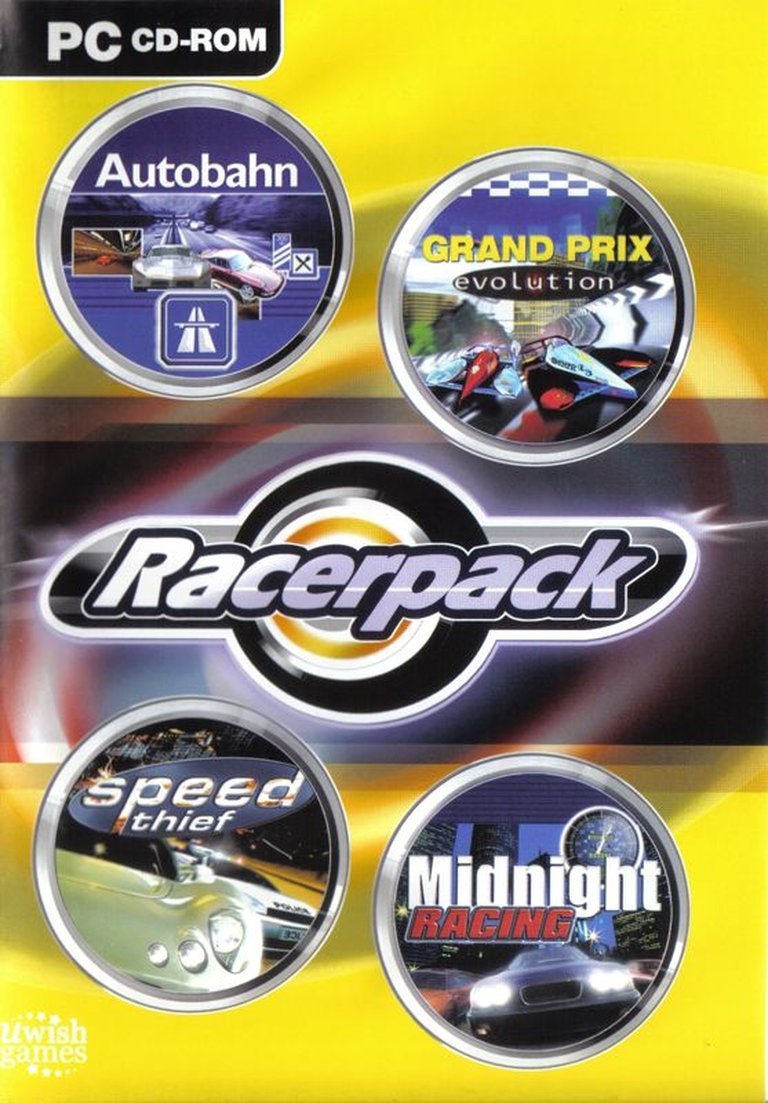
Racerpack is a 2007 racing game compilation for Windows, published by uWish Games on CD-ROM. The bundle includes four distinct racing titles: Autobahn, Grand Prix Evolution, Midnight Racing, and Speed Thief, offering varied racing experiences across different settings and styles within a single commercial package.
Racerpack Cracks & Fixes
Racerpack Patches & Updates
Racerpack: A Forgotten Relic of 2007’s Racing Compilation Era
Introduction
In the annus mirabilis of 2007—a year that gifted gamers BioShock, Portal, and Mass Effect—a lesser-known anthology slipped onto store shelves, unnoticed and uncelebrated. Racerpack, a budget compilation of four racing titles, represents a forgotten footnote in gaming history. This review excavates its origins, dissects its flawed execution, and examines why it faded into obscurity. Thesis: Racerpack exemplifies the pitfalls of low-effort compilations—a disjointed, technically dated package overshadowed by the era’s groundbreaking innovations.
Development History & Context
Developed by Incagold and published by uWish Games (a British studio known for bargain-bin releases), Racerpack arrived in September 2007 for Windows. The mid-2000s saw a surge of budget compilations targeting casual players, often repackaging older titles or licensing subpar imitations of popular genres. Racing games, buoyed by franchises like Need for Speed and Burnout, dominated the market, but Racerpack lacked the polish or vision to compete.
Technologically, the games—Autobahn, Grand Prix Evolution, Midnight Racing, and Speed Thief—were built on rudimentary engines, likely recycled from earlier projects. The lack of credits or developer interviews suggests a hurried production, prioritizing quantity over quality. For context, 2007 also saw Forza Motorsport 2 and DiRT redefine racing simulations, leaving Racerpack’s offerings glaringly archaic.
Narrative & Thematic Deep Dive
As a compilation, Racerpack lacks a unifying narrative, but its individual games flirt with themes common to early 2000s racing culture:
- Autobahn: A generic highway speedfest evoking Need for Speed: Underground’s high-octane drag races—minus the customization or stakes.
- Grand Prix Evolution: A futuristic F1 homage starring Nelson Piquet, though its “2100 A.D.” setting amounts to little beyond bland sci-fi textures.
- Midnight Racing: Illegal street races under moonlight, reminiscent of Midnight Club but devoid of its open-world immersion.
- Speed Thief: A Gone in 60 Seconds knockoff where players steal cars for cash—a premise undermined by clunky mechanics.
None explore character arcs or world-building; they mimic popular tropes without understanding their appeal.
Gameplay Mechanics & Systems
Racerpack’s gameplay loops are repetitive and marred by technical jank:
-
Core Mechanics:
- Autobahn and Midnight Racing rely on simplistic “dodge traffic” gameplay with sluggish controls.
- Grand Prix Evolution’s futuristic angle introduces no innovations, offering bare-bones lap races on flat, uninspired tracks.
- Speed Thief stands out for its misguided ambition—stealing cars requires awkward mini-games, but the lack of police AI or meaningful consequences renders it tedious.
-
Progression & UI:
- Unlock systems are nonexistent; players grind repetitive races for marginal rewards.
- The menu UI resembles early-2000s shareware—cluttered and unintuitive.
-
Flaws:
- Collision detection is erratic, and framerate dips plague high-speed sequences.
- No multiplayer or leaderboards—a baffling omission for a racing compilation.
World-Building, Art & Sound
Racerpack’s aesthetic is a patchwork of missed opportunities:
-
Visual Design:
- Autobahn and Midnight Racing recycle bland urban textures, while Grand Prix Evolution’s “futuristic” tracks are merely neon-drenched corridors.
- Car models lack detail, with rudimentary damage systems and no customization.
-
Sound Design:
- Engine noises are passable but generic.
- The soundtrack features royalty-free rock and electronica tracks that loop incessantly.
The package feels like a tech demo rather than a cohesive experience.
Reception & Legacy
Racerpack left no cultural footprint:
-
Commercial & Critical Reception:
- No professional reviews exist—a rarity even for budget titles. User impressions on forums describe it as “forgettable” and “a cash grab.”
- It failed to chart in sales data, buried beneath 2007’s titans.
-
Legacy:
- uWish Games continued releasing low-tier compilations, but Racerpack remains their most obscure.
- Its games influenced nothing; even contemporary critics of rushed licensed titles (Spider-Man 3, Pirates of the Caribbean) ignored it.
Conclusion
Racerpack is a relic of an era when publishers flooded markets with half-baked compilations. Its lack of innovation, technical flaws, and absence of soul render it a textbook example of how not to curate an anthology. While 2007 elevated gaming as an artistic medium, Racerpack serves as a counterpoint—a reminder that not all titles age into cult classics. For historians, it’s a curiosity; for players, it’s best left in the rearview mirror.
Final Verdict: A forgettable detour in racing history, notable only as a case study in missed potential.