
- Release Year: 2015
- Platforms: Windows
- Publisher: Babel Studio
- Developer: Babel Studio
- Genre: Adventure
- Perspective: 1st-person
- Game Mode: Single-player
- Gameplay: Puzzle
- Setting: Fantasy
- Average Score: 80/100
Description
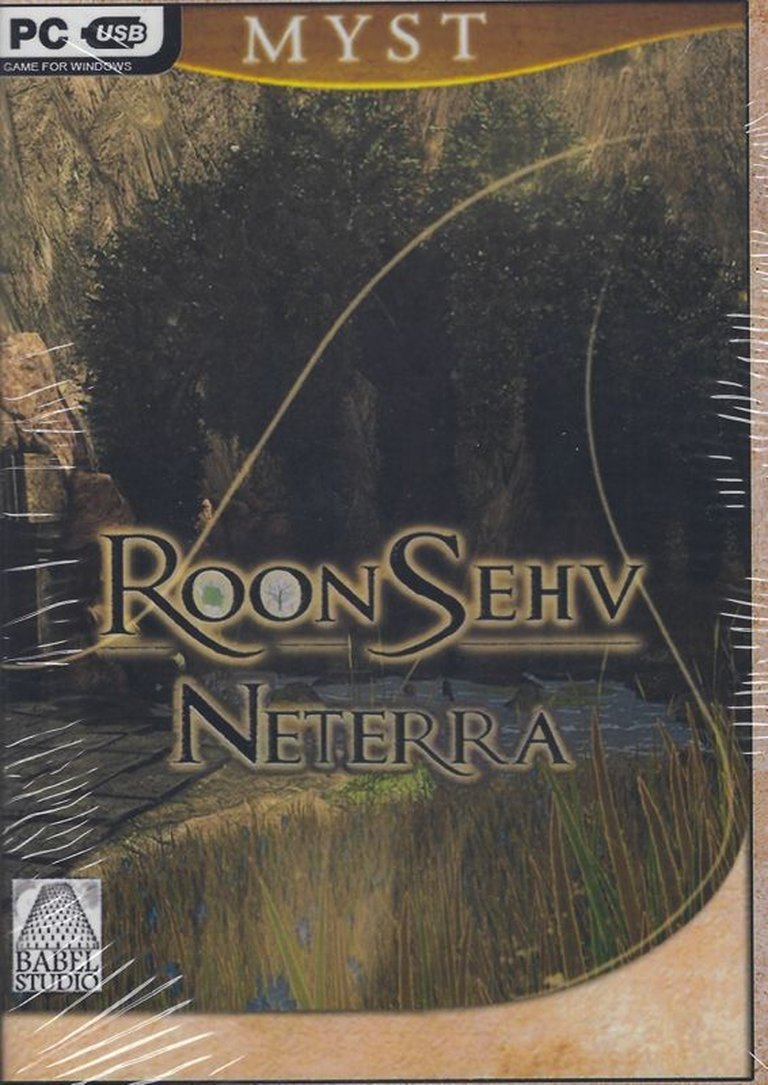
RoonSehv: NeTerra is a fan-made, Myst-inspired adventure game set in the universe of Myst, exploring a parallel story involving Atrus and his family. Developed with Unreal Engine 3, the game immerses players in the abandoned sanctuary of RoonSehv—a haven for the D’ni civilization’s artists and scholars—where they solve environmental puzzles and uncover lore through exploration. Blending atmospheric first-person exploration with intricate puzzles, the standalone narrative enriches the Myst mythology while retaining the series’ signature sense of isolation and discovery.
RoonSehv: NeTerra Guides & Walkthroughs
RoonSehv: NeTerra Reviews & Reception
collectionchamber.blogspot.com : It is a masterpiece that reminded me why I loved this franchise to begin with.
mobygames.com (80/100): A Myst-like fangame based on the story of Myst.
RoonSehv: NeTerra Cheats & Codes
PC
Press Up Button When Placing Monsters To Place Them In Opponent’s Field
| Code | Effect |
|---|---|
| C009C584 8400 | Press Up Button When Placing Monsters To Place Them In Opponent’s Field |
| E009C711 10 | Press Up Button When Placing Monsters To Place Them In Opponent’s Field |
| 300EB3D8 01 | Press Up Button When Placing Monsters To Place Them In Opponent’s Field |
| E009C711 10 | Press Up Button When Placing Monsters To Place Them In Opponent’s Field |
| 800FF4E8 0050 | Press Up Button When Placing Monsters To Place Them In Opponent’s Field |
| E009C711 10 | Press Up Button When Placing Monsters To Place Them In Opponent’s Field |
| 800FF4EA 0000 | Press Up Button When Placing Monsters To Place Them In Opponent’s Field |
RoonSehv: NeTerra: Review
In the pantheon of video games, few franchises have left as indelible a mark as Myst. The original game, released in 1993, set a new standard for puzzle-solving and exploration in the adventure genre. Fast forward to 2015, and we find a gem hidden within the vast landscape of fan-made games: RoonSehv: NeTerra. This Myst-like fangame, developed by Babel Studio, is a testament to the enduring legacy of Myst and the passion of its fans. RoonSehv: NeTerra is not just a tribute; it is a standalone masterpiece that stands tall among its inspirations. This review will delve into the intricate details of RoonSehv: NeTerra, exploring its development history, narrative, gameplay mechanics, world-building, and its enduring legacy.
Development History & Context
The Studio and Creators’ Vision
RoonSehv: NeTerra was the brainchild of Denis Martin, a French developer who went by the username Prom361. The project began in 2004, but it was not until 2013 that Martin discovered the Unreal Development Kit (UDK), which provided the necessary tools to bring his vision to life. The team at Babel Studio, which included Martin, grew to a core group of seven talented individuals, each contributing their unique skills to the game’s development.
The creators’ vision was clear: to capture the essence of Myst while adding their own unique twist. They aimed to create a game that was faithful to the Myst series but also stood on its own as a compelling adventure. The use of the Unreal Engine 3 allowed them to achieve a level of visual fidelity and immersion that was previously unattainable for fan-made projects.
Technological Constraints and Gaming Landscape
The gaming landscape in 2015 was vastly different from that of the early 1990s when Myst was released. The advent of high-speed internet, powerful gaming PCs, and advanced game engines like the Unreal Engine 3 had democratized game development. This allowed independent developers like Babel Studio to create games that rivaled commercial titles in terms of visual quality and gameplay mechanics.
However, the technological constraints of the era were still significant. The Unreal Engine 3, while powerful, required a deep understanding of its intricacies to fully utilize its capabilities. The team at Babel Studio had to learn the engine as they developed the game, a testament to their dedication and skill.
Narrative & Thematic Deep Dive
Plot and Characters
RoonSehv: NeTerra takes place in the world of Myst, specifically in the secluded sanctuary of RoonSehv. This is a haven for artists and scholars of the peaceful and technologically advanced D’ni. The story revolves around Atrus and his family, who live in this isolated paradise. For those unfamiliar with Myst lore, Atrus is the creator of many of the worlds or “ages” found within the books he has written, a power garnered from the mystical D’ni.
The narrative of RoonSehv: NeTerra is uncovered through the discovery of various texts and artifacts scattered throughout the game world. The story is a parallel tale to the main Myst series, set in the abandoned paradise where Atrus’s sons grew up. The game begins in the midst of a raging sandstorm, with the player stumbling aimlessly until they come across a downed flying contraption. This sets the stage for a journey of exploration and puzzle-solving.
Dialogue and Themes
The dialogue in RoonSehv: NeTerra is sparse but impactful. The game relies heavily on environmental storytelling, allowing the player to piece together the narrative through exploration and discovery. This approach is consistent with the Myst series, where dialogue is often secondary to the immersive world-building.
Themes of isolation, discovery, and the consequences of technological advancement are prevalent throughout the game. RoonSehv: NeTerra explores the idea of a utopian society that has fallen into disrepair, leaving behind clues and artifacts that the player must decipher. This theme of decay and abandonment adds a layer of melancholy to the game, contrasting with the serene and beautiful environments.
Gameplay Mechanics & Systems
Core Gameplay Loops
RoonSehv: NeTerra is a first-person puzzle adventure game, much like its inspiration. The core gameplay loop revolves around exploration, puzzle-solving, and environmental interaction. The game is designed to be intuitive, with simple and responsive controls that allow the player to navigate the world seamlessly.
The puzzles in RoonSehv: NeTerra are pleasingly obtuse, requiring keen observation and the ability to make seemingly random connections with the surroundings. The answers to the puzzles are all visible within the game world, but the player must often realize what those symbols refer to or that they are part of a puzzle in the first place.
Combat and Character Progression
There is no combat in RoonSehv: NeTerra, which is consistent with the Myst series. The focus is entirely on puzzle-solving and exploration. Character progression is handled through the discovery of new areas and the solving of puzzles, which unlock further parts of the game world.
User Interface
The user interface in RoonSehv: NeTerra is minimalistic and unobtrusive. The HUD is kept to a bare minimum, with only essential information displayed on the screen. This allows the player to fully immerse themselves in the game world without distractions. The controls are intuitive, with the WASD keys used for movement and the mouse for looking around. This control scheme is standard for first-person games and works well within the context of RoonSehv: NeTerra.
Innovative or Flawed Systems
One of the innovative aspects of RoonSehv: NeTerra is its use of the Unreal Engine 3 to create a fully realized 3D environment. This allows for a level of immersion and interaction that was previously unattainable in fan-made games. The game’s puzzles are well-designed, with a few exceptions. One particular puzzle requires the player to count the different colored lights in each room and place representational orbs in size order. This puzzle is somewhat flawed, as it lacks clear clues and can be frustrating for players who are not familiar with the Myst series. However, this is a minor issue in an otherwise well-crafted game.
World-Building, Art & Sound
Setting and Atmosphere
The setting of RoonSehv: NeTerra is a testament to the developers’ attention to detail. The game world is beautifully designed, with a sense of wonder and mystery that permeates every corner. The environments are rich and detailed, inviting the player to explore and discover hidden secrets.
The atmosphere of RoonSehv: NeTerra is one of serene beauty and melancholy. The game’s use of lighting and color creates a sense of isolation and decay, contrasting with the lush and vibrant environments. This contrast adds depth to the game’s narrative, highlighting the themes of abandonment and loss.
Visual Direction
The visual direction of RoonSehv: NeTerra is stunning. The use of the Unreal Engine 3 allows for high-quality graphics and smooth animations. The environments are beautifully rendered, with a level of detail that is impressive for a fan-made game. The character models, while not the focus of the game, are also well-designed and fit seamlessly into the game world.
Sound Design
The sound design in RoonSehv: NeTerra is exceptional. The original soundtrack, composed by Olivier Maurey, is a highlight of the game. The music is atmospheric and evocative, complementing the game’s visuals and narrative perfectly. The sound effects are also well-crafted, adding to the immersion and realism of the game world.
Reception & Legacy
Critical and Commercial Reception
RoonSehv: NeTerra received critical acclaim upon its release in 2015. Critics praised the game’s faithfulness to the Myst series, its beautiful visuals, and its challenging puzzles. The game was noted for its high production values and the dedication of its developers. Despite being a fan-made game, RoonSehv: NeTerra stood out as a polished and professional title.
Commercially, RoonSehv: NeTerra was a success. The game was downloaded over 2,000 times in its first few months, a testament to its popularity among Myst fans and adventure game enthusiasts. The game’s free-to-play model allowed it to reach a wide audience, further cementing its legacy.
Influence on Subsequent Games and the Industry
RoonSehv: NeTerra has had a significant influence on subsequent games and the adventure genre as a whole. Its use of the Unreal Engine 3 to create a fully realized 3D environment set a new standard for fan-made games. The game’s success demonstrated that independent developers could create high-quality titles that rivaled commercial releases.
The legacy of RoonSehv: NeTerra can be seen in the numerous Myst-inspired games that have followed in its footsteps. The game’s focus on exploration, puzzle-solving, and environmental storytelling has become a staple of the adventure genre, inspiring a new generation of developers and fans.
Conclusion
RoonSehv: NeTerra is a masterpiece of fan-made gaming, a testament to the enduring legacy of Myst and the passion of its creators. The game’s beautiful visuals, challenging puzzles, and immersive world-building make it a standout title in the adventure genre. Despite its flaws, RoonSehv: NeTerra is a game that deserves to be experienced by anyone who appreciates the art of puzzle-solving and exploration.
In the pantheon of video games, RoonSehv: NeTerra stands tall as a shining example of what can be achieved by dedicated and talented developers. Its influence on subsequent games and the industry as a whole is undeniable, and its legacy will continue to inspire future generations of adventure game enthusiasts. RoonSehv: NeTerra is not just a game; it is a love letter to the Myst series and a testament to the power of fan-made creativity.