
- Release Year: 2020
- Platforms: Windows
- Publisher: Brace Yourself Games
- Developer: Brace Yourself Games
- Genre: Simulation
- Perspective: Third-person
- Game Mode: Single-player
- Gameplay: City building, construction simulation
- Setting: Futuristic, Sci-fi
- Average Score: 60/100
Description
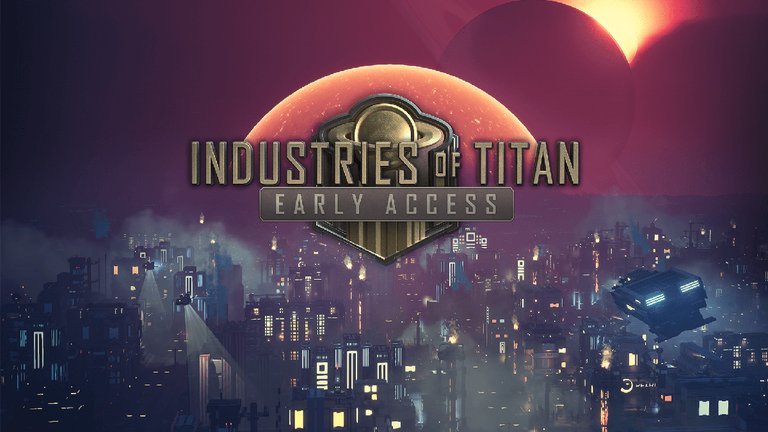
Industries of Titan is a sci-fi city-building and industrial simulation game set on Saturn’s moon Titan, where players construct sprawling factories, manage resources, and compete against rival corporations in a dystopian future. Combining strategic planning with real-time elements, the game challenges players to exploit Titan’s harsh environment while balancing power, production, and workforce dynamics. Though praised for its bold concepts and atmospheric cyberpunk-inspired setting, early reviews note uneven execution and incomplete core mechanics during its Early Access phase.
Gameplay Videos
Where to Buy Industries of Titan
PC
Industries of Titan Free Download
Industries of Titan Cracks & Fixes
Industries of Titan Guides & Walkthroughs
Industries of Titan Reviews & Reception
metacritic.com (60/100): Industries of Titan starts strong and has some bold ideas, but they just don’t really go anywhere.
pcgamer.com : Industries of Titan starts strong and has some bold ideas, but they just don’t really go anywhere.
rockpapershotgun.com : Industries of Titan starts strong and has some bold ideas, but they just don’t really go anywhere.
opencritic.com (60/100): Industries of Titan starts strong and has some bold ideas, but they just don’t really go anywhere.
Industries of Titan: A Titan of Ambition, A Moon of Missed Potential
Introduction
In the pantheon of cyberpunk city-builders, Industries of Titan looms like a neon-clad colossus—a game that marries dystopian capitalism with interstellar exploitation, yet stumbles under the weight of its own ambition. Developed by Brace Yourself Games (of Crypt of the NecroDancer fame), this 2023 release promises a gritty fusion of city-building, real-time strategy, and systemic storytelling set on Saturn’s desolate moon. But does it ascend to greatness, or collapse under corporate hubris? This review dissects its legacy, mechanics, and the haunting void between its vision and execution.
Development History & Context
Brace Yourself Games, a Vancouver-based indie studio, ventured into uncharted territory with Industries of Titan. Led by Andy Nguyen and Ryan Clark, the team aimed to subvert the city-building genre by weaving in RTS combat and a biting satire of late-stage capitalism. Partnering with Malaysia’s Streamline Studios and leveraging Unreal Engine 4, the game entered Early Access in 2020 as a skeletal prototype. Initial builds lacked critical features like a campaign or tech tree, but updates over three years added layers of complexity, culminating in a January 2023 launch.
Released against a backdrop of crowd-pleasers like Cities: Skylines and Frostpunk, Industries of Titan sought to carve a niche with its hybrid mechanics and stark aesthetic. Yet, its journey mirrors Titan’s own ruined colonies: ambitious, overextended, and haunted by what could have been.
Narrative & Thematic Deep Dive
Set in a corporatocratic future, players assume the role of a “Founder” tasked with colonizing Titan under the whims of a shadowy Council. The narrative is a scathing critique of unchecked capitalism: citizens are brainwashed into ad-watching drones, employees toil in soul-crushing factories, and pollution chokes the moon’s brittle atmosphere. The ruins of past colonies litter the landscape, serving as grim reminders of corporate Darwinism.
Yet, the satire lacks teeth. Characters like the dryly voiced corporate advisor feel underdeveloped, and the rebels—purportedly freedom fighters—operate as faceless nuisances rather than ideological foils. The campaign’s goal of earning a Council seat reduces moral complexity to a checklist of soulless milestones (“build 12 air purifiers”), undermining its thematic potential.
Gameplay Mechanics & Systems
Industries of Titan dazzles with its layered systems but falters in their integration:
City-Building & Resource Management
The core loop revolves around scavenging ruins for minerals and isotopes, then erecting factories to refine them. Buildings can be customized internally—a standout feature where players micro-manage floor layouts for efficiency. Early-game tension arises from balancing energy grids, pollution, and worker morale. However, progression stagnates as specialized buildings render interiors obsolete, reducing late-game strategy to repetitive expansion.
RTS Combat & Ships
Rebel attacks introduce RTS elements, but the system feels half-baked. Ship design is clunky (no multiplayer selection!), combat boils down to health-stacking brawls, and turrets often trivialize threats. The “Zen Mode” disabling rebels ironically highlights their superfluity.
Tech Tree & Objectives
The randomized tech tree offers meaningful upgrades (e.g., pollution reduction), but campaign objectives—like hoarding influence—feel arbitrary. Victory hinges on grinding checklists rather than strategic mastery, souring the endgame.
UI & Quality of Life
The interface is a double-edged sword: visually sleek but plagued by tiny icons and buried menus (players routinely miss the Tech Web). Controller support is absent, compounding frustrations.
World-Building, Art & Sound
Industries of Titan’s aesthetic is its crowning achievement:
– Visual Design: Neon-lit voxel structures and crumbling ruins evoke a post-apocalyptic cyberpunk hellscape. Day-night cycles and weather effects (sandstorms, toxic fog) add dynamism, though fire VFX overwhelm smaller screens.
– Sound Design: Danny Baranowsky’s synth-heavy score oscillates between eerie ambience and pulsating beats, while voice acting drips with corporate condescension. The crackle of burning factories and hum of machinery immerse players in Titan’s industrial nightmare.
Yet, beauty can’t mask the dissonance—a world that looks alive but feels sterile, its citizens mere cogs in a lifeless machine.
Reception & Legacy
Upon release, Industries of Titan garnered mixed reviews:
– Critics: PC Gamer (60/100) praised its “bold ideas” but lamented shallow execution, while Rock Paper Shotgun dubbed it “the prettiest strategy game ever” with “no tendons.” Metacritic settled at 58%, citing unrealized potential.
– Players: Steam reviews oscillate between admiration for its style and frustration with grind. The lack of post-launch support (cut roadmaps, abandoned features) further dented its reputation.
Its legacy? A cautionary tale—a game that dared to hybridize genres but faltered under scope creep. While it inspired niche appreciation, it failed to redefine the city-builder mold.
Conclusion
Industries of Titan is a paradox: a visually stunning, audaciously designed game shackled by its own ambition. Its strengths—innovative interior customization, atmospheric world-building, and Danny Baranowsky’s score—clash with undercooked combat, repetitive objectives, and a narrative that whispers when it should scream. For city-building aficionados, it offers a fleeting high, like a corporate stimulant wearing off too soon. For others, it’s a relic—a moonbase half-built, its ruins waiting for a worthier successor.
Final Verdict: A flawed gem for the patient, but no crown jewel in the pantheon of greats. 3/5 stars.