
- Release Year: 1995
- Platforms: Windows
- Publisher: Disney Interactive, Inc.
- Developer: Media Station, Inc.
- Genre: Educational
- Perspective: 3rd-person (Other)
- Game Mode: Single-player
- Gameplay: Interactive book, Mini-games
- Setting: Fantasy
- Average Score: 64/100
Description
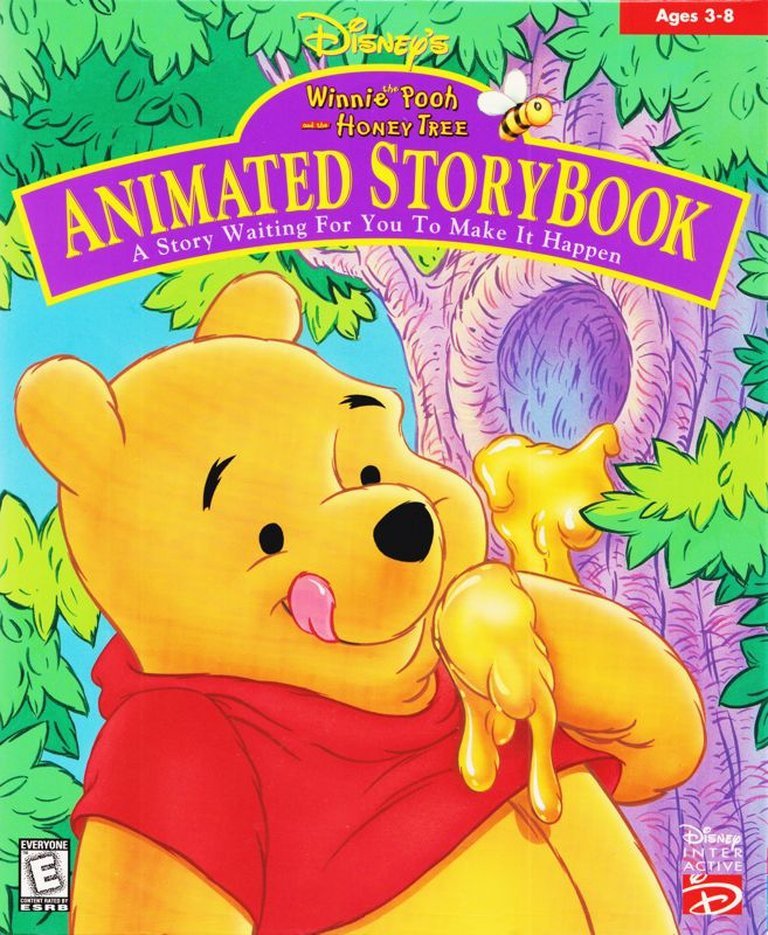
Disney’s Animated Storybook: Winnie the Pooh and the Honey Tree is the second installment in Disney’s educational storybook series, adapting A. A. Milne’s classic tale. Players join Pooh on his quest for honey, which lands him stuck in Rabbit’s doorway, prompting his friends to help free him. The game features an interactive storybook format with clickable elements, sing-along songs, and four simple mini-games designed for preschoolers aged 3-6. Activities include matching toys to descriptions, solving honey puzzles, tidying Rabbit’s shelves, and catching butterflies with Roo. With no overarching goal, the experience focuses on early reading skills and gentle engagement through whimsical 100 Acre Wood adventures.
Gameplay Videos
Disney’s Animated Storybook: Winnie the Pooh and the Honey Tree Free Download
Disney’s Animated Storybook: Winnie the Pooh and the Honey Tree Reviews & Reception
imdb.com (64/100): Interactive storybook based on Winnie the Pooh and the Honey Tree classic animated short.
Disney’s Animated Storybook: Winnie the Pooh and the Honey Tree: Review
Introduction
In the mid-1990s, as CD-ROM technology began reshaping how children interacted with media, Disney’s Animated Storybook: Winnie the Pooh and the Honey Tree (1995) emerged as a charming bridge between storytelling and early digital education. Developed by Media Station, Inc. and published by Disney Interactive, this title was the second entry in the Disney’s Animated Storybook series, following The Lion King (1994). Designed for children aged 3–6, the game sought to blend the whimsy of A.A. Milne’s characters with interactive elements that fostered literacy and problem-solving skills. While not a technical marvel by today’s standards, its legacy lies in its role as a foundational piece of edutainment, offering a nostalgic glimpse into the era when Disney began translating its animated magic into interactive experiences.
Development History & Context
Studio Vision and Technological Constraints
Media Station, Inc., a Michigan-based developer known for its work on early multimedia projects, spearheaded the game’s creation. The studio leveraged proprietary tools like WinToon to optimize animation playback on CD-ROMs, a medium constrained by slow read speeds and limited storage. At the time, home computers typically ran on 486 processors with 4MB of RAM, demanding careful balancing of visual fidelity and performance.
The Gaming Landscape
The mid-’90s saw a boom in “interactive storybooks,” with Broderbund’s Living Books series setting the standard. Disney aimed to capitalize on this trend by pairing its iconic IPs with rudimentary gameplay. Winnie the Pooh and the Honey Tree was part of a broader corporate strategy to synergize with Disney’s Winnie the Pooh franchise revival, which included home video re-releases and merchandise. The game’s development coincided with Disney’s push to dominate the edutainment market, competing with titles like Reader Rabbit and JumpStart.
Narrative & Thematic Deep Dive
Adapting a Classic
The game adapts Disney’s 1966 Winnie the Pooh and the Honey Tree short film, which itself was based on Milne’s original stories. The plot follows Pooh’s quest for honey, culminating in his infamous entrapment in Rabbit’s doorway. While the narrative is abridged, key moments—like Pooh’s failed bee-tree heist and Rabbit’s exasperated attempts to free him—are preserved.
Characters and Dialogue
Voice acting is a standout feature, with Jim Cummings reprising his role as Pooh and Tigger, and other cast members like Ken Sansom (Rabbit) and Michael Gough (Gopher) returning. Notably, Piglet and Tigger are relegated to minor roles, appearing only in mini-games or menu screens. The dialogue retains the gentle humor of the film, though the script omits scenes like Eeyore’s tail subplot and Gopher’s midnight snack, likely to streamline the experience for young audiences.
Themes
Beneath its simple exterior, the game reinforces themes of friendship, persistence, and consequences (Pooh’s gluttony lands him in trouble). Its educational focus—highlighting word recognition and listening skills—aligns with Disney’s broader goal of making learning feel like play.
Gameplay Mechanics & Systems
Core Loop and Interactivity
The game functions as a digital flipbook: players progress through story “pages” adorned with clickable hotspots that trigger animations (e.g., bees buzzing or Pooh bouncing). Narration can be toggled to autoplay or activate via clicks, accommodating both pre-readers and early readers.
Mini-Games
Four mini-games punctuate the story:
1. Piglet’s Toy Hunt: Match descriptions to hidden toys.
2. Honey Shelf Puzzle: Find jars of honey in Rabbit’s cluttered shelves.
3. Clean-Up Duty: Restore order to Rabbit’s home post-Pooh chaos.
4. Butterfly Catching: Help Roo net butterflies in a timing-based challenge.
Each mini-game is deliberately simple, emphasizing observation and motor skills over complexity. The lack of difficulty settings or fail states ensures a stress-free experience, though it limits replayability for older children.
User Interface
The point-and-click interface is intuitive, with arrows for navigation and characters like Owl offering word definitions. However, the fixed 4:3 aspect ratio and low-resolution sprites reflect the era’s hardware limitations.
World-Building, Art & Sound
Visual Direction
The art style faithfully replicates Disney’s hand-drawn animation, with lush backgrounds of the Hundred Acre Wood and expressive character sprites. Scenes like Rabbit’s garden and Christopher Robin’s room are rendered in vivid detail, though animations are limited to 10 frames per second to conserve resources.
Sound Design
The soundtrack, composed using samples from the EMU Proteus 2 Orchestral synthesizer, reprises the film’s jaunty melodies. Sound effects—like Pooh’s rumbly tumbly or Rabbit’s exasperated sighs—add charm. Notably, the game was bilingual (English/Spanish), a rarity for the time, emphasizing Disney’s push for inclusive education.
Atmosphere
The cozy, low-stakes atmosphere mirrors the source material, inviting children to explore at their own pace. Small touches—like Pooh’s gleeful humming or the rustle of leaves—create an immersive, storybook feel.
Reception & Legacy
Critical Response
Upon release, the game earned mixed-to-positive reviews:
– SuperKids praised its readability focus (80/100), calling it “better constructed than The Lion King.”
– All Game Guide lauded its replayability but noted its simplicity (70/100).
Critics agreed it succeeded as an entry-level title for preschoolers, though its lack of depth deterred older audiences.
Commercial Impact
While sales figures are scarce, the game contributed to Disney’s dominance in the ’90s edutainment market. It was bundled with later Winnie the Pooh titles and re-released in compilations like Disney’s Classic Animated Storybook Collection (2001).
Influence
The Animated Storybook series paved the way for Disney’s later ventures into interactive media, including Ariel’s Story Studio (1997) and Disney Learning games. Its emphasis on narration and hotspots influenced contemporaries like Living Books, while its bilingual option presaged modern localization efforts.
Conclusion
Disney’s Animated Storybook: Winnie the Pooh and the Honey Tree is a time capsule of mid-’90s edutainment—a gentle, visually nostalgic experience that prioritizes accessibility over innovation. While its gameplay lacks sophistication, its faithfulness to the source material and thoughtful design for young learners cement its place in gaming history. For millennials who grew up with it, the game remains a honey-sweet memory of Disney’s early forays into interactive storytelling. As a relic of its era, it exemplifies how even the simplest digital adaptations can leave lasting impressions on their audience.