
- Release Year: 2003
- Platforms: Windows
- Publisher: Cenega Czech s.r.o.
- Developer: Centauri Production s.r.o.
- Genre: Adventure, Educational
- Perspective: Side view
- Game Mode: Single-player
- Gameplay: Graphic adventure, Mini-games, Puzzle elements
- Setting: Fantasy
Description
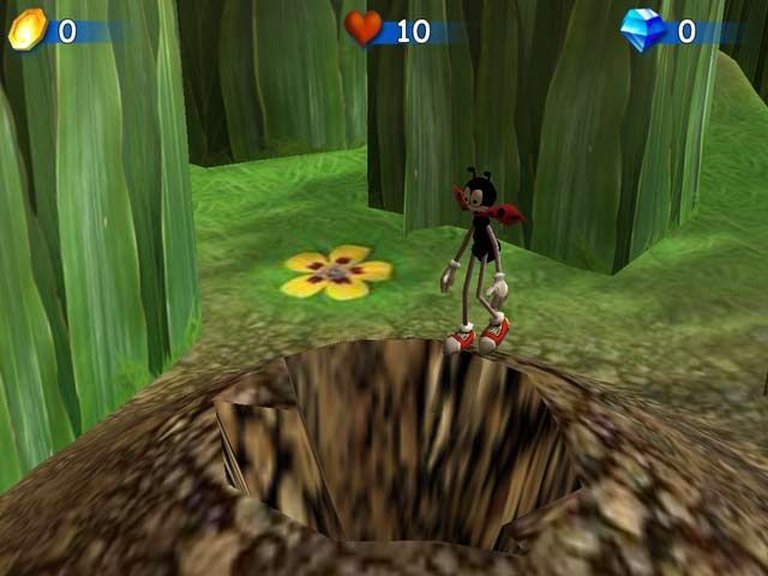
Ferda CD-Romek 25: Královský únos is the 25th installment in the Ferda series, originally distributed alongside the CD-Romek magazine. This educational adventure game centers on Ferda, featuring a mix of graphic adventure gameplay, logic puzzles, and mini-games designed to enhance children’s memory, perception, ecological awareness, and orientation skills. Set in a fantasy world, it also includes English language exercises tailored for young learners, combining playful exploration with developmental activities.
Ferda CD-Romek 25: Královský únos: Review
Introduction
In the early 2000s Czech gaming landscape, a plucky ant named Ferda Mravenec emerged as an unlikely hero, starring in a series of educational adventures aimed at children. Ferda CD-Romek 25: Královský únos (2003), the 25th installment in the long-running franchise bundled with the CD-Romek magazine, attempted to blend lighthearted fantasy storytelling with puzzles, platforming, and language-learning exercises. While its ambitions were commendable, the game remains a fascinating case study of how educational intent collides with gameplay execution—a charming but uneven experience that reflects both the limitations and creativity of its era.
Development History & Context
Studio Vision & Constraints
Developed by Centauri Production and published by Cenega Czech, Královský únos was part of a broader initiative to merge entertainment with education for young audiences. The game was distributed alongside CD-Romek, a children’s magazine that included comics, puzzles, and promotional material (like a Harry Potter-themed board game). This distribution model ensured accessibility but also imposed budgetary and technical constraints, as the game needed to run on low-end PCs prevalent in Czech households at the time.
The Ferda series drew inspiration from Ondřej Sekora’s iconic literary works, which chronicled the adventures of Ferda, a clever ant known for his resourcefulness. The developers sought to translate Sekora’s whimsical world into interactive form, prioritizing simplicity and child-friendly mechanics. However, the need to cater to both educational goals (e.g., English language basics, ecological awareness) and entertaining gameplay resulted in a fragmented design that struggled to balance these elements seamlessly.
Narrative & Thematic Deep Dive
Plot & Characters
The story follows Ferda’s quest to rescue a kidnapped ant queen from rebellious “black ants,” a straightforward narrative tailored for children. The game’s six levels escalate in stakes—from navigating krtek (mole) tunnels to outsmarting a villainous general—while reinforcing themes of bravery, teamwork, and environmental stewardship.
Key characters include:
– Ferda: Voiced by Václav Rašilov, whose cheerful performance anchors the game’s tone.
– Pytlík (a beetle): A loyal ally voiced by Lubor Šplíchal, aiding Ferda in constructing bridges.
– The Ant Queen: A symbol of order, voiced with regal warmth by Klára Sedláčková-Oltová.
– The General: A comically over-the-top antagonist (Miroslav Hanuš) who hurls rocks in the final showdown.
While the dialogue is minimal, the voice acting elevates the experience, imbuing the anthropomorphic cast with personality. Thematically, the game subtly nods to Sekora’s ecological messaging, such as the importance of respecting nature (e.g., avoiding predatory insects like the “mravkolev” [antlion]).
Gameplay Mechanics & Systems
Core Loop & Challenges
The gameplay oscillates between:
1. Platforming: Side-view navigation of tunnels, floating logs, and fungal forests, with precarious jumps that often feel unfairly punishing for young players. Falls result in instant death, demanding precise timing.
2. Resource Management: Collecting “měďáky” (coins) to purchase bridge materials from Pytlík, a rudimentary economics lesson.
3. Stealth: Evading patrolling ants in a clunky but novel stealth segment.
4. Boss Fights: The final showdown requires dodging falling boulders for 60 seconds—a test of reflexes that clashes with the game’s otherwise leisurely pace.
Flaws & Innovations
– Lives System: Players start with 10 lives, replenished via heart pickups. However, trial-and-error level design often leads to frustration.
– Educational Elements: English vocabulary mini-games feel tacked-on, disrupting the flow.
– UI/UX: The menu supports six player profiles, a thoughtful touch for shared family PCs.
World-Building, Art & Sound
Visuals & Atmosphere
The game’s 2D side-view perspective evokes storybook illustrations, with vibrant colors and expressive character sprites. Environments range from earthy tunnels to sunlit meadows, though low-resolution textures betray the game’s budget limitations.
Sound Design
– Voice Acting: The Czech cast delivers standout performances, particularly Rašilov’s Ferda.
– Music & SFX: A jaunty, repetitive soundtrack complements the action, while sound effects (e.g., antlion burrowing) add visceral stakes.
Reception & Legacy
Launch & Long-Term Impact
Upon release, Královský únos garnered little critical attention outside niche Czech gaming circles. However, retrospective analyses (like the Old-Games.ru review) praise its improvements over earlier Ferda titles, particularly its cohesive narrative and inventive stealth segment.
The game’s legacy lies in its cultural resonance: it introduced a generation of Czech children to gaming while honoring Sekora’s literary legacy. Though overshadowed by contemporary titles, its voice acting and educational scaffolding influenced later Central European children’s media, such as the Příběhů ze života series.
Conclusion
Ferda CD-Romek 25: Královský únos is a paradoxical gem—a game brimming with charm and earnest ambition yet hamstrung by janky design and inconsistent difficulty. Its strengths (voice acting, thematic sincerity) shine brightest when viewed through the lens of its educational mission, while its flaws (clunky platforming, undercooked stealth) underscore the challenges of blending pedagogy with play. For historians, it offers a poignant snapshot of early 2000s Czech game development; for players, it remains a nostalgic, if imperfect, tribute to a beloved literary ant.
Final Verdict: A culturally significant but mechanically flawed entry—best appreciated as a relic of its time rather than a timeless classic.