
- Release Year: 2005
- Platforms: Windows
- Publisher: ZUXXEZ Entertainment AG
- Genre: Compilation, Special edition
- Game Mode: Online PVP, Single-player
- Average Score: 84/100
Description
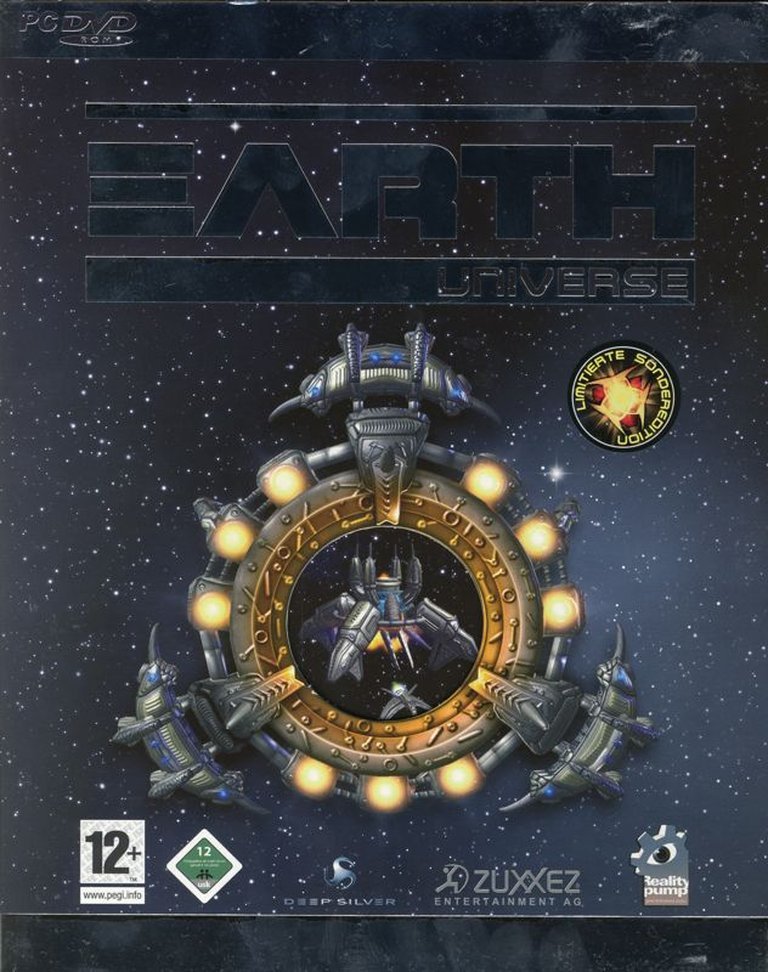
Earth Universe is a comprehensive special edition compilation that brings together the iconic Earth series of sci-fi real-time strategy games, including Earth 2140, Earth 2150, and Earth 2160, along with their expansions, mission packs, and exclusive extras. Set in futuristic conflicts spanning 2140 to 2160, the collection offers base-building, resource management, and tactical combat across diverse campaigns. Released in 2005 for Windows, it also includes physical bonuses like a soundtrack, SDK tools for modding, a T-shirt, notepad, and metal pen. Praised for its value and nostalgic appeal, it caters to both newcomers and series veterans, with multiplayer support for up to eight players.
Earth Universe Reviews & Reception
gamepressure.com (85/100): Earth Universe is a collector’s set of games from the Earth series – a futuristic real time strategy cycle (RTS), created by a Polish development studio Reality Pump.
mobygames.com (83/100): Earth Universe notepad
Earth Universe: Review
A Definitive Collection for Strategy Aficionados, Burdened by Time
Introduction
In an industry where classic games often fade into obscurity, Earth Universe (2005) stands as a mammoth archival effort—a collector’s shrine to TopWare’s cult-favorite Earth strategy series. This review posits that while the compilation is a technical and historical triumph, bundling nearly a decade of real-time strategy (RTS) innovation into one package, its value hinges on nostalgia and archival interest rather than modern gameplay appeal. For newcomers, it’s a time capsule of early 2000s RTS design; for veterans, a love letter to a fractured series.
Development History & Context
Studio & Vision
Developed by Polish studio Reality Pump (known for Earth 2150) and published by ZUXXEZ Entertainment, Earth Universe emerged during a transitional period for RTS games. By 2005, franchises like Command & Conquer and Age of Empires dominated the genre, while Earth carved a niche with its dystopian theming and customizable units. The compilation was a final attempt to consolidate the series’ legacy after Earth 2160’s lukewarm reception.
Technological Constraints
The included games (Earth 2140, 2150, 2160, and their expansions) span 1997–2005, reflecting the era’s shift from 2D sprite-based engines to early 3D graphics. Earth 2150 was notable for its terrain deformation and day-night cycles, while 2160 experimented with futuristic faction design. However, the lack of remastered visuals or quality-of-life updates in Earth Universe highlights its identity as a preservation project rather than a modernization.
Gaming Landscape
Released alongside seminal titles like Battle for Middle-earth II and Company of Heroes, Earth Universe felt outdated. Its sales were modest, catering primarily to existing fans in an era where RTS was increasingly leaning toward competitive multiplayer and cinematic storytelling.
Narrative & Thematic Deep Dive
Plot & Characters
The Earth series is anchored in a post-apocalyptic timeline where warring factions—the United Civilized States (UCS), Eurasian Dynasty (ED), and Lunar Corporation (LC)—battle for survival amid ecological collapse. Earth Universe compiles this arc:
– Earth 2140: A Cold War-esque conflict between the UCS and ED, introducing the series’ grim tone.
– Earth 2150: The discovery of Earth’s impending destruction drives a race to colonize space.
– Earth 2160: Introduces the alien-like LC, leaning into campy sci-fi tropes.
Themes
The series critiques militarism and environmental neglect, but its storytelling is utilitarian—functional rather than profound. Dialogue is often hammy, and characters lack depth, serving primarily as mission brief narrators.
Gameplay Mechanics & Systems
Core Gameplay Loop
As a quintessential 90s/2000s RTS, the Earth games emphasize:
– Base Building: Modular structures with energy grids.
– Unit Customization: Mix-and-match chassis/weapons (a standout feature in 2150).
– Resource Management: Ore, energy, and cash govern expansion.
Innovations & Flaws
– Terrain Deformation (Earth 2150): Dig tunnels or erect barriers dynamically—a forgotten gem of interactivity.
– Campaign Variety: Each faction offers unique missions, but AI pathfinding and balance issues plague later entries.
– UI Clunkiness: menus feel archaic, with no updates for modern resolutions.
Multiplayer
LAN and online support for 2–8 players is included, but the community had dwindled even by 2005.
World-Building, Art & Sound
Setting & Atmosphere
The Earth series’ bleak, industrial aesthetic—rusted tanks, smoggy skies—evokes Mad Max meets Gundam. 2160’s shift to neon-bathed alien architecture divided fans but showcased artistic ambition.
Sound Design
The included “Best of” soundtrack is a highlight, blending melancholic synths with militaristic percussion. Voice acting, however, ranges from passable to laughably stilted.
Visual Direction
The transition from 2140’s pixelated sprites to 2160’s early 3D models is jarring but historically fascinating. The lack of graphical updates, however, renders the games visually dated.
Reception & Legacy
Critical Reception
– PC Action (Germany): 85% – “A box as hefty as Pam Anderson’s silicone breasts… but older titles show their age.”
– GameStar (Germany): 81% – “Worthwhile for series newcomers, but hard to justify for existing owners.”
Commercial Performance
Sales were niche, with the compilation targeting superfans. The bundled physical extras (T-shirt, notepad) added perceived value but failed to broaden appeal.
Legacy
While Earth Universe didn’t reignite the series, it remains a vital artifact of RTS history. Its SDK and modding tools (Earth-C Studio) empowered a small but dedicated modding community. The compilation’s influence is indirect—its preservation efforts inspired later retro collections like Command & Conquer: The Ultimate Collection.
Conclusion
Earth Universe is a paradox: a lovingly assembled museum piece shackled by its own completeness. For historians and die-hard RTS fans, it’s indispensable, offering a chronological tour of a series that dared to innovate despite middling budgets. Yet for modern players, its unrefined mechanics and dated presentation render it a curio rather than a classic.
Final Verdict:
– For Collectors: ★★★★☆ (A treasure trove of content.)
– For Modern Gamers: ★★☆☆☆ (A history lesson, not a plaything.)
In the pantheon of video game compilations, Earth Universe earns its place—but only by embracing its role as a time capsule, not a timeless masterpiece.