
- Release Year: 2020
- Platforms: Linux, Macintosh, Windows
- Publisher: Silver Side Studios, Spookulele Games
- Developer: Weston Bell-Geddes
- Genre: Action, Adventure
- Perspective: Side view
- Game Mode: Single-player
- Gameplay: Direct control, Platform, Visual novel
- Setting: Contemporary, Fantasy
- Average Score: 45/100
Description
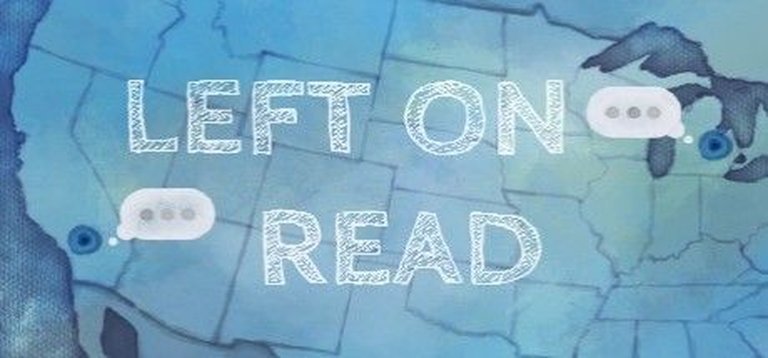
Left on Read is a 2020 indie visual novel blending platformer mechanics with interactive fiction. Set during the COVID-19 pandemic lockdown, players navigate a long-distance college crush relationship entirely through texting. The game unfolds within a smartphone messaging interface where players jump between dialogue options to craft responses, balancing heartfelt confessions with cautious backtracking. With branching narrative paths, unexpected twists like fake pregnancy pranks, and an unlockable ‘Realism Mode’ that mimics actual waiting times for replies, the experience merges contemporary romance themes with playful meta-humor.
Gameplay Videos
Where to Buy Left on Read
PC
Left on Read Guides & Walkthroughs
Left on Read Reviews & Reception
store.steampowered.com (79/100): After playing for about 5 minutes, I was hooked.
metacritic.com (6/100): I feel the game is very alright.
howlongtobeat.com (50/100): The regular gameplay is fine, enjoyable even, but the gymnastics you have to do to naturally unlock ‘Secure the Bag’ requires either an immense amount of brain power or the patience of a god.
Left on Read Cheats & Codes
PC (Steam)
Open Left on Read in Steam, then run Cheat Engine 7.2. Attach Cheat Engine to the LeftOnRead.exe process. Enable the ‘Enable Speedhack’ checkbox and adjust the speed multiplier (up to 500x) to accelerate text messages in Realistic Mode.
| Code | Effect |
|---|---|
| Cheat Engine 7.2 with Speedhack | Accelerates in-game time for Realistic Mode messages, enabling faster completion of the mode to unlock the ‘Realist’ achievement. |
| 6191857249 | Dials the in-game phone number, which plays a repeating sound. (Easter egg / ARG puzzle, not a cheat) |
Left on Read: A Poignant Snapshot of Pandemic-Era Loneliness and Digital Romance
Introduction
In the early months of 2020, as lockdowns reshaped human connection, Left on Read emerged as a disarmingly raw reflection of isolation, regret, and the fragile dance of digital romance. Developed by USC student Weston Bell-Geddes and released in May 2020, this free indie title blends visual novel storytelling with platformer mechanics to create an experience that resonated deeply with a generation navigating love through screens. This review argues that Left on Read—despite its technical roughness—stands as a culturally significant artifact of COVID-19’s emotional toll, capturing the anxiety of modern communication with brutal honesty and dark humor.
Development History & Context
A Quarantine Passion Project
Born from Bell-Geddes’ personal regrets after being sent home from college during the pandemic, Left on Read was developed in under a month using Unity. With a tiny team—engineer Sheehan Ahmed and artist Natalia Godoy—the game’s creation mirrored its themes: hurried, intimate, and fueled by late-night introspection. Bell-Geddes described it as a “coping mechanism” for himself and peers grappling with sudden isolation, a sentiment echoed in Steam reviews where players called it “eerily relatable.”
The Indie Landscape of 2020
The game arrived amid a surge of COVID-themed indies (Animal Crossing: New Horizons escapism, Plague Inc. morbidity), but Left on Read stood apart by focusing on interpersonal voids rather than viral spread. Its minimalist design contrasted with AAA blockbusters, leaning into lo-fi aesthetics that mirrored the constrained realities of lockdown creativity.
Narrative & Thematic Deep Dive
Plot and Characters: A One-Sided Courtship
Players embody a college freshman texting their crush over three months of quarantine. The narrative unfolds through disjointed exchanges laden with TV Tropes-worthy awkwardness:
– Fake Pregnancy: A cruel April Fool’s joke that heightens the protagonist’s vulnerability.
– Last-Second Word Swap: Backspaced confessions (“I like you—” → “I like hiking!”) mirror real-life anxiety.
– Long-Distance Relationship: The crushing weight of “What if?” permeates every exchange.
The crush remains an enigma—self-absorbed, erratic—forcing players to dissect subtext in her replies. This imbalance critiques Gen Z’s paradox of hyper-connection and emotional isolation.
Themes: Regret and Digital Claustrophobia
The game’s tagline—“Don’t wait, you never know when it might be too late”—anchors its exploration of stalled intimacy. The protagonist’s indecision becomes a prison, amplified by the platforming mechanics that literalize the risk of “slipping up” in conversation.
Gameplay Mechanics & Systems
Platforming as Social Anxiety Simulator
Messages appear as floating platforms; players jump to “select” responses, with mistimed landings sending unintended replies. This system brilliantly mirrors the panic of texting:
– Controls: Criticized as “clunky” (Indie-Hive), the slippery physics amplify the protagonist’s nervous energy.
– Realism Mode: Unlocked post-game, it forces players to wait actual hours for replies—a bold, frustrating critique of dopamine-driven chat culture.
Illusion of Choice
While marketed as “choice-driven,” paths often converge. A player might agonize over confessing feelings, only to have the protagonist backpedal autonomously—a deliberate commentary on self-sabotage.
World-Building, Art & Sound
Aesthetic Minimalism
The UI replicates a smartphone’s messaging app, stripped to essentials:
– Visuals: Natalia Godoy’s 2D art reduces characters to bouncing squares and speech bubbles, emphasizing emotional distance.
– Sound Design: Droning ASMR tones evoke liminal space, while notification pings trigger Pavlovian tension.
The Silent Horror of ‘…’
The game weaponizes text conventions: typing indicators, read receipts, and the dreaded ellipsis (…), transforming them into existential threats.
Reception & Legacy
Critical and Player Response
– Steam: “Mostly Positive” (79% of 4,612 reviews); praised as “the most relatable protagonist in gaming history” but critiqued for janky controls.
– Indie-Hive: Scored 66%, calling it “innovative but flawed.”
– Cultural Impact: Players flooded forums with personal stories, proving its therapeutic value.
Influence on the Industry
Though not a commercial titan, Left on Read inspired a wave of pandemic-era indies exploring digital intimacy (Emily is Away <3, I Was a Teenage Exocolonist). Its ARG-like “Realism Mode” also previewed the rise of meta-narratives in games like Immortality.
Conclusion
Left on Read is a messy masterpiece—a game that stumbles mechanically but soars conceptually. Its unflinching portrayal of pandemic loneliness, paired with inventive genre-blending, cements its place as a vital time capsule of early COVID-19 life. While not without flaws (uneven controls, repetitive loops), it remains a touching reminder to seize connection before it’s too late—or risk being left on read, forever.
Final Verdict: A flawed but essential play for historians of pandemic culture and anyone who’s ever stared at a typing indicator, heart in throat.