
- Release Year: 2010
- Platforms: Windows
- Developer: Arvi Teikari
- Genre: Role-playing
- Perspective: Diagonal-down
- Game Mode: Single-player
- Gameplay: Puzzle elements
- Setting: Fantasy
Description
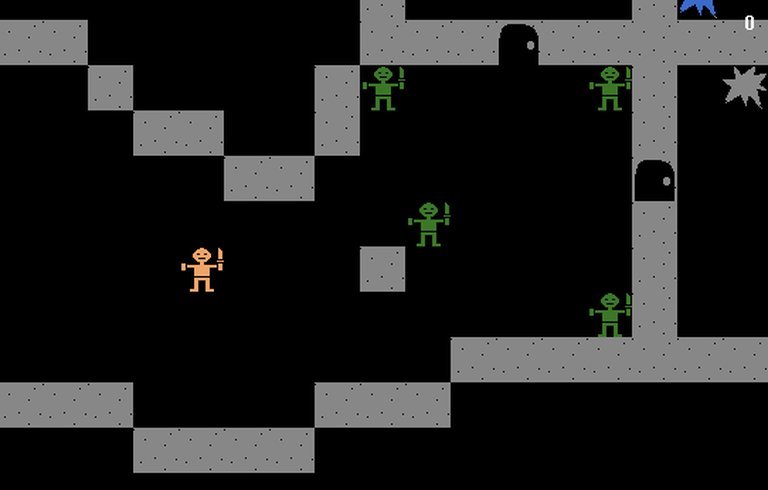
Super MysteeriLuola: Solitude of Circumstantial Preferance is a fantasy RPG and the third installment in the MysteeriLuola series. Players navigate sewer labyrinths in 2D scrolling environments with a diagonal-down perspective, solving innovative puzzles to defeat the evil wizard Urist McWizard. Developed by Arvi Teikari (Hempuli) using Multimedia Fusion, it blends RPG exploration with strategic puzzle-solving in a whimsical underground setting, featuring a revamped interface and new gameplay mechanics.
Super MysteeriLuola: Solitude of Circumstantial Preferance: Review
Introduction
In the anarchic universe of experimental game jams, few titles embody the spirit of “quantity over quality” as vividly as Super MysteeriLuola: Solitude of Circumstantial Preferance. Released in 2010 as part of the chaotic 371-in-1 Pirate Klik Kart jam organized by Glorious Trainwrecks, this third installment in the MysteeriLuola trilogy—crafted in just 48 hours by Finnish developer Arvi Teikari (aka Hempuli)—stands as a testament to the creative absurdity and unpolished charm of indie game development. This review unpacks the game’s origins, its deliberately janky design, and its idiosyncratic legacy within the pantheon of joke-RPGs.
Development History & Context
A Game Born from Controlled Chaos
Super MysteeriLuola emerged from a game jam that encouraged participants to flood the event with as many low-effort, humor-driven games as possible. The goal? To surpass 371 entries (a nod to pirated multi-game cartridges). The result was over 500 surreal creations, including Hempuli’s MysteeriLuola trilogy. Built using Clickteam Fusion 2.5—a tool favored for its accessibility but notorious for its limitations—the game was designed to prioritize speed and satire over polish.
Hempuli, later known for refined titles like Baba Is You, embraced the jam’s ethos of “so-bad-it’s-good” design. The trilogy’s third entry leveraged the engine’s 2D scaffolding to stitch together a dungeon-crawling farce, complete with intentionally grating audio and slapdash mechanics. Its existence speaks to a pre-Among Us era of indie experimentation, where humor and brevity trumped marketability.
Narrative & Thematic Deep Dive
Sewers, Wizards, and Absurdist Lore
The game’s “plot” is a masterclass in nonsensical worldbuilding. Players navigate sewer labyrinths to confront the “Evil Wizard Urist McWizard”—a name blending Dwarf Fortress’s default dwarf name “Urist” with a faux-Scottish surname. This lore-light adventure revels in irony: the title’s verbose subtitle (Solitude of Circumstantial Preferance) clashes with the game’s barebones storytelling, while enemies like “Ninja Pirates” and environments like the “Donut Mausoleum” (from its predecessor) underscore its commitment to absurdity.
Dialogue and text are minimalist, prioritizing punchline over profundity. Thematically, the game lampoons RPG tropes—quests are reduced to illogical puzzles, and progression feels intentionally arbitrary, mocking the genre’s tendency toward granular stat-building.
Gameplay Mechanics & Systems
A Deliberately Broken Machine
- Core Loop: Navigate 2D sewers, solve simplistic puzzles (e.g., lever-pulling, switch-hitting), and battle enemies via rudimentary combat systems.
- Combat: A stripped-down approximation of Dungeon Master, with clunky melee interactions and negligible AI. Enemies like “Ninja Pirates” serve as visual gags rather than strategic foes.
- Interface: Touted as a “totally new interface,” the UI is more a parody of RPG complexity—overlapping menus and erratic button responses heighten the game’s comedic ineptitude.
- Progression: Minimal character development; upgrades, if present, feel accidental rather than earned.
Flaws abound—collision detection issues, repetitive tasks—but these were features, not bugs, in the context of the jam’s ethos.
World-Building, Art & Sound
Aesthetic Anarchy
- Visuals: Pixel art so crude it circles back to avant-garde. Environments like the “Scanline Dungeon” (a callback to MysteeriLuola: Scanline Dungeon) use glitchy scanlines as a design motif, while sewer backdrops are laughably sparse.
- Sound Design: Originally packed with “intentionally annoying” effects (later toned down in the 2024 trilogy re-release), the audio leans into cacophony—a sonicmiddle finger to AAA polish.
- Atmosphere: The game’s charm lies in its refusal to take itself seriously. Every choppy animation and garish color palette screams, “This was made in two days. Enjoy.”
Reception & Legacy
From Obscurity to Cult Curiosity
At launch, Super MysteeriLuola was buried under hundreds of other jam entries, earning no critical reviews or commercial traction. Yet, its legacy grew quietly. Hempuli’s later success with Baba Is You spurred interest in his back catalog, culminating in the MysteeriLuola Trilogy (2024)—a remastered bundle that sanded off the originals’ roughest edges while preserving their irreverence.
The game’s influence is subtle but detectable in the “joke-RPG” subgenre, inspiring titles like Hylics and Moon: Remix RPG Adventure that blend surrealism with self-aware mechanics. Within the Glorious Trainwrecks community, it remains a beloved artifact of anarchic creativity.
Conclusion
Super MysteeriLuola: Solitude of Circumstantial Preferance is not a “good” game by conventional metrics—yet its intentional badness is its genius. A product of constrained time, limited tools, and boundless humor, it captures a moment in indie gaming where imperfection was celebrated as radical art. For historians, it’s a vital case study in jam culture; for players, it’s a 30-minute romp through the mind of a developer learning to laugh at his own craft. In the annals of video game history, it earns its place as a glorious trainwreck—one worth preserving, if only to remind us that not every masterpiece needs polish.
Final Verdict: A diamond in the rough, if the rough were made entirely of duct tape and inside jokes.