
- Release Year: 2017
- Platforms: Windows
- Publisher: Jolly Bear Games, Inc.
- Developer: Jolly Bear Games, Inc.
- Genre: Adventure
- Perspective: 1st-person
- Game Mode: Single-player
- Gameplay: Hidden object
- Setting: Classical antiquity, Europe
- Average Score: 60/100
Description
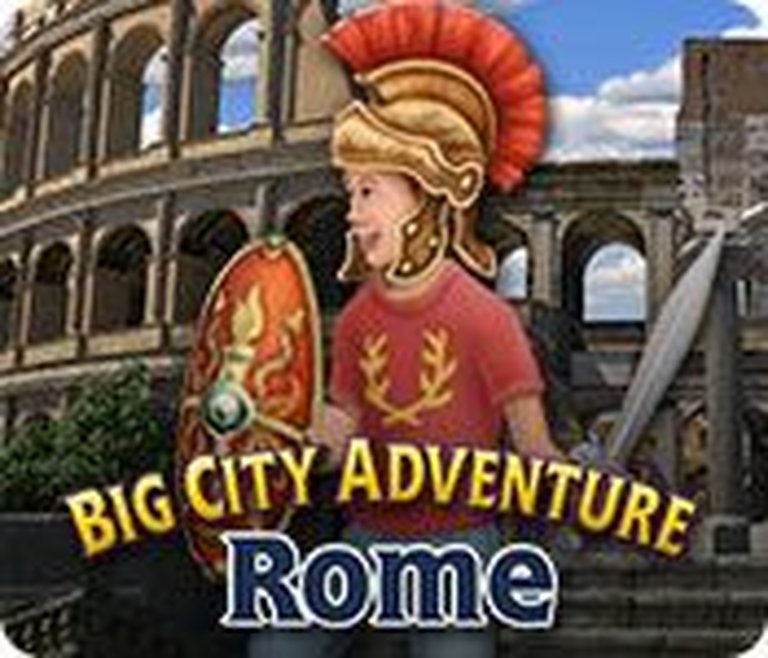
Big City Adventure: Rome is a hidden object adventure game where players explore the historic streets and iconic landmarks of Rome, Italy. As part of the Big City Adventure series, the game challenges players to find hidden items, solve puzzles, and complete mini-games across intricately detailed scenes set in classical antiquity. Utilizing a first-person perspective with point-and-select mechanics, players uncover clues and progress through a journey that immerses them in the rich culture and architecture of ancient Europe.
Gameplay Videos
Big City Adventure: Rome Guides & Walkthroughs
Big City Adventure: Rome Reviews & Reception
gamezebo.com (60/100): Simple, straightforward gameplay.
Big City Adventure: Rome: Review
Introduction
Rome—the Eternal City—has long captivated imaginations with its layers of history, art, and myth. Big City Adventure: Rome (2017), the 13th installment in Jolly Bear Games’ long-running hidden object (HOG) series, invites players to explore this iconic setting through a lens of casual gameplay and educational trivia. While the game doesn’t reinvent the wheel, it solidifies the franchise’s reputation as a reliable purveyor of bite-sized, family-friendly entertainment. This review argues that Big City Adventure: Rome succeeds as a comfortable, if unambitious, entry in the genre, leveraging its setting to deliver a polished but predictable experience.
Development History & Context
Developed by Jolly Bear Games and published by Big Fish Games, Big City Adventure: Rome emerged during a transitional period for hidden object games. By 2017, the genre had largely shifted toward narrative-driven “adventure HOGs” (Mystery Case Files, Dark Arcana) or hybrid puzzle experiences. Yet Jolly Bear Games doubled down on its signature formula: streamlined, location-hopping scavenger hunts with light educational elements.
The game was built for low-spec systems, requiring only a Pentium 3 processor and 256 MB of RAM, a deliberate choice to cater to casual players on older hardware. Its release followed a predictable cadence for the series, arriving four years after Big City Adventure: Tokyo (2013). While technically unremarkable, its design reflects a keen understanding of its audience—specifically, parents and retirees seeking stress-free gameplay paired with virtual tourism.
Narrative & Thematic Deep Dive
Big City Adventure: Rome eschews plot in favor of thematic immersion. Players assume the role of a tourist trawling 60 landmarks—from the Colosseum to St. Peter’s Basilica—to find hidden objects and solve mini-games. The “narrative” is threadbare: there’s no protagonist, conflict, or stakes. Instead, the game leans on postcards laden with historical tidbits (e.g., “The Trevi Fountain dates to 19 BC”) to contextualize its settings.
This approach leans into the series’ educational ethos, but it’s a missed opportunity to weave a richer tapestry. Rome’s history—filled with emperors, gladiators, and intrigue—goes untapped. The game’s sole thematic throughline is discovery, framing Rome as a playground of scattered artifacts rather than a living city.
Gameplay Mechanics & Systems
The core loop is classic HOG fare:
1. Hidden Object Scenes: Players comb static screens for listed items, ranging from era-appropriate relics (helmets, scrolls) to anachronistic oddities (astronauts, Eiffel Tower miniatures). Items are often obfuscated via scaling, transparency, or color shifts.
2. Mini-Games: After each scene, a simple puzzle unlocks the next location. Examples include tile-matching or spaghetti-noodle pathfinding. These are skippable via “Skip Coins” earned in-game.
3. Progression: Collecting shields (one per scene) and postcards provides marginal rewards, while achievements incentivize replayability (e.g., “Complete a scene without hints”).
Modes:
– Timed Mode: For score-chasers, with penalties for misclicks.
– Relaxed Mode: No clock, ideal for beginners.
Flaws: The arbitrary item placement frustrates—why is a spacesuit hidden in the Roman Forum?—and the mini-games lack depth. Yet the UI is crisp, and the adjustable difficulty (riddles optional) ensures broad accessibility.
World-Building, Art & Sound
Visually, Big City Adventure: Rome is a mixed bag. The hand-drawn backdrops of landmarks are lush and detailed, evoking travel brochures. However, the hidden objects often clash tonally, undermining immersion. The sound design is sparse but effective: ambient crowds near the Spanish Steps or echoing drips in catacombs. A looping Italian-inspired soundtrack—think mandolins and accordions—adds charm, though it grows repetitive.
The game’s greatest strength is its virtual tourism. While hardly a substitute for visiting Rome, it offers a breezy introduction to its landmarks, making it a fitting entry point for younger players or casual history buffs.
Reception & Legacy
Big City Adventure: Rome garnered muted critical attention. Reviews praised its simplicity (Gamezebo called it “hidden object gameplay at its purest”) but critiqued its lack of ambition. With no Metacritic score and few professional reviews, it remains a niche title, buoyed mainly by franchise loyalists.
Its legacy lies in its accessibility. As a budget-friendly, low-stakes game, it exemplifies the “comfort food” corner of the HOG genre. While it didn’t influence broader trends, it reinforced Jolly Bear’s reputation as a steadfast developer of family-friendly fare.
Conclusion
Big City Adventure: Rome is neither groundbreaking nor flawed—it’s a reliably pleasant diversion. Its minimalist design and educational slant make it ideal for casual gamers seeking a virtual stroll through history, though its lack of narrative and repetitive mechanics limit its appeal. For historians, it’s a curious artifact: a game that reduces Rome’s grandeur to a checklist of hidden trinkets, yet still manages to evoke a flicker of wonder. In the pantheon of hidden object games, it’s a solid 3/5—unremarkable but enduring, like a well-worn postcard from a trip you barely remember.