
- Release Year: 2018
- Platforms: Macintosh, Windows
- Publisher: Big Fish Games, Inc, HH Games, S.A.D. Software Vertriebs- und Produktions GmbH
- Developer: e-FunSoft Games
- Genre: Puzzle
- Perspective: 1st-person
- Game Mode: Single-player
- Gameplay: Tile matching
- Average Score: 79/100
Description
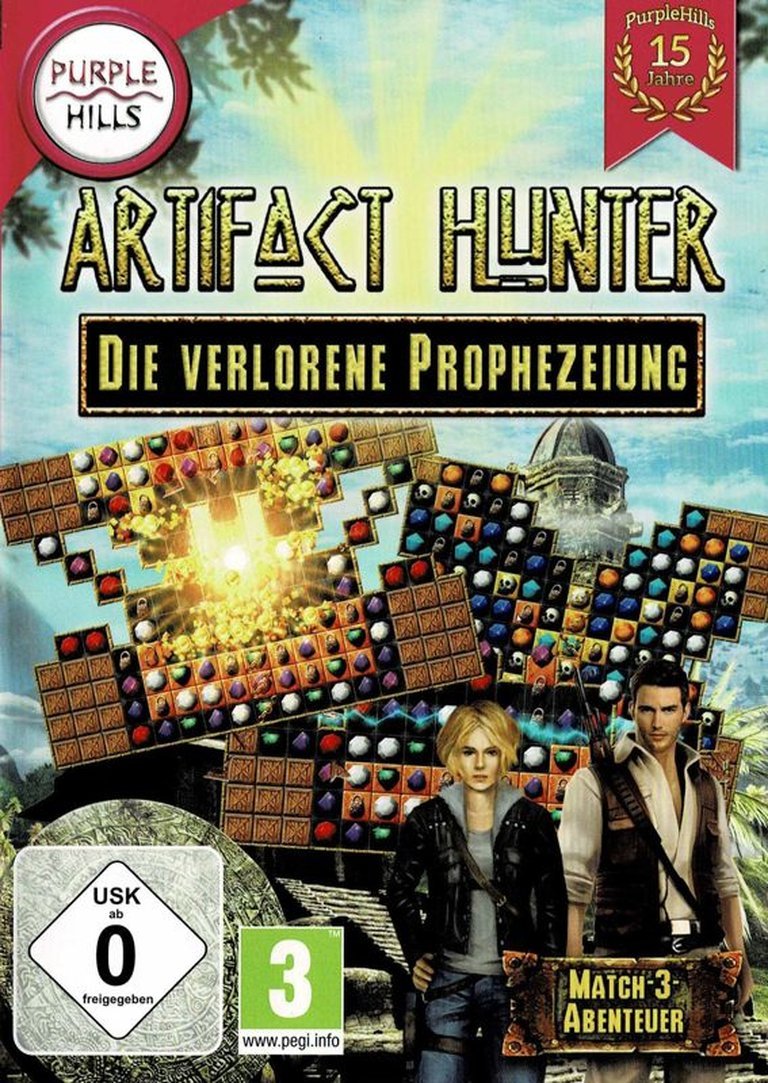
In ‘Artifact Hunter: The Lost Prophecy’, players step into the shoes of Jason, a treasure hunter who uncovers his father’s journal detailing a quest for a mysterious artifact known as the Lost Prophecy. Journeying across 20 global locations, Jason navigates match-3 puzzle challenges to collect rare artifacts, unravel his father’s disappearance, and confront a world-altering secret. Along the way, he encounters allies, adversaries, and a rich narrative exploring family legacy and hidden truths in this first-person puzzle adventure.
Gameplay Videos
Where to Buy Artifact Hunter: The Lost Prophecy
PC
Artifact Hunter: The Lost Prophecy Reviews & Reception
steambase.io (79/100): Mostly Positive
Artifact Hunter: The Lost Prophecy Cheats & Codes
PC
Go to your room, open laptop, click on Switch profile in the corner to switch to Mikah’s profile, then enter code 1937 to access the cheat console.
| Code | Effect |
|---|---|
| 1937 | Accesses the cheat console |
Artifact Hunter: The Lost Prophecy: Review
Introduction
In an era dominated by battle royales and open-world epics, Artifact Hunter: The Lost Prophecy (2018) carved out a niche as a narrative-driven match-3 puzzler, blending globetrotting adventure with casual gameplay. Developed by e-FunSoft Games and published by Big Fish Games, this title sought to marry the addictive simplicity of tile-matching mechanics with a cinematic treasure-hunting saga. While not revolutionary, The Lost Prophecy stands as a testament to the enduring appeal of story-centric casual games. This review unpacks its triumphs and shortcomings, positioning it within the broader landscape of puzzle-adventure hybrids.
Development History & Context
Studio Vision & Era Constraints
e-FunSoft Games, known for titles like Academy of Magic: The Great Dark Wizard’s Curse, aimed to elevate the match-3 genre with Artifact Hunter. Released in 2018, the game arrived during a resurgence of indie and casual titles on platforms like Steam and Big Fish Games. The studio leveraged the accessibility of puzzle mechanics to attract a broad audience while experimenting with narrative depth—a gamble in a genre often criticized for repetitive gameplay.
Technological Landscape
Built for Windows and macOS, The Lost Prophecy utilized modest system requirements, targeting low-spec PCs and casual gamers. The first-person perspective and hand-drawn environments were ambitious for a match-3 title but paled in comparison to AAA productions. The team, including composer Staffan Melin (credited on 88 other games) and writer Samantha Lienhard, focused on atmospheric cohesion rather than technical prowess, reflecting the budgetary constraints of mid-tier indie development.
Narrative & Thematic Deep Dive
Plot & Characters
Jason, the protagonist, embarks on a quest to uncover the truth behind his father’s disappearance, guided by a journal hinting at the mythical Lost Prophecy. The story spans 20 global locations—from Egyptian tombs to tropical jungles—each tied to a puzzle-solving segment. While the plot follows familiar tropes (family legacy, cryptic artifacts), it distinguishes itself through brisk pacing and a cast of allies and rivals, voiced by Jonathan Francis and Loes van Honk.
Themes & Dialogue
Beneath its adventure veneer, the game explores themes of obsession and reconciliation. Jason’s journey mirrors classic hero arcs, but the writing occasionally falters, relying on clichéd exchanges (“The artifact is closer than you think!”). Yet, the emotional core—Jason’s longing for closure—resonates, elevating the narrative above generic puzzle-game fare.
Gameplay Mechanics & Systems
Core Loop & Puzzle Design
The gameplay revolves around match-3 puzzles that gate progression. Each solved level unlocks artifacts and new locations, with mechanics like timed challenges and cascading combos adding minor twists. While functional, the puzzles lack innovation, echoing Bejeweled and Cradle of Rome without introducing fresh mechanics.
Progression & UI
Character progression is narrative-driven, with no skill trees or RPG elements. The UI is minimalist, prioritizing clarity over flair, though its utilitarian design feels dated. The absence of difficulty settings may frustrate newcomers, as later levels spike in complexity without warning.
Flaws & Innovations
The game’s greatest flaw is its repetitiveness: the match-3 formula wears thin after hours of play. However, integrating puzzle-solving into a globetrotting narrative was a novel approach in 2018, foreshadowing later hybrids like Gems of War.
World-Building, Art & Sound
Visual Direction
Art by Teritori Studio and Yohanes Dony Wicaksana blends vibrant, cartoony locales with detailed artifact designs. Each environment—a Mesoamerican temple or Himalayan village—boasts unique color palettes, though asset reuse is noticeable. The first-person perspective immerses players in each setting, albeit with static backdrops that limit interactivity.
Sound Design & Music
Matthew Fisher’s score merges orchestral swells with regional instruments, enhancing the sense of adventure. Sound effects, like the clink of matched tiles, are satisfying but repetitive. Voice acting is competent, though secondary characters often feel underdeveloped.
Reception & Legacy
Launch Reception
Critics largely ignored The Lost Prophecy at launch, but player reviews on Steam (79/100) praised its “charming story” and “relaxing gameplay.” GameTop’s 3.3/5 rating highlighted its appeal to casual audiences but criticized its lack of depth.
Enduring Influence
While not a genre-defining title, Artifact Hunter demonstrated the commercial viability of narrative-driven puzzles, inspiring successors like Artifact Seeker: Legend of Aurorium (2024). Its legacy lies in bridging casual and adventure demographics, a niche now embraced by studios like Artifex Mundi.
Conclusion
Artifact Hunter: The Lost Prophecy is a flawed yet earnest attempt to Merge Indiana Jones-esque storytelling with match-3 mechanics. Its repetitive gameplay and simplistic systems hinder longevity, but its heartwarming narrative and atmospheric design offer a comforting escape for puzzle enthusiasts. As a middle-tier title in the puzzle-adventure canon, it earns a place not in the pantheon of classics but as a stepping stone toward more ambitious hybrids. For casual gamers seeking a lighthearted quest, it remains a worthwhile detour—even if it never quite unearths its full potential.
Final Verdict: A competently crafted, if unremarkable, puzzle-adventure that prioritizes charm over challenge.