
- Release Year: 2018
- Platforms: Windows
- Publisher: Blasted Science
- Developer: Josh Moody
- Genre: Role-playing (RPG)
- Perspective: Side view
- Game Mode: Single-player
- Gameplay: RPG elements
- Average Score: 100/100
Description
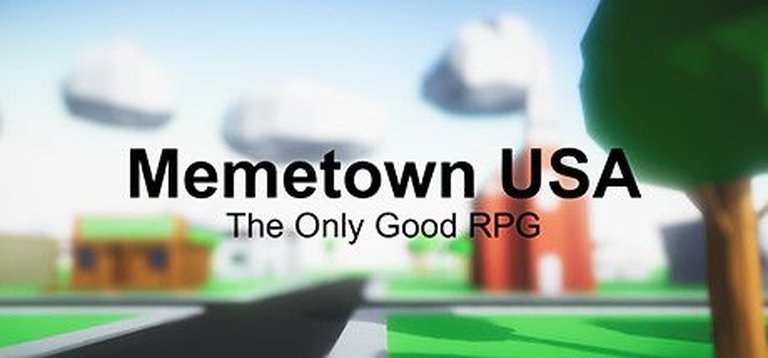
Memetown USA is a short, humorous roleplaying game set in a meme-obsessed city where players must thwart a dangerous cult attempting to destroy the universe. Featuring 2D exploration with occasional 3D cutscenes, the game leans heavily into meme culture with absurd elements like in-game meme-editing software, frog-themed boss battles, and satirical religious references such as ‘Holy Bible 2’. Its quirky charm includes a meme-inspired soundtrack, an in-game internet simulator, and a narrative that blends comedy with RPG mechanics for a brief yet eccentric adventure.
Gameplay Videos
Where to Buy Memetown USA
PC
Memetown USA Mods
Memetown USA Guides & Walkthroughs
Memetown USA: A Post-Ironic Pilgrimage Through Dankest Depths of Internet Culture
Introduction
In the cathedral of gaming absurdity, where ironic detachment and earnest nostalgia collide, Memetown USA stands as a holy relic—a self-proclaimed “game nobody asked for” that weaponizes meme culture with surgical (if janky) precision. Released in 2018 by solo developer Josh Moody under the fictional publisher Blasted Science, this micro-budget RPG is less a coherent experience and more a Dadaist manifesto masquerading as interactive satire. Its thesis? A biting parody of internet culture’s saturation into every facet of modern life, delivered through a lens so self-deprecating it circles back to sincerity. For those brave enough to pilgrimage into its deep-fried world, Memetown USA offers a paradoxical odyssey: a game that openly mocks its own existence while somehow validating the very subculture it ridicules.
Development History & Context
One Developer’s Descent into Meme Madness
Memetown USA emerged from the chaotic mind of Josh Moody, whose prior claim to fame was the “sawdust-in-a-rice-krispy-treat” meme—a nugget of internet ephemera that, per his website, he’d “been riding for months.” Built in Unity over an unspecified but clearly limited timeframe, Moody’s project embraced intentional jank as both aesthetic and ethos. The game’s Steam page bluntly declares: “The amount of effort required to make this game far exceeded the value of the end result”—a statement that doubles as mission statement and disclaimer.
A Landscape of Absurdity
Released in 2018, Memetown USA arrived amid a wave of irony-poisoned indie experiments like Goat Simulator and Pony Island, games that reveled in absurdity and meta-commentary. Yet where those titles polished their chaos, Moody leaned into amateurish execution. The game’s meager $4.20 price tag (a nod to cannabis culture) and specs touting compatibility with literal “potato” PCs positioned it as anti-AAA defiance—a middle finger to corporate gaming sensibilities.
Technological Constraints as Comedy
Powered by Unity’s basic toolset, Memetown USA oscillates between 2D side-scrolling and jarringly crude 3D cutscenes, their textures “deep-fried” until barely recognizable. This wasn’t just a limitation; it was comedy. The game’s minimalist UI and simplistic RPG systems parody genre conventions while highlighting the dissonance between meme culture’s rapid-fire consumption and RPGs’ traditionally slow-paced depth.
Narrative & Thematic Deep Dive
Plot: Save the Universe, Dankly
Players inhabit Memetown, a city where “memes are products. Memes are people. Memes are religion.” The inciting incident? A nearby cult—implied to be a stand-in for toxic online communities—plans to destroy reality. The narrative unfurls across “dozens of minutes” (or “hours if you’re slow”), stitching together absurdist vignettes involving frog-themed boss battles, cursed scriptures like Holy Bible 2 and Duderonomy 420, and a meme-editing suite masquerading as gameplay.
Characters: Walking Reaction Images
NPCs lack traditional arcs, existing instead as meme avatars spouting non sequiturs and recycled internet in-jokes. The dialogue drips with meta-humor, like a church elder lamenting, “Our memes must be holy—no normie trash!” Here, Moody lampoons meme culture’s tribal gatekeeping, where authenticity is measured in obscurity.
Themes: The Eucharist as an Impact Font
Beneath the shitposting lies surprisingly sharp critique:
– Religion as Meme Ecosystem: The cult’s dogma mirrors how online fandoms deify vapid content.
– Digital Identity Crisis: Memetown’s citizens are hollow vessels defined solely by their meme affiliations.
– Creative Bankruptcy: The meme-editing mechanic—a literal content mill—mocks internet culture’s obsession with repackaging over originality.
It’s Infinite Jest for the /r/okbuddyretard crowd—a treatise on how irony engulfs meaning.
Gameplay Mechanics & Systems
Core Loop: Meme Crafting as Combat
The game hybridizes RPG tropes and meme-generation:
– Exploration: Side-view navigation through garishly colored environments reminiscent of early-2000s Flash games.
– “Combat”: Boss battles against entities like Giant Frogs, defeated not by stats but by hastily assembling memes mid-fight.
– Progression: Unlocking new meme templates (e.g., “Distracted Boyfriend,” “Wojak”) replaces skill trees, reducing character growth to viral potential.
Innovation via Shitposting
The meme editor—an actual in-game tool—lets players create and share atrocities via a now-defunct online service. This mechanic bends the fourth wall: Why battle cultists when you can drown them in absurdity? Yet the clunky interface (intentionally?) mirrors the fleeting satisfaction of real-world meme creation: laborious for something instantly discarded.
Flaws as Features
UI elements glitch into illegibility; quests lack waypoints; the “entire in-game internet” is a static JPEG of a dying Geocities page. These aren’t bugs—they’re part of the joke. Memetown USA weaponizes frustration, asking, “Why play this when you could scroll Reddit?”
World-Building, Art & Sound
Visuals: Aesthetic Rot in 16:9
Memetown’s world is a visual manifesto:
– 2D Environments: Neon-brutalist streets plastered with LOLcats and Pepe murals, collapsing under their own saturation.
– 3D “Cutscenes”: Rendered in Unity-default assets, then distorted into surreal, eye-searing spectacles.
– Deep-Fried Textures: A deliberate choice echoing how memes degrade through reposting—a metaphor for cultural entropy.
Soundtrack: YouTube Poop as Orchestra
The OST collages royalty-free MIDI renditions of “meme songs” like “Running in the 90s” and “All Star,” each track compressed into oblivion. Sound effects—borrowed from Windows error noises and Vine clips—punctuate actions with nostalgic dissonance.
Atmosphere: Nostalgia for a Burning Internet
Between its fake error messages and faux-web interfaces, Memetown USA recreates the early-2010s internet’s chaotic charm. It’s less a game and more a virtual museum of dead memes—a monument to digital transience.
Reception & Legacy
Launch: A Whisper, Not a Bang
With no marketing beyond Moody’s self-sabotaging quips (“This game sucks, and so do you”), Memetown USA slipped onto Steam in 2018 to crickets. Zero critic reviews (per Metacritic) and a scant nine Steam user reviews amplify its outsider status. Yet those who played praised its “AAA quality meme material” (Steambase) and “unhinged sincerity” (Steam user reviews)—a 100% positive rating from 14 ratings, per Steambase.
A Cult for the Cultless
While lacking mainstream influence, Memetown USA crystallized a niche: games embracing “anti-quality” as art. It presaged ironic meta-titles like Hylics 2 and Beeswing, proving that rabid self-awareness could carve a space in indie gaming. Moody himself became a micro-influencer, his “sawdust-in-a-rice-krispy-treat” meme lore deepening the game’s mythos.
The Meme Paradox
Its legacy is self-cannibalizing. By satirizing meme culture’s disposability, Memetown USA became disposable itself—a forgotten artifact in gaming’s digital landfill. Yet this futility is its triumph: a game that knew it would be irrelevant, then weaponized that truth.
Conclusion
Memetown USA is not a “good” game by conventional metrics. It’s buggy, slight, and brutally ephemeral. But as a cultural autopsy—a dissection of how memes mutate from subversion to dogma—it’s revelatory. Josh Moody crafted a bespoke hellscape where internet humor goes to die, daring players to laugh at its corpse. For historians, it’s a vital artifact of late-2010s digital nihilism. For everyone else? A $4.20 shitpost museum ticket—price includes existential dread.
Final Verdict: A masterclass in intentional failure, Memetown USA is the Trout Mask Replica of RPGs—ugly, impenetrable, and utterly unforgettable for those who speak its language. Play it once, screenshot it twice, never speak of it again.