
- Release Year: 2019
- Platforms: Windows
- Publisher: I.S.L.A.
- Developer: I.S.L.A.
- Genre: Puzzle
- Perspective: 3rd-person
- Game Mode: Single-player
- Gameplay: Life, Social simulation
- Setting: Contemporary
- Average Score: 48/100
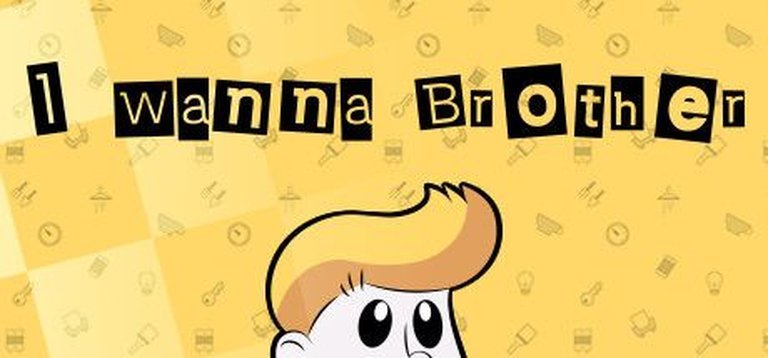
Description
I Wanna Brother is a quirky puzzle game released in 2019, where the protagonist, Timmy, attempts to create the ideal conditions for his parents to have another child. The game features 10 physics-based puzzles where Timmy must arrange the room correctly before his parents return home, all while incorporating humorous and somewhat risqué innuendos that go over his head. Developed by I.S.L.A., the game is a unique blend of life simulation and puzzle-solving, set in a contemporary environment.
Where to Buy I Wanna Brother
PC
I Wanna Brother Guides & Walkthroughs
I Wanna Brother Reviews & Reception
steambase.io (48/100): A triumphant return to form for the series.
store.steampowered.com (48/100): A triumphant return to form for the series.
I Wanna Brother: Review
Introduction
In an era where indie games frequently push boundaries, I Wanna Brother (2019) stands out as a bizarre, darkly comedic experiment. Developed by the enigmatic studio I.S.L.A., this free-to-play puzzler explores the taboo premise of a child manipulating his parents into conceiving a sibling through slapstick tactics. While its concept teeters between audacious and absurd, the game’s legacy lies in its unapologetic embrace of uncomfortable humor and minimalist design. This review interrogates whether I Wanna Brother is a subversive gem or a misfire in indie gaming history, dissecting its narrative ambition, gameplay execution, and polarizing reception.
Development History & Context
Studio Origins & Vision
Little is known about I.S.L.A., the developer behind I Wanna Brother. The studio’s sparse credits and lack of a public footprint suggest it may be a solo developer or a small collective. Their vision appears rooted in provocative humor, leveraging Unity Engine’s accessibility to create a low-budget, physics-based satire. Released on August 22, 2019, the game emerged during a boom era for indie experimentation on Steam, where titles like Goat Simulator and Surgeon Simulator demonstrated that janky mechanics could coexist with viral appeal.
Technological Constraints
Built in Unity, I Wanna Brother is a modest production. Its fixed-screen 3D perspective and rudimentary physics reflect the toolkit’s limitations rather than pushing technical boundaries. The game’s minimal system requirements (2GB RAM, Intel HD Graphics) cater to low-end PCs, positioning it as an accessible—if unpolished—experience.
Cultural Landscape
The late 2010s saw indie games increasingly tackle adult themes through absurdist lenses (e.g., Getting Over It with Bennett Foddy). I Wanna Brother fits into this trend, using childhood naivety to explore topics like parental relationships and reproductive agency—albeit with the subtlety of a sledgehammer.
Narrative & Thematic Deep Dive
Plot & Characters
Players control Timmy, a lonely child who devises a misguided plan to “help” his parents conceive a brother by arranging aphrodisiac objects in their bedroom. The narrative hinges on dramatic irony: Timmy’s innocent misinterpretations of adult activities clash with the player’s understanding of the situation. For example, placing candles and wine bottles becomes a puzzle, while Timmy cheerfully remarks, “Mommy loves red juice!”
Dialogue & Tone
The game’s writing leans heavily on double entendres. Timmy’s dialogue is deliberately oblivious (“Daddy says roses make people happy!”), while environmental cues—like a strategically placed “romance novel”—wink at the player. This tonal duality walks a tightrope between dark comedy and cringe-worthy awkwardness.
Thematic Undercurrents
Beneath the raunchy premise lies a surprisingly poignant theme: childhood loneliness. Timmy’s desperation for companionship drives his actions, framing the game as a twisted coming-of-age tale. However, the execution often undermines this depth, prioritizing shock value over emotional resonance.
Gameplay Mechanics & Systems
Core Loop & Puzzles
The game features 10 levels, each requiring players to drag-and-drop objects into suggestive arrangements before Timmy’s parents return. Physics-based challenges include stacking items precariously or aligning them to trigger scripted events (e.g., a falling book knocking over a vase). While simple, the puzzles suffer from inconsistent physics and clunky controls, sometimes turning frustration into a core mechanic.
Progression & Achievements
Achievements like “Matchmaker” (for completing a level flawlessly) incentivize replayability, but their implementation feels shallow. With no narrative consequences for failure—other than Timmy’s dejected sigh—the stakes remain low.
UI & Accessibility
The UI is minimalist to a fault. A timer counts down parental arrival, but feedback on object interactions is lacking. The absence of a save system exacerbates the game’s brevity (30–60 minutes), leaving little reason to revisit levels.
World-Building, Art & Sound
Visual Design
The game’s aesthetic is utilitarian: flat-shaded 3D models populate sparsely decorated rooms. Timmy’s cartoonish design contrasts with the realistic bedroom setting, creating a dissonant vibe that amplifies the absurdity. While artistically unremarkable, the visuals serve the comedy—think a child’s crayon drawing brought to life.
Atmosphere & Sound
A looping piano melody evokes a whimsical tone, juxtaposing eerily with the adult subtext. Sound effects—like the thud of misplaced objects or Timmy’s giggle—add slapstick flair. However, the lack of voice acting or dynamic audio leaves the world feeling sterile.
Reception & Legacy
Launch Reception
I Wanna Brother debuted to mixed Steam reviews (48% positive). Players praised its audacious concept but criticized its janky physics and short runtime. MobyGames users rated it 1/5, citing “uncomfortable” themes and lack of polish. Notably, no critic reviews exist, relegating it to obscurity.
Cultural Impact
Though not commercially successful, the game gained niche notoriety as a “so-bad-it’s-good” curiosity. Its premise inspired memes and ironic Let’s Plays, echoing the cult appeal of titles like Bad Rats.
Industry Influence
While I Wanna Brother didn’t revolutionize gaming, it exemplifies indie devs’ willingness to explore taboo topics. Its DNA can be traced to later “anti-comfort” games like The Uncle Who Works for Nintendo, which similarly weaponize discomfort.
Conclusion
I Wanna Brother is a flawed yet fascinating artifact of indie gaming’s boundary-pushing era. Its premise—equal parts bold and bewildering—challenges players to laugh at discomfort, even as clunky mechanics undermine the experience. While not a masterpiece, it earns a place in gaming history as a case study in provocative design. For those seeking a quick, bizarre diversion, it delivers—but like Timmy’s scheme, it’s best approached with lowered expectations.
Final Verdict: A curious footnote in indie gaming, memorable more for its concept than execution.