
- Release Year: 2001
- Platforms: Windows
- Publisher: Stack Software, SunTendy Interactive Multimedia Co., Ltd.
- Developer: Stack Software
- Genre: Adventure
- Game Mode: Single-player
- Gameplay: Cards, Tiles, Turn-based, Visual novel
- Setting: Fantasy
- Average Score: 70/100
- Adult Content: Yes
Description
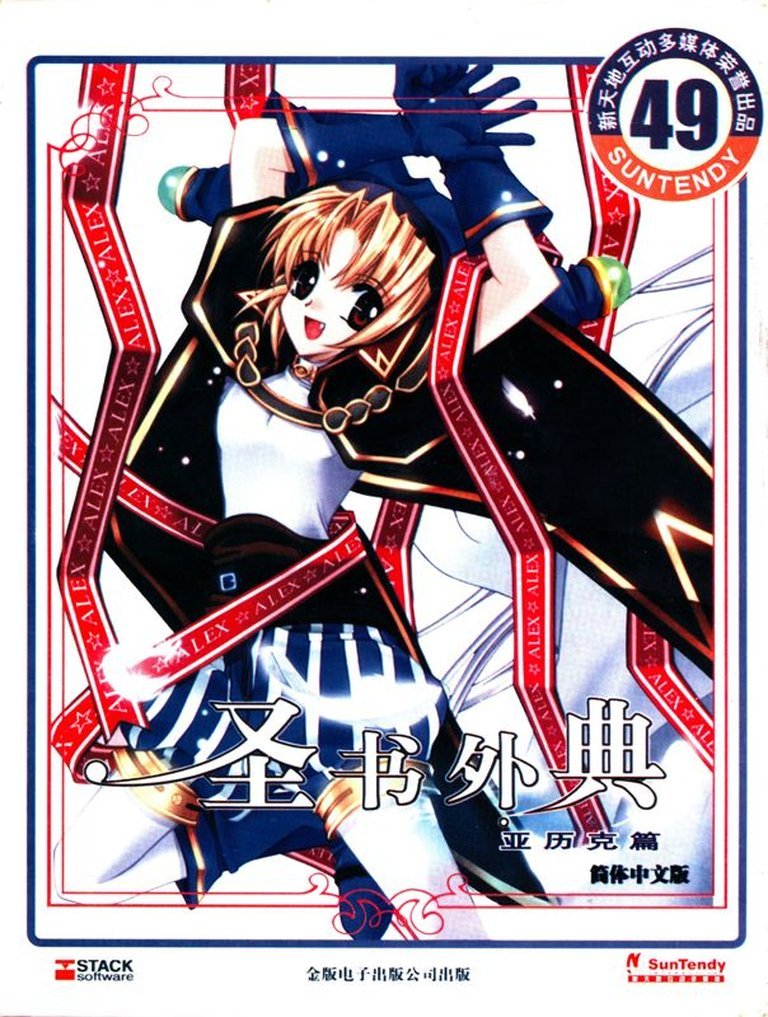
Apocripha/0: Alex Disc is a boys’ love visual novel set in the deteriorating kingdom of Naraku, where the king, an angel fallen from Heaven, births twin sons, Alexandre and Platina. To revitalize the kingdom, the king forces the twins to battle each other to the death, with the winner becoming the new king. The game focuses on Alexandre’s perspective, incorporating a card battle system and offering an extra story if paired with the Platina Disc.
Apocripha/0: Alex Disc: A Forgotten Gem of Early 2000s BL Visual Novel Innovation
Introduction
In the shadowy corners of early 2000s niche gaming, Apocripha/0: Alex Disc emerges as a cult classic—a daring fusion of boys’ love (BL) storytelling, strategic card battles, and mythological world-building. Developed by Stack Software in 2001, this visual novel dared to blend romance and tragedy within a Dantean fantasy, casting players as one of two rival princes doomed to duel for a crumbling throne. While overlooked by mainstream audiences, its legacy endures as a pioneering work that elevated the BL genre beyond mere titillation, embedding its existential themes into a mechanically inventive framework.
Development History & Context
The Studio and Vision
Stack Software, a now-defunct Japanese studio, aimed to subvert expectations of early-2000s BL games, which often prioritized romance over narrative depth. Led by director Akio Oonuma and artist Yuki Azusa (known for Fantastic Fortune), the team sought to create a “whole age” BL experience—one accessible to wider audiences without explicit content—while weaving in tactical card battles reminiscent of Magic: The Gathering.
Technological Constraints
Released for Windows in 2001, Alex Disc leveraged limited visual novel norms: static sprites, minimal CGs, and text-heavy storytelling. However, its full voice acting—featuring legends like Motoki Takagi (Alex) and Toshiyuki Morikawa (Jade)—was a rarity for the era, elevating its emotional resonance. The decision to split the story across two discs (Alex Disc and Platina Disc) was both innovative and commercially risky, requiring players to purchase both for the full narrative.
Gaming Landscape
The early 2000s saw BL games like Togainu no Chi dominate doujin circles, but Apocripha/0 stood apart. Its hybrid gameplay and philosophical themes mirrored the rise of narrative-driven RPGs like Final Fantasy Tactics, while its mythological undertones tapped into post-Evangelion existentialism in anime.
Narrative & Thematic Deep Dive
A Tragedy of Twinned Fates
Set in Naraku (Buddhist “Hell”), the game follows golden-haired prince Alexandre and his silver-haired twin Platina, born from the eyes of a dying king. Forced into a fratricidal war to renew the kingdom, their story interrogates predestination, free will, and the cost of power. Alex, portrayed as impulsive yet endearing, contrasts sharply with Platina’s icy intellect—a duality explored further in the companion Platina Disc.
Characters as Ideological Archetypes
- Alexandre: Embodies chaos and emotional growth, mirroring Nietzschean “will to power.”
- Sapphirus (Alex’s mentor): A pragmatic assassin whose loyalty masks existential despair.
- Jade (Platina’s advisor): A Machiavellian figure manipulating events to defy divine fate.
The supporting cast—demons, fallen angels, and rogue spirits—serve as foils to the twins’ struggle, with routes branching into bittersweet romances or tragic betrayals.
Themes: Beyond BL Tropes
While marketed as BL, the game’s focus on platonic bonds and sacrificial love transcends genre expectations. Themes of cyclical violence (“inheritance war”) and the impossibility of utopia reflect Buddhist impermanence, with endings often denying outright happiness—a narrative bravado that inspired fan-driven “fix-it” doujinshi.
Gameplay Mechanics & Systems
Card Battles: Strategy Meets Symbolism
The card-based combat system ties directly into the lore: players deploy “spirit cards” representing mythological entities like the Six Holy Spirits. Battles are turn-based, with elemental affinities (fire/water) and numerical values dictating outcomes. While criticized for simplicity, the system reinforces the story’s themes—e.g., Platina’s logic-focused deck vs. Alex’s high-risk, high-reward plays.
Visual Novel Structure
- Branching Paths: Choices affect ally recruitment (3 out of 6 per playthrough), altering battle dynamics and unlocking character-specific endings.
- Dual Disc Synergy: Installing both discs adds a rare “brother ending,” rewarding dedicated players with narrative closure.
Flaws: Repetition and Pacing
The card battles grow repetitive, and the sparse CG count (compensated by Azusa’s lush art) may disappoint modern VN fans. Yet, these limitations heighten the focus on dialogue and voice acting.
World-Building, Art & Sound
Aesthetics of Despair
Yuki Azusa’s art blends Baroque opulence with ethereal beauty—think cascading robes, glowing sigils, and chiaroscuro lighting. Naraku’s decaying grandeur mirrors the twins’ internal turmoil, while the Abyss’s twisted landscapes echo Hieronymus Bosch.
Soundtrack: Haunting Melancholy
Composed by Peak A Soul+, the OST mixes Gregorian chants with melancholic piano tracks. Standouts include Chikai no Esperos (opening theme), sung by Eri Kawai, whose soaring vocals evoke both hope and doom.
Voice Acting: Emotional Anchors
The cast—including Kappei Yamaguchi (Beryl) and Houko Kuwashima (Lhodo)—delivers nuanced performances, elevating even minor characters like the tragic fallen angel Ceres.
Reception & Legacy
Initial Reception
Despite limited Western coverage, Japanese fans praised its narrative ambition and voice acting. However, its high price (≈¥15,000 for both discs) and niche appeal restricted sales.
Enduring Influence
- BL Genre Evolution: Its “tame” approach inspired later all-age BL hybrids like Dramatical Murder.
- Cultural Impact: The opening theme remains iconic, while fan works proliferate on platforms like Pixiv.
- PS2 Port: The 2004 enhanced edition introduced new CGs and scenarios, cementing its status as a collector’s item.
Conclusion
Apocripha/0: Alex Disc is a flawed masterpiece—a game that dared to merge card strategy with apocalyptic romance, asking players to confront the weight of destiny. While its combat may feel dated and its split-release model frustrating, its emotional depth and artistic vision remain unmatched. For BL enthusiasts and visual novel historians alike, it stands as a testament to early-2000s ambition—a crown jewel in the Abyss, awaiting rediscovery.
Final Verdict: A landmark in narrative-driven BL, deserving of its cult status but hampered by accessibility. For those willing to brave its darkness, Alex Disc offers a tragic, unforgettable odyssey.