
- Release Year: 1999
- Platforms: Windows
- Publisher: ARI Data CD GmbH, Pacific Interactive Entertainment, SdLL, S.A.S., Swing! Entertainment Media AG
- Developer: Gee Whiz! Entertainment
- Genre: Action, Sports
- Perspective: Third-person
- Game Mode: Hotseat, Single-player
- Gameplay: stunts, Tricks
- Average Score: 54/100
Description
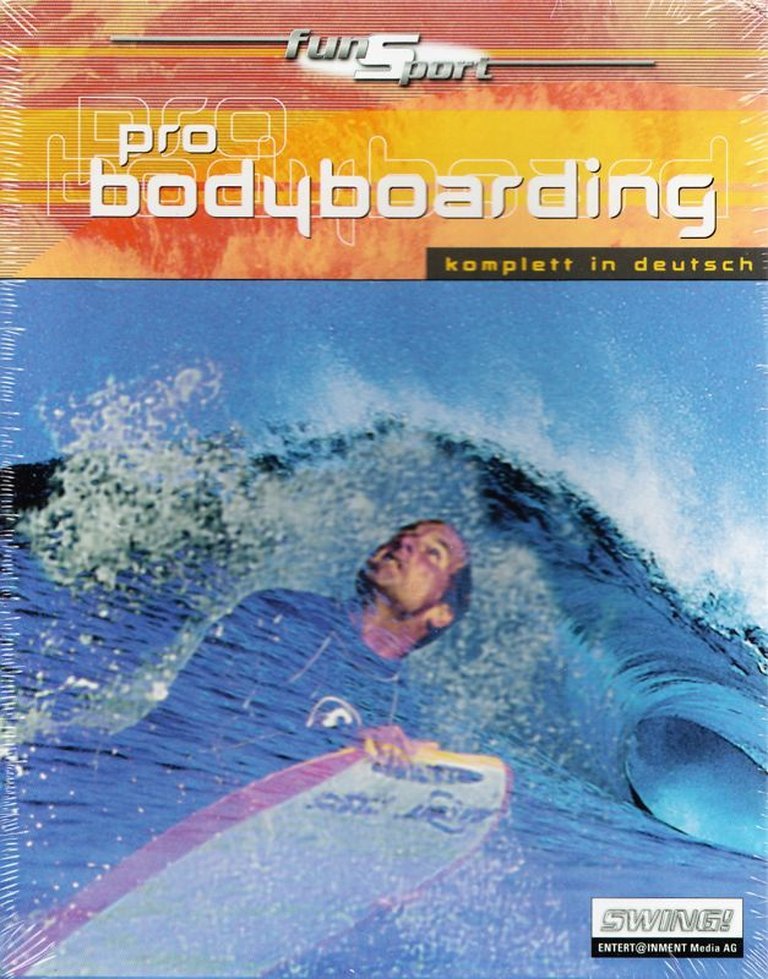
Mike Stewart’s Pro Bodyboarding is a 3D sports game that immerses players in the thrilling world of bodyboarding. Named after the legendary Mike Stewart, a nine-time world champion, the game allows players to ride waves in various global locations, perform a variety of tricks, and compete in different modes. Players can choose from multiple characters, each with unique characteristics, and navigate through waves while avoiding obstacles like rocks and buoys. The game features six modes, including Contest, Arcade, and Slalom, offering both single and multiplayer experiences.
Gameplay Videos
Mike Stewart’s Pro Bodyboarding Cracks & Fixes
Mike Stewart’s Pro Bodyboarding Patches & Updates
Mike Stewart’s Pro Bodyboarding Reviews & Reception
game-over.com (76/100): If this game excels in one thing, it’s fun.
Mike Stewart’s Pro Bodyboarding: Review
Introduction
In the late 1990s, extreme sports games surged in popularity alongside the rise of franchises like Tony Hawk’s Pro Skater. Amid this wave, Mike Stewart’s Pro Bodyboarding (1999) aimed to carve out a niche for a lesser-known sport: wave-riding on a compact, lie-down board. Named after nine-time world champion Mike Stewart, the game promised an authentic dive into the sport’s adrenaline-pumping tricks and global locales. Yet, while it stood as one of the first bodyboarding simulations, its execution—hampered by technical limitations and uneven design—left it straddling the line between cult curiosity and forgotten relic. This review explores how Pro Bodyboarding’s ambition outpaced its polish, delivering flashes of arcade fun alongside frustrating shortcomings.
Development History & Context
Developed by Gee Whiz! Entertainment and published by Pacific Interactive Entertainment, Pro Bodyboarding emerged during a golden age for extreme sports games. The studio sought to capitalize on Mike Stewart’s celebrity status—akin to how Tony Hawk leveraged its namesake—but faced stiff competition and the technical constraints of late-’90s 3D graphics.
The game was built for Windows PCs, demanding modest specs (Pentium 166 MHz, 32MB RAM) but struggling to render fluid water physics. Critics noted that the “real-time 3D waves” marketed by developers were underwhelming, with flat textures and repetitive animations. The decision to prioritize a realistic trick system over visual fidelity split audiences: while bodyboarding purists praised the mechanics, casual players found the game visually dated even at release.
Narrative & Thematic Deep Dive
As a sports sim, Pro Bodyboarding lacks a traditional narrative. Instead, its “story” lies in the player’s ascent from amateur to champion, mirroring Stewart’s career. The game features eight riders, including Stewart, each with distinct stats, but characterization is nonexistent. Dialogue is limited to menu screens and brief voice clips, leaving the focus squarely on competition.
Thematically, the game channels the freedom and danger of wave-riding. Locations like Hawaii’s Pipeline and Australia’s Shark Island are framed as arenas for mastery, where players dodge rocks, buoys, and swimmers—a nod to real-world hazards. However, the lack of dynamic weather or unpredictable waves undercuts the sport’s inherent volatility.
Gameplay Mechanics & Systems
Pro Bodyboarding’s core loop revolves around trick execution and wave navigation. Players perform 12 moves—from basic spins to complex double barrel rolls—using keyboard controls criticized as clunky (German magazine PC Action called the steering “a complete torment”). Chaining tricks boosts scores, but imprecise inputs often lead to frustrating wipeouts.
Six modes offer variety:
– Contest: Compete against AI riders in judged heats.
– Arcade: A time-attack mode where board damage ends the run.
– Slalom: Weave through buoys for speed challenges.
– Practice/Training: Sandboxes for honing techniques.
– Hot-Seat Multiplayer: Local two-player showdowns.
While the trick roster is robust, critics lamented its uneven learning curve. PC Player noted that only “the fewest players will discover all tricks,” partly due to poor feedback. The UI is sparse but functional, though the absence of tutorials exacerbates the steep skill ceiling.
World-Building, Art & Sound
The game’s eight global locations are its strongest visual asset, with distinct wave patterns and backdrops. However, low-poly models and fuzzy textures betray the era’s limitations. Waves lack dynamism, appearing as repetitive, cookie-cutter formations, and character models are eerily simplistic—GameBlitz praised the “arcadey” vibe, but PC Games derided the “ugly graphics” as a dealbreaker.
Sound design shines faintly: crashing waves and ambient surf noises create immersion, though the lack of a licensed soundtrack or dynamic audio (e.g., crowd reactions) leaves the world feeling sterile. Camera angles, notably the “inside the barrel” view, add cinematic flair but can’t salvage the overall presentation.
Reception & Legacy
At launch, Pro Bodyboarding earned mixed reviews, averaging 46% on MobyGames. Positive assessments highlighted its novelty: Gaming Entertainment Monthly (85%) called it “refreshing,” while GameBlitz (80%) praised its “something completely different” appeal. Negative critiques, however, were scathing. German outlets like PC Action (15%) slammed its “miserable steering,” and PC Games (23%) dismissed it as “Tony Hawk in the wet element—but without the class.”
Commercially, the game faded quickly, overshadowed by sleeker titles. Its legacy lies in its niche appeal: bodyboarding enthusiasts appreciated its dedication to the sport, and its inclusion in bundles like Sommer Sport Pack (2006) gave it prolonged visibility in Europe. Yet, its influence on later sports games is negligible, a footnote in the extreme sports genre.
Conclusion
Mike Stewart’s Pro Bodyboarding is a paradox: a game bursting with reverence for its sport yet hobbled by technical and design flaws. Its trick system and global locales offer glimpses of arcade joy, but clunky controls, dated visuals, and repetitive modes stifle its potential. For bodyboarding devotees, it remains a quirky time capsule—a flawed homage to a legend. For most, it’s a reminder that not every niche sport translates seamlessly to pixels.
In video game history, Pro Bodyboarding is neither a trailblazer nor a catastrophe. It’s a 5.6/10 curiosity: worth revisiting for its ambition, but ultimately a wave that crashed before reaching shore.