
- Release Year: 2000
- Platforms: Windows
- Publisher: Focus Multimedia Ltd.
- Developer: Red Dragon Shareware
- Genre: Compilation, Crossword puzzle, Number puzzle, Word
- Perspective: 2D
- Game Mode: Single-player
- Gameplay: Card Games, Crossword, Hangman, Mastermind, Sokoban, Word search
- Average Score: 97/100
Description
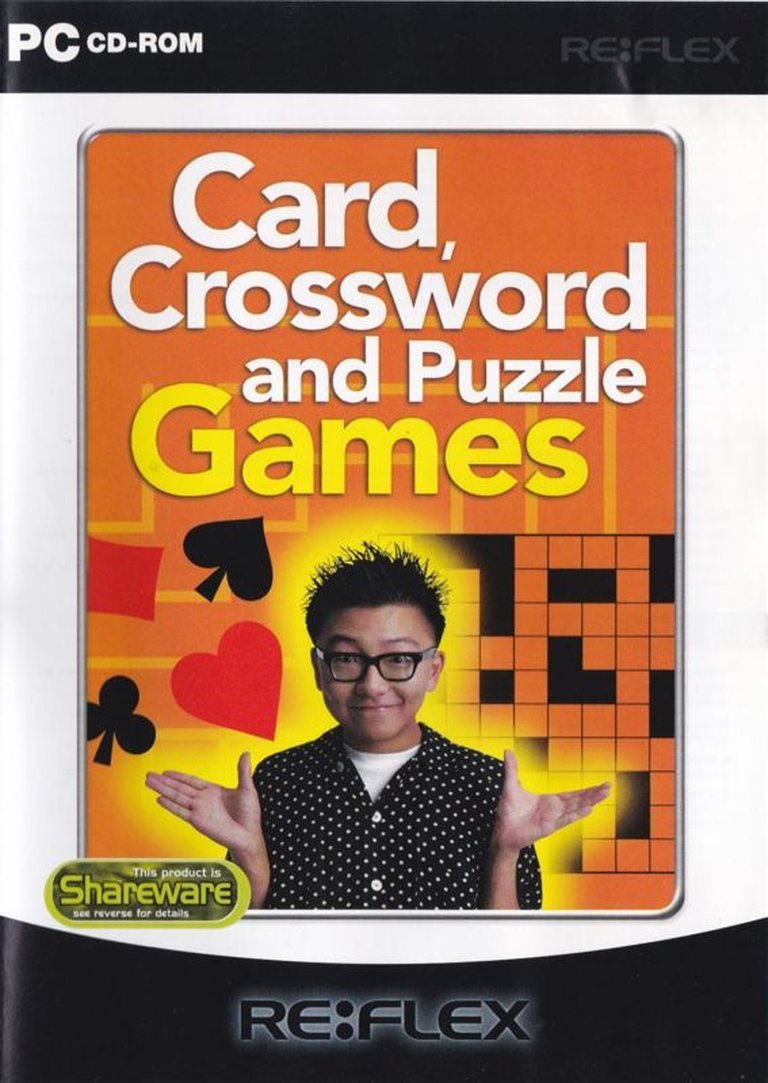
Card, Crossword and Puzzle Games is a compilation of shareware programs originally released for Windows 3.0/3.1, re-issued by Focus Multimedia. It features eight themed ‘banks’ of classic games, including card games like Canasta and Blackjack, solitaire collections, strategy puzzles like Sokoban and mazes, and word games such as crosswords and hangman. Some games run directly from the CD-ROM while others require installation, offering a nostalgic mix of casual entertainment.
Card, Crossword and Puzzle Games Reviews & Reception
metacritic.com (97/100): In the end, NFL 2K1 is a deeper, more refined version of the original game.
Card, Crossword and Puzzle Games: Review
A Time Capsule of Early Digital Diversions
Introduction
In the twilight of physical media and the dawn of digital distribution, Card, Crossword and Puzzle Games (2000) emerges not as a revolutionary title, but as a cultural microcosm. This Focus Multimedia compilation—a reissue of earlier shareware collections—encapsulates an era when “casual gaming” meant floppy disks, CD-ROM installations, and the charmingly low-stakes chaos of Windows 3.1 compatibility. While lacking the polish of contemporary hits like Tetris or Bejeweled, its archival significance cannot be overstated. This review argues that Card, Crossword and Puzzle Games is a vital, if unrefined, preservation of early digital leisure—a bridge between the arcade boom of the ’80s and the mobile revolution to come.
Development History & Context
The Studio & Vision
Developed by Red Dragon Shareware and published by Focus Multimedia, Card, Crossword and Puzzle Games epitomized the budget-friendly compilation model popularized in the late ’90s. Focus Multimedia specialized in aggregating shareware and public-domain software—often from amateur developers like Mark-Jan Harte (Canasta for Windows) and Oxford student Martin Davidson (Stop the Bus)—packaging them into themed “banks.” Their vision was pragmatic: democratize gaming for PC users lacking high-end hardware or internet access.
Technological Constraints & Era
Released amidst the PlayStation 2’s 2000 launch and The Sims’ cultural takeover, this compilation felt deliberately archaic. The constraints were twofold:
1. Legacy Compatibility: Many games targeted Windows 3.1/95 systems, limiting graphical complexity to basic sprites and 256-color palettes. Titles like AntiC (a DOS-era puzzle game) and Marvin’s Contract Bridge Bidding Handbook (a text-heavy DOS ebook) highlighted the schism between emerging 3D gaming and stubbornly persistent 16-bit holdouts.
2. Distribution Limitations: As a CD-ROM release, the compilation required manual installation for many titles—a far cry from the plug-and-play simplicity of consoles or nascent digital platforms.
The Gaming Landscape
The early 2000s saw puzzle games at a crossroads: Mobile gaming was embryonic (Nokia’s Snake had debuted in 1997), while AAA studios leaned toward narrative-driven epics like Deus Ex. Focus Multimedia’s compilation served a niche audience—casual players, office workers, and families—who valued quantity over polish. It competed not with Resident Evil Code: Veronica, but with Reader Rabbit and newspaper crosswords.
Narrative & Thematic Deep Dive
As a compilation, Card, Crossword and Puzzle Games lacks a unifying narrative. Instead, its themes emerge through curation:
The Cult of Solitude
The Solitaire Card Games bank—featuring Klondike, Spider, and Freecell—embodied the solitary, meditative appeal of pre-social gaming. These titles, many ported from Amiga and early Windows systems, offered digital translations of analog pastimes, providing productivity veneers for procrastinating office workers.
Intellectual Ostentation
Crossword and word-search banks (Dino Spell, Telephone Puzzle 2) leaned into self-improvement culture. Their inclusion of educational tools mirrored the late ‘90s “edutainment” boom, albeit without the production values of Carmen Sandiego.
Shareware Aesthetics
Games like Moraff’s Tinyjongg and Poker Broker reveled in utilitarian design—cluttered menus, garish colors, and relentlessly cheerful MIDI soundtracks. This reflected shareware’s DIY ethos: functionality trumped artistry, and gameplay longevity often relied on addiction loops rather than depth.
Gameplay Mechanics & Systems
Core Gameplay Loops
The compilation’s 200+ games followed predictable but satisfying loops:
– Card Banks: Hearts, Blackjack, and regional variants like Tresette emphasized quick sessions and statistical mastery.
– Puzzle Banks: Sokoban clones and sliding-block puzzles (Taipei) prioritized spatial reasoning, while Mastermind adaptations tested deductive logic.
– Word Banks: Hangman and crossword tools relied on lexical recall, often with rudimentary hint systems.
Innovations & Flaws
- Strengths: The sheer volume of content (e.g., 44 games in Card Bank 2 alone) offered unparalleled variety. Standouts included Jewels of the Oracle (a match-three precursor to Candy Crush) and Rings of the Magi (a tile-based RPG-lite).
- Weaknesses: Inconsistent quality control plagued the collection. Double Block (from Brain Games for Windows) suffered from clunky controls, while DOS-era titles like AntiC felt technologically stranded.
UI/UX Design
Navigating the compilation’s menu system was a masterclass in frustration:
– Disjointed Menus: Each “bank” launched its own executable, requiring users to frequently swap discs or endure lengthy load times.
– Input Limitations: Many games lacked mouse support, relying on arcane keyboard shortcuts (e.g., Three Leaves v2.0).
World-Building, Art & Sound
Visual Direction
Art styles ranged from functional to anarchic:
– Card Games: Static 2D tables with flat, Windows 3.1-style icons.
– Puzzles: Tinyjongg’s mahjong tiles used basic gradients, while 3D Maze’s chunky polygons evoked Wolfenstein 3D’s engine.
– Word Games: Text-heavy interfaces resembled early word processors, complete with CRT scanlines.
Atmosphere & Sound Design
The audio landscape was similarly eclectic:
– Card Banks: Looped MIDI renditions of public-domain classics (e.g., The Entertainer).
– Puzzle Banks: Synthetic bleeps and bloops reminiscent of ’80s arcades.
– Notable Exception: Jewels of the Oracle featured ambient, new-age-inspired tracks that hinted at emerging audiovisual storytelling.
Reception & Legacy
Initial Reception
No Metacritic scores or professional reviews exist—unsurprising for a budget compilation. Player anecdotes suggest it was marketed toward thrifty PC users, often sold in discount bins alongside 1250+ Games (a sister title).
Evolving Reputation
While commercially obscure, Card, Crossword and Puzzle Games gained cult status among:
– Preservationists: It archivable endangered shareware threatened by OS obsolescence.
– Game Historians: Titles like Noisy Video Poker documented early monetization experiments (e.g., pseudo-gambling mechanics).
Industry Influence
Its legacy is indirect but profound:
1. Digital Distribution: Anticipated platforms like Steam and itch.io by showcasing niche, low-cost content.
2. Mobile Templates: Games like Jewels of the Oracle prefigured the match-three boom, while Dino Spell’s educational slant mirrored App Store hits like Duolingo.
Conclusion
Card, Crossword and Puzzle Games is neither a masterpiece nor a failure—it is a time capsule. Its janky interfaces and erratic quality reflect an era when “gaming” encompassed everything from Half-Life to a grad student’s solitaire passion project. For modern players, it’s a curiosity; for historians, it’s invaluable. In the grand tapestry of video game history, Focus Multimedia’s compilation stitches together the frayed edges of pre-digital casual play—a reminder that before microtransactions and live services, joy could reside in a clumsily coded Blackjack sim. Final Verdict: A flawed but essential artifact of gaming’s democratization.