
- Release Year: 2004
- Platforms: PlayStation 2, Windows
- Publisher: Hip Interactive Corp.
- Developer: Code Monkeys Ltd., The
- Genre: Action, Adventure
- Perspective: 3rd-person (Other)
- Game Mode: Single-player
- Gameplay: Puzzle elements
- Setting: House
- Average Score: 45/100
Description
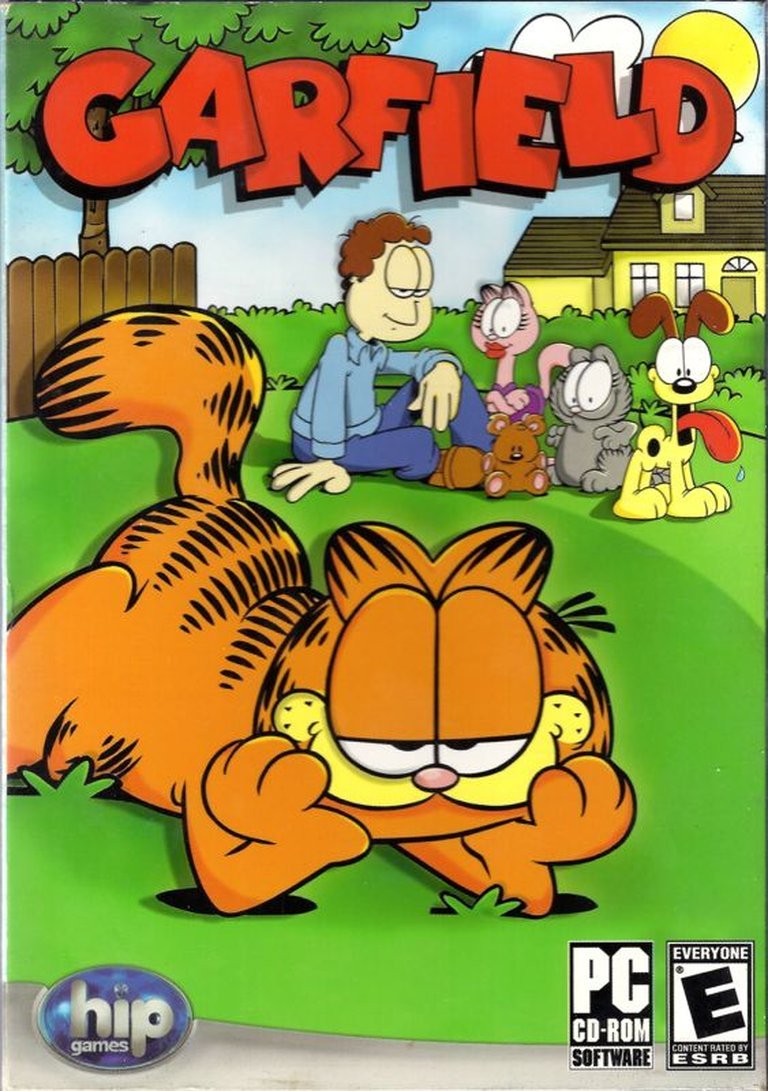
In ‘Garfield,’ players take on the role of the iconic lazy, lasagna-loving cat in a 3D puzzle-adventure set entirely within his home. After being woken from a nap, Garfield discovers that Odie has trashed the house just before Jon’s imminent return. Using unconventional methods like vacuum cleaners and other household items, players solve mini-game puzzles to clean up the chaos in under an hour, earning a tasty lasagna reward for success.
Gameplay Videos
Where to Buy Garfield
PC
Garfield Free Download
Garfield Cracks & Fixes
Garfield Patches & Updates
Garfield Mods
Garfield Guides & Walkthroughs
Garfield Reviews & Reception
metacritic.com (71/100): Boring fetch quest game where you have to put items In the correct place, the voice acting is horrendous and the gameplay lacks variety, all the songs keep relentlessly looping, the menu music especially, the cutscenes look horrid too with poor animation, How could they mess this up on the PS2? I understand that they don’t know what to do with the garfield license, But a fetch quest.. seriously? Why not make a game where you have to steal food from the fridge?
imdb.com (30/100): The most rancid game ever Eternal, unending shame on the people who made this game. Jim Davis ought to be more careful when licensing out his most famous creation.
en.wikipedia.org (48/100): The Garfield game received poor ratings, Superpanda of Jeuxvideo.com gave it a 5 out of 10, and Aymeric of jeuxvideopc.com (a PC section of Jeuxvideo.com) heavily criticized the game with a 0 out of 10 score.
mobygames.com (31/100): Garfield had a rough transition into 3-D. The Good: -Story fits the Garfield mold -Cool cutscnes looks like a Xbox 360 game (Kinda). The Bad: -The models look like they were from a Super Nintendo game -Garfield instead of using his cat insincts, he uses a vacumecleaner.
Garfield Cheats & Codes
Sega Game Gear
Enter passwords on the password screen or debug menu during pause.
| Code | Effect |
|---|---|
| 1,1,2,2,1,2 | Access debug menu. Press 2 for second screen. |
| CBJL | Invincibility (password) |
| GIBM | Unlimited ammunition (password) |
| IGBM | Unlimited ammunition (password) |
Game Boy
Enter passwords on the password screen.
| Code | Effect |
|---|---|
| Chicken, Bear, John, Lady | Level select |
| GIBM | Unlimited ammunition (password) |
Genesis (In-Game Button Codes)
Enter button sequences on the pause menu.
| Code | Effect |
|---|---|
| Left, C, Down, Up, B, Right | Access ‘Heather’ pause menu |
| C, Down, B, Left, A, Up | 99 projectiles |
| Down, Up, A, B, Up, Right | Gain a continue |
| Up, Down, B, A, Right, C | Gain a life |
| A, C, Up, Down, Up, Right | Refill health |
Genesis (Game Genie)
Enter Game Genie codes.
| Code | Effect |
|---|---|
| A02A-EAD4 | Start with 5 shots |
| KR2A-EAD4 | Start with 50 shots |
| NR2A-EAD4 | Start with 99 shots |
| RHYT-E61T + RHYT-E61W | Infinite lives |
| RHDT-A6T8 + RHDT-A6VA | Invincible after 1 hit |
PC
Enter passwords or use pause menu commands.
| Code | Effect |
|---|---|
| Arlene, Arlene, Arlene | Level selector menu (password) |
| Pause, then press Jump | Fly mode (invincible, no collision) |
Garfield (2004): A Lasagna-Stained Leap into 3D Obscurity
Introduction
In the annals of licensed video games, few mascots have endured—or suffered—quite like Garfield. The orange tabby’s 2004 foray into 3D gaming was a pivotal moment, born from a decade-long struggle to modernize Jim Davis’ comic strip icon after the Sega Genesis classic Garfield: Caught in the Act (1995). Developed by The Code Monkeys and published by Hip Interactive, Garfield (2004) promised a bold reinvention but collapsed under the weight of its own ambition. This review dissects a game emblematic of mid-2000s licensed shovelware: a clumsy, bug-riddled experiment that failed to honor its source material or justify its existence in an era dominated by Twisted Metal and Ratchet & Clank.
Development History & Context
The Studio and Licensing Chaos
The Code Monkeys, a UK-based studio with credits on Special Forces: Nemesis Strike and Stolen, inherited a franchise in flux. After Garfield’s license bounced from Sega to Expert Software (1999) and Hip Interactive (2003), the pressure to modernize the IP was palpable. The 3D platformer boom of the early 2000s—driven by PlayStation 2 hits like Jak and Daxter—demanded a transition from 2D, yet The Code Monkeys faced tight constraints. With an estimated budget dwarfed by contemporaries and built on the aging RenderWare engine, the game was doomed to technical mediocrity from inception.
Technological and Creative Constraints
The early 2000s’ shift to 3D was brutal for licensed games, often prioritizing novelty over polish. Garfield’s development was no exception: mouse-and-keyboard controls (a holdover from its PC origins) clashed with console design, while the PS2’s limited RAM resulted in excruciating load times between rooms. The studio’s vision—a “3D interactive puzzle adventure”—buckled under hardware limitations, reducing Garfield’s house to a labyrinth of empty spaces and repetitive asset reuse.
Narrative & Thematic Deep Dive
Plot and Characters: Faithful, Yet Flawed
The premise is pure Garfield: Jon Arbuckle threatens the lasagna-obsessed cat with a diet if he fails to clean Odie’s apocalyptic house trashing. While the stakes align with the comic’s lazy charm, the execution falters. Garfield’s trademark snark appears in sporadic one-liners (“Egg-cellant!”), but dialogue is sparse, and characters feel disconnected. Odie’s role as a nuisance—constantly tackling Garfield—mirrors the comics, yet lacks nuance, devolving into a gameplay irritant.
Themes: Responsibility vs. Sloth
The game’s eight-hour time limit (in-universe) pits Garfield’s laziness against mortal fear of Jon’s wrath—a clever thematic extension of the strip’s core conflict. However, the narrative lacks escalation. Villains like Nermal (relegated to a footrace side quest) and spiders (generic enemies) fail to elevate tension. The result is a series of chores masquerading as a story, with no emotional payoff beyond unlocking Jon’s lasagna-laden fridge.
Gameplay Mechanics & Systems
Core Loop: Vacuuming Away Sanity
Players navigate 15 rooms, using a vacuum cleaner to suck up misplaced objects (basketballs, computers) and “blow” them into silhouetted correct spots. The mechanic sounds inventive but decays into tedium:
- Inventory Hell: Garfield can only carry three items, necessitating endless backtracking to storage boxes.
- Odie’s Annoyance: The dog respawns in most rooms, tackling Garfield and disrupting progress—an artificial difficulty spike.
- Mini-Games: A Columns-style block matcher and jigsaw puzzles offer brief respite but feel undercooked.
Bugs and Unintentional Cruelty
The attic’s “Windup Roundup” mini-game is notoriously broken, with spiders disabling the vacuum unless players exploit collision glitches. Worse, completing the final room triggers an unskippable ending cutscene, preventing 100% completion—a design oversight emblematic of rushed QA.
UI and Controls: A User Experience Nightmare
Keyboard-and-mouse controls (ported awkwardly to PS2) render movement slippery, while the camera struggles in tight spaces. The “?” interaction prompts—Garfield’s sole guide—vanish after one use, forcing trial-and-error guesswork for obscure item placements (e.g., the pool cue hidden in leafy backdrops).
World-Building, Art & Sound
Visuals: A Time Capsule of Ugliness
Critics lambasted the game’s “angular” models (JeuxVideoPC), comparing Garfield to “Super Nintendo” rejects. While FMV cutscenes mimic Xbox 360-tier animation (per fan reviews), in-game visuals are drab: textures repeat ad nauseam, and Jon’s permanently scowling face clashes with his comic counterpart’s dopey charm. The lone artistic triumph? The attic’s remix of the menu theme—a melancholic dirge for lost potential.
Sound Design: Forgettable and Fractured
Garfield’s non-Lorenzo Music voice actor delivers lines with bored detachment, while Odie’s silent antics feel eerie. Environmental sounds (vacuum hums, item placements) lack impact, and looping tracks grate within minutes. The sole exception: Jon’s enraged “GARFIELD!” in the game-over cutscene—a meme-worthy crescendo of disappointment.
Reception & Legacy
Critical and Commercial Failure
The game bombed critically, averaging 31% on MobyGames (3 reviews) and a scathing 0/10 from JeuxVideoPC (“a disaster”). Critics cited “sluggish controls” (7Wolf Magazine), “repetitive gameplay” (Jeuxvideo.com), and visuals “dated on arrival.” Sales data remains elusive, but its bargain-bin afterlife speaks volumes.
Cultural Impact: A Footnote in Garfield’s Saga
Though forgotten by mainstream audiences, the game’s infamy birthed ironic appreciation. Fan theories posit its “Perpetual Smiler” Garfield as a proto-surreal meme, while the 2015 Garfield: The Musical riffed on its themes of domestic chaos. Its sole legacy? Paving the way for the so-bad-it’s-good Garfield Kart (2013), which embraced absurdity with competitive racing.
Industry Influence: Licensed Games’ Dark Age
Garfield epitomizes early 2000s licensed shovelware—cash grabs prioritizing IP recognition over innovation. Its failure mirrored contemporaries like Catwoman (2004), cementing skepticism toward comic adaptations in gaming until Rocksteady’s Batman: Arkham Asylum (2009) reset expectations.
Conclusion
Garfield (2004) is less a game than a cautionary tale. Its attempt to drag comics into 3D was commendable but hamstrung by technical ineptitude, design apathy, and a fundamental misunderstanding of its source material’s appeal. For historians, it’s a relic of licensed gaming’s grim nadir; for players, a frustrating slog. Yet, like Garfield’s hatred of Mondays, its very existence feels perversely iconic—a lasagna-stained monument to ambition outpacing execution. Final Verdict: A historical curiosity, best left to masochists and meme archaeologists.
Rating: ★½ (out of 5) | Platforms Reviewed: PlayStation 2, Windows | Legacy Status: Cult Failure