
- Release Year: 2013
- Platforms: Linux, Macintosh, PlayStation 3, Windows, Xbox 360
- Publisher: Kalypso Media Digital Ltd., Kalypso Media GmbH
- Developer: Dreampainters Software
- Genre: Adventure
- Perspective: 1st-person
- Game Mode: Single-player
- Gameplay: Puzzle elements
- Average Score: 57/100
Description
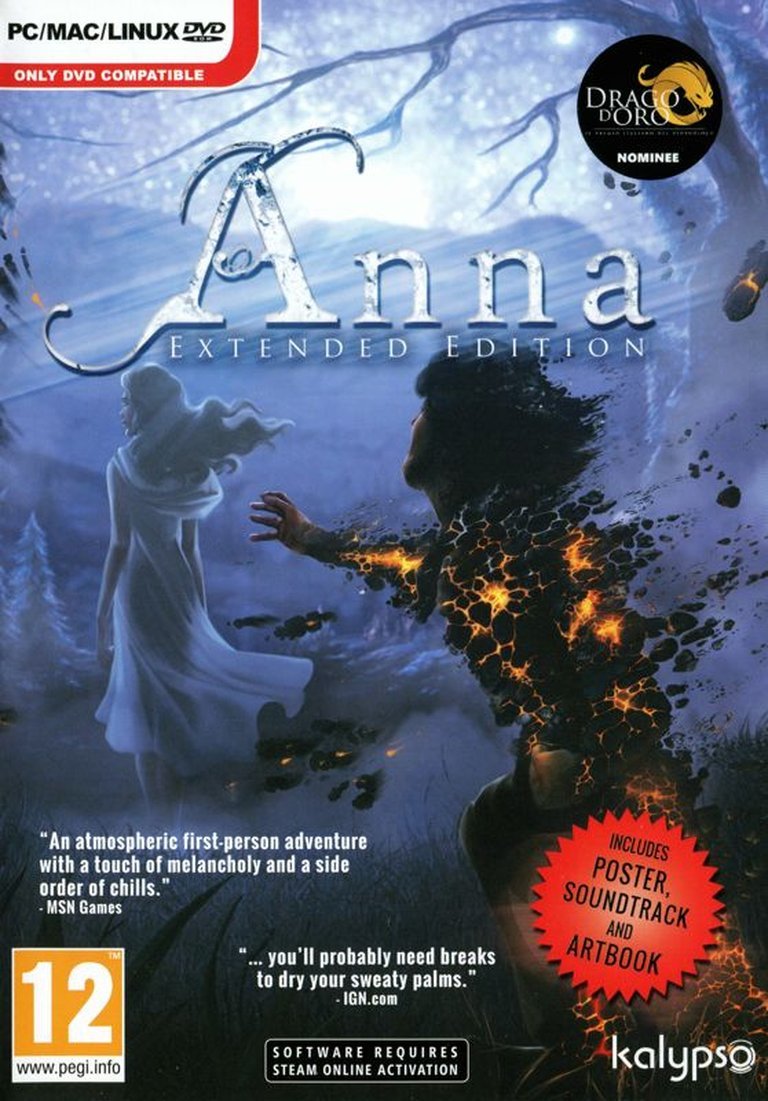
Anna: Extended Edition is a psychological horror adventure game where players explore an abandoned sawmill and surrounding areas to uncover a dark past. Presented in first-person perspective, the game combines environmental puzzle-solving with a haunting narrative, revealing its story through scattered clues and eerie encounters. This enhanced version features improved environments, redesigned puzzles, new music, an updated interface, and introduces the Wife Doll as a central character. Owners of the original receive a free upgrade, while the UK retail edition includes bonus content like an art book and soundtrack.
Gameplay Videos
Where to Buy Anna: Extended Edition
PC
Anna: Extended Edition Cracks & Fixes
Anna: Extended Edition Patches & Updates
Anna: Extended Edition Guides & Walkthroughs
Anna: Extended Edition Reviews & Reception
steambase.io (61/100): Anna – Extended Edition review data is updated in real-time as more players share their feedback on Steam.
metacritic.com (75/100): Anna: Extended Edition improves the basic title from every point of view.
gamepressure.com (37/100): Improved edition of the 2012 PC Adventure Anna. Developers took care not only of nicer graphics, but also new locations, additional puzzles or a changed interface.
store.steampowered.com : Anna – Extended Edition has been given an overhaul based on the feedback of the thousands of players of the original Anna.
Anna: Extended Edition: A Haunting Descent into Madness and Mythology
Introduction
In the shadowed corridors of indie horror, Anna: Extended Edition (2013) stands as a chilling testament to psychological terror and narrative ambition. Developed by Italian studio Dreampainters and published by Kalypso Media, this first-person horror-adventure reimagines its 2012 predecessor with expanded content, refined puzzles, and a denser atmosphere. Set against the austere beauty of the Italian Alps, Anna weaves a tale of obsession, pagan curses, and fractured sanity. This review argues that while the game stumbles under the weight of its own cryptic design, it remains a cult classic—a flawed but evocative experiment in environmental storytelling and existential dread.
Development History & Context
Studio Vision and Folklore Foundations
Dreampainters Software, a small Italian team, drew inspiration from regional myths of the Val D’Ayas Valley, particularly a local legend about a sawmill haunted by a lumberjack who murdered his family. The studio sought to subvert traditional horror tropes by prioritizing psychological unease over jump scares, crafting a narrative that unfolds through fragmented diaries, environmental clues, and shifting realities.
Technological Constraints and Iteration
Built on Unity, the original Anna (2012) faced criticism for obtuse puzzles and a clunky interface. The Extended Edition addressed these issues with redesigned environments, a streamlined UI, and new characters like the haunting “Wife Doll.” However, technical limitations persisted, particularly in console ports (PS3, Xbox 360), where long load times and graphical hicks marred immersion.
The 2013 Horror Landscape
Released amid a renaissance of indie horror (Amnesia: The Dark Descent, Slender: The Arrival), Anna stood out for its folklore-driven narrative and lack of combat. Its focus on slow-burn tension and player-driven storytelling resonated with fans weary of action-oriented horror, though it struggled to reach mainstream audiences.
Narrative & Thematic Deep Dive
Plot: A Labyrinth of Guilt and Goddesses
Players assume the role of an amnesiac archaeologist drawn to a decaying sawmill by dreams of a woman named Anna. Through cryptic journals and ghostly visions, the story unveils a dual tragedy:
- The Ancient Curse: Anna, a pagan goddess associated with fertility and nature, was betrayed by men after her human avatar was burned as a witch. Her wrath manifests as an obsession that drives men to madness and violence.
- The Protagonist’s Sin: Years before, the player character murdered his wife and children in a fit of rage after they destroyed a statue of Anna—a crime erased from his memory.
Characters and Ambiguity
- Anna: Less a character than a force of nature, she symbolizes the destructive power of unchecked desire. Her presence is felt through whispers, shifting environments, and mannequin-like “dolls” that stalk the player.
- The Wife Doll: Added in the Extended Edition, this entity embodies the protagonist’s guilt, alternating between mournful weeping and violent outbursts.
Themes: Obsession and Epistemic Crisis
The game explores how obsession corrodes identity. Is Anna a vengeful deity, a hallucination, or a manifestation of the protagonist’s repressed trauma? The narrative’s ambiguity—enhanced by eight possible endings—invites players to question their own complicity in unraveling the mystery.
Gameplay Mechanics & Systems
Puzzle Design: Brilliance and Frustration
Puzzles range from intuitive (aligning symbols to unlock doors) to maddeningly obscure (combining arbitrary items like a toaster and water). The Extended Edition softened criticism by adding hints and restructuring challenges, but trial-and-error gameplay persists.
Sanity System and Environmental Interaction
The protagonist’s sanity fluctuates based on actions: witnessing horrors lowers stability, causing hallucinations and spatial distortions. However, this system feels underdeveloped compared to genre peers like Eternal Darkness.
UI and Controls
While the PC version’s point-and-click interface works smoothly, console adaptations suffer from sluggish camera controls—a flaw lamented in PlayStation Lifestyle’s 50% review.
World-Building, Art & Sound
Visual Design: Beauty in Decay
The sawmill’s crumbling interiors and mist-shrouded forests blend photorealistic textures with surreal distortions. The Extended Edition enhanced lighting and particle effects, making scenes like the “sea of candles” finale strikingly ethereal.
Soundscape: Chantry’s Haunting Score
Italian band Chantry’s soundtrack merges Gregorian chants with industrial drones, amplifying the game’s oppressive mood. Subtle audio cues—footsteps, distant weeping—keep players perpetually on edge.
Technical Shortcomings
Despite improvements, flickering textures and abrupt load screens (noted in Adventure Gamers’ 60% review) occasionally disrupt immersion.
Reception & Legacy
Critical Divide
- Praise: Critics lauded the atmosphere (HonestGamers: 80%), sound design, and narrative ambition.
- Criticism: Opaque puzzles, translation errors, and technical flaws drew ire (Destructoid: 3.1/10). The PS3 version’s 50% score on PlayStation Lifestyle underscored port-related issues.
Cult Status and Influence
Though commercially modest, Anna inspired a trilogy (Anna’s Songs) and the unreleased White Heaven. Its emphasis on environmental storytelling and psychological horror echoes in titles like Layers of Fear and The Suicide of Rachel Foster.
Player Reception
Steam reviews (62% positive) reflect a divided fanbase: some cherish its eerie depth, while others dismiss it as “frustrating” (Steam user ericcoutinho).
Conclusion
Anna: Extended Edition is a paradox—a game undermined by its own ambition yet unforgettable in its atmospheric prowess. Its clunky mechanics and uneven polish prevent it from standing alongside genre titans, but as a meditation on guilt and myth, it remains a compelling artifact of indie horror’s evolution. For patient players willing to endure its flaws, Anna offers a haunting journey into the abyss of the human psyche—one that lingers long after the credits roll.
Final Verdict: A flawed gem for horror aesthetes, best approached as an experimental narrative rather than a polished game.