
- Release Year: 2018
- Platforms: Nintendo Switch, Windows
- Publisher: Deonn Software ltd., Forever Entertainment S. A.
- Developer: Deonn Software ltd.
- Genre: Action, Strategy, Tactics
- Perspective: 3rd-person (Other)
- Game Mode: Single-player
- Gameplay: Shooter
- Setting: Futuristic, Sci-fi
- Average Score: 65/100
Description
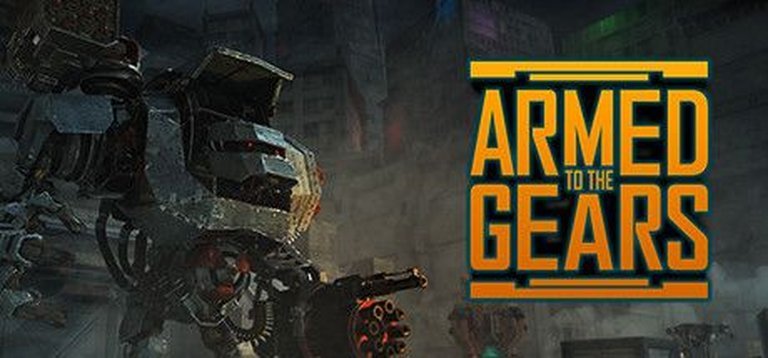
Armed to the Gears is a sci-fi tactical action game set in a futuristic world, combining real-time combat with strategic elements. Players engage in intense battles using advanced weaponry and gear, navigating third-person diagonal-down perspectives across dynamic environments. As a commercial shooter blending action and strategy, it challenges players to balance quick reflexes with tactical decision-making in its sci-fi warfare setting.
Gameplay Videos
Where to Buy Armed to the Gears
PC
Armed to the Gears Cracks & Fixes
Armed to the Gears Guides & Walkthroughs
Armed to the Gears Reviews & Reception
opencritic.com (68/100): this particular title is in need of some parts and maybe an overhaul in places
steamcommunity.com : These elements create glimpses of what Armed to the Gears could have been if its systems were built out with greater ambition and depth.
Armed to the Gears Cheats & Codes
PC
For Cheat Happens trainer: Use Numpad keys. For Fearless Revolution Cheat Engine table: Install Cheat Engine, open the .CT file, select the game process, and check the boxes or set values to 1 to activate options.
| Code | Effect |
|---|---|
| NumPad1 | Player Hull (Toggle for unlimited) |
| NumPad2 | Player Armor (Toggle for unlimited) |
| NumPad3 | No Machine Gun Heat (Toggle on) |
| NumPad4 | Unlimited Missiles (Toggle on) |
| NumPad5 | Unlimited Jetpack Fuel (Toggle on) |
| NumPad6 | Workshop Money (Toggle on for unlimited Credits) |
| godmode | God Mode |
| one hit kill | One Hit Kill |
| no overheat | No Overheat |
| inf missiles | Infinite Missiles |
| max credits | Maximum Credits |
| max fuel | Maximum Fuel |
| jetpack speed | Jetpack Speed |
| fast capture | Fast Capture |
Armed to the Gears: A Gritty Mech Odyssey in the Shadows of Giants
Introduction
Armed to the Gears (2018) is a sci-fi tactical shooter that quietly carved a niche among mech enthusiasts and strategy fans. Developed by the indie studio Deonn Software, the game blends real-time combat with strategic base-capturing mechanics, set against a futuristic backdrop of mechanized warfare. Despite its modest budget and limited marketing, Armed to the Gears stands as a testament to indie ingenuity, offering a focused experience centered on customization, replayability, and tactical depth. This review examines how the game navigates the crowded landscape of 2018—a year dominated by blockbusters like Monster Hunter: World and Red Dead Redemption 2—and assesses its legacy as a cult favorite.
Development History & Context
Deonn Software, a lesser-known studio, sought to deliver a mech-centric experience without the AAA budget of contemporaries like Gears of War 4 or Call to Arms. Released on Windows in March 2018 (and later on Nintendo Switch in 2021), the game was built in Unity, a pragmatic choice for its cost-effectiveness. The 2018 gaming landscape was saturated with live-service titles and battle royales (Fortnite, PUBG), but Armed to the Gears leaned into single-player depth, a rarity at the time.
The developers openly engaged with players via Steam forums, iterating on feedback post-launch. This community-driven approach mirrored trends in early-access development, though the game launched as a commercial product. Its delayed Switch port reflected the platform’s growing indie library, capitalizing on the hybrid console’s tactical-game-friendly audience.
Narrative & Thematic Deep Dive
The game’s narrative is sparse, focusing on environmental storytelling. Players command a lone mech pilot defending humanity against an unnamed mechanized threat. While character development is minimal, the setting evokes a Horizon Zero Dawn-lite aesthetic: ruined cities reclaimed by nature, with enemy factions vying for control of resource nodes.
Themes of desperation and resilience emerge through gameplay rather than dialogue. Missions often involve scavenging parts or reclaiming territory, reinforcing a “scrappy underdog” tone. The absence of a grand narrative might disappoint story-driven players, but it aligns with the game’s focus on emergent, systems-driven storytelling.
Gameplay Mechanics & Systems
Armed to the Gears shines in its modular design:
– Mech Customization: Players choose from nine armor/fairing combinations, each granting unique perks (e.g., shield regeneration, collision damage). Weapons and upgrades are purchased using in-game credits, encouraging strategic loadout experimentation.
– Dynamic Missions: Randomized enemy placements, loot crates, and destructible environments ensure no two playthroughs are identical. Later updates introduced wave-based survival modes, akin to Tower Defense meets MechWarrior.
– Strategic Depth: Capturing bases unlocks artillery strikes or drone support, creating a risk-reward loop. Offensive vs. defensive playstyles are viable, with leaderboards (added post-launch) incentivizing score-chasing.
However, the UI is clunky, with poor inventory management, and the initial learning curve frustrates newcomers. Combat lacks the polish of Gears of War 4’s cover mechanics, but the sheer variety of playstyles compensates.
World-Building, Art & Sound
The game’s visuals are utilitarian, leveraging Unity’s capabilities without achieving photorealism. Mech designs are chunky and industrial, echoing Battletech’s rugged aesthetic. Environments, while repetitive, sell a “post-apocalyptic garage” vibe, with grease-stained hangars and overgrown urban battlegrounds.
Sound design is functional but unremarkable: weapon discharges and mechanical whirrs dominate, though the absence of a dynamic soundtrack weakens immersion. The game’s art direction leans into its indie roots, prioritizing clarity over spectacle—a double-edged sword that grounds the gameplay but lacks visual flair.
Reception & Legacy
Critically, Armed to the Gears flew under the radar. No major outlets reviewed it at launch, and MobyGames lists zero critic scores. Player reception was mixed but passionate, praised for its depth but criticized for janky controls and thin content at release.
Yet its legacy lies in its社区-driven evolution. Developer Raf’s post-launch updates—such as the 2019 “survival mode” and RPG-inspired pilot progression—demonstrated a commitment to longevity. The Switch port introduced cross-platform leaderboards, further cementing its cult status.
In an era of mech revivals (Daemon X Machina, MechWarrior 5), Armed to the Gears remains a footnote—but its emphasis on player agency and modular design influenced later indie hybrids like Brigador.
Conclusion
Armed to the Gears is a diamond in the rough. Its lack of polish and narrative ambition hold it back from greatness, but its core loop of mech customization and tactical experimentation delivers satisfying depth. For players weary of AAA bloat, it offers a focused, replayable experience—one that rewards patience and creativity. While not a landmark title, it exemplifies indie resilience, proving that even in the shadows of giants, niche innovations thrive.
Final Verdict: A flawed but compelling mech-strategy hybrid, best suited for tacticians willing to overlook its rough edges.