
- Release Year: 2018
- Platforms: Macintosh, Windows
- Publisher: Piece of Cake Studios
- Developer: Piece of Cake Studios
- Genre: Action
- Perspective: Diagonal-down
- Game Mode: Co-op
- Gameplay: Hacking, Stealth
- Setting: Futuristic, Sci-fi
- Average Score: 76/100
Description
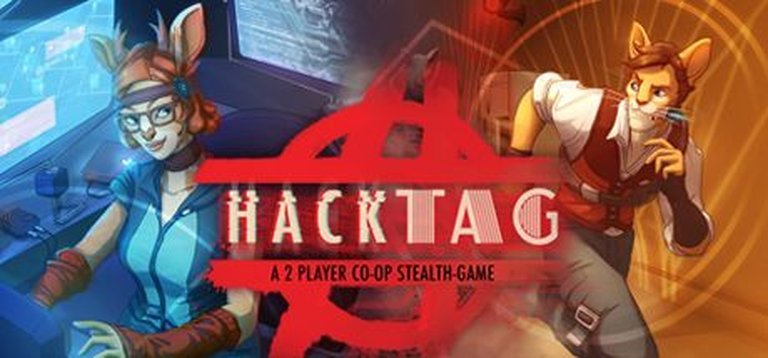
Hacktag is a cooperative stealth game set in a futuristic sci-fi world, where players team up as an elite agent and a hacker to execute corporate espionage missions. Emphasizing asymmetric gameplay, one player physically infiltrates facilities in a 2D perspective, avoiding guards and traps, while the other player supports remotely by manipulating security systems, unlocking doors, and disabling cameras. Designed primarily for two-player co-op, the game challenges partners to communicate and strategize, with replayable missions encouraging perfection through improved coordination.
Where to Buy Hacktag
PC
Hacktag Guides & Walkthroughs
Hacktag Reviews & Reception
metacritic.com (73/100): Mixed or Average
opencritic.com (80/100): Hacktag is a wonderful experience and a fine example of how asymmetry in gameplay design can create an interesting dynamic of teamwork.
godisageek.com : Hacktag is one of those games that has existed in the relative obscurity of Steam’s “Early Access pile” for some time while it’s being given the love and attention that it deserves.
Hacktag: Review
Introduction
In an era dominated by sprawling AAA titles and live-service behemoths, Hacktag (2018) stands as a daring experiment in asymmetrical cooperative gameplay. Developed by French indie studio Piece of Cake Studios, this stealth-action hybrid tasks two players with infiltrating corporate strongholds—one as a nimble field agent, the other as a remote hacker—blending Metal Gear Solid’s tension with Keep Talking and Nobody Explodes’s communication-driven chaos. While its commercial footprint was modest, Hacktag carved a niche as a cult favorite among co-op enthusiasts, praised for its inventive mechanics and lambasted for uneven execution. This review dissects its legacy, asking: Can a game thrive on novelty alone?
Development History & Context
Studio Vision & Constraints
Founded in 2015, Piece of Cake Studios aimed to reinvigorate the stealth genre with Hacktag, leveraging the Unity engine to create a lean, communication-focused experience. Inspired by heist films and the rise of indie co-op hits like Overcooked, the team sought to emulate the cinematic thrill of tandem infiltration. Limited by budget and scope, they prioritized procedural generation to maximize replayability—a double-edged sword that amplified accessibility but risked repetition.
The 2018 Landscape
Released amid a surge of indie co-op titles (A Way Out, Unrailed!), Hacktag faced stiff competition. Its asymmetric premise distinguished it, but the lack of AAA polish and marketing left it overshadowed. The game’s February 14 launch—a cheeky nod to its “digital romance” of teamwork—failed to capitalize on seasonal trends, and despite a lukewarm Steam Early Access reception, it soldiered on, refining systems based on player feedback.
Narrative & Thematic Deep Dive
Setting & Characters
Set in a 2029 dystopia ruled by anthropomorphic animal corporations, Hacktag’s world-building is more whimsical than weighty. Players assume roles as freelance mercenaries undertaking espionage for rival factions like the shadowy “Black Paw” conglomerate. While the premise channels Zootopia meets Mr. Robot, the narrative is thinly spread, relying on mission briefings and light flavor text.
Themes & Tone
The game’s central theme—trust in collaboration—shines through its gameplay loop. The hacker’s godlike oversight contrasts with the agent’s vulnerability, mirroring real-world dynamics of power and dependency. However, the tone wobbles between deadpan satire (e.g., a mission titled “Espresso Espionage”) and half-baked critiques of corporate greed, leaving its story feeling like a missed opportunity for sharper satire.
Gameplay Mechanics & Systems
Core Loop & Asymmetry
Hacktag’s brilliance lies in its dichotomy:
– The Agent navigates isometric environments, dodging guards and lasers in real-time.
– The Hacker manipulates gadgets via a blueprint-style interface, disabling cameras and unlocking doors.
Success demands constant communication—think Rainbow Six Siege meets Hello Neighbor. Mini-games, like synchronizing door hacks, inject urgency, though repetition dulls their appeal.
Progression & Customization
Unlockable skills (e.g., “Smoke Bomb” for the Agent, “Firewall Override” for the Hacker) add depth, but the progression curve feels shallow. Character customization—360 cosmetic items for anthropomorphic avatars—delivers charm but lacks impact.
Flaws & Frustrations
Single-player mode, which forces solo control of both roles, is a slog. AI pathfinding glitches and procedural level quirks (Jeuxvideo.com criticized “laborious” solo play) mar the experience. The “co-opetitive” scoring system, meant to fuel rivalry, often feels underbaked.
World-Building, Art & Sound
Visual Design
The game’s art style—a mashup of Despicable Me’s cartoonish flair and Tron’s neon grids—polarized critics. Agent missions bask in a warm, golden filter, while hacker segments drown in sterile blue holograms. Though visually distinct, textures and animations betray the budget constraints, with Hooked Gamers noting “muddy” environmental details.
Soundscape
The soundtrack, a blend of lo-fi electronic beats and tense synth pulses, complements the gameplay but lacks memorability. Voice lines—grunts, quips, and hacker jargon—are serviceable, though the absence of full voice acting limits immersion.
Reception & Legacy
Critical Response
Hacktag earned a middling 68% aggregate score (MobyGames), with praise for its “original, surprising, and convincing” co-op design (Jeuxvideo.com) but scorn for its “terrible typos” and repetitive missions (Hooked Gamers). Steam reviews echo this split: 66% positive, lauding its “frantic fun with friends” while bemoaning “lackluster solo play.”
Industry Impact
Though no blockbuster, Hacktag influenced later asymmetrical titles like Operation: Tango (2021), proving indie studios could innovate within niche genres. Its procedural level generator and communication-first design became case studies for co-op game jams.
Conclusion
Hacktag is a paradoxical gem—a game that soars in co-op yet stumbles alone, dazzles with ideas but frays at the edges. Its asymmetric premise remains a masterclass in teamwork, yet technical hiccups and repetitive design hold it back from greatness. For enthusiasts of indie experimentation, it’s a worthy curio; for others, a reminder that novelty alone can’t sustain a legacy. In the annals of co-op stealth, Hacktag earns a footnote—not a chapter—but a footnote worth revisiting.
Final Verdict: 7/10 – A flawed yet inventive co-op experience best enjoyed with a trusted partner (and a tolerance for jank).