
- Release Year: 2021
- Platforms: Windows
- Publisher: Valkeala Software
- Developer: Ruskija Game Experience
- Genre: Puzzle
- Perspective: Diagonal-down
- Game Mode: Single-player
- Gameplay: Puzzle
- Average Score: 57/100
Description
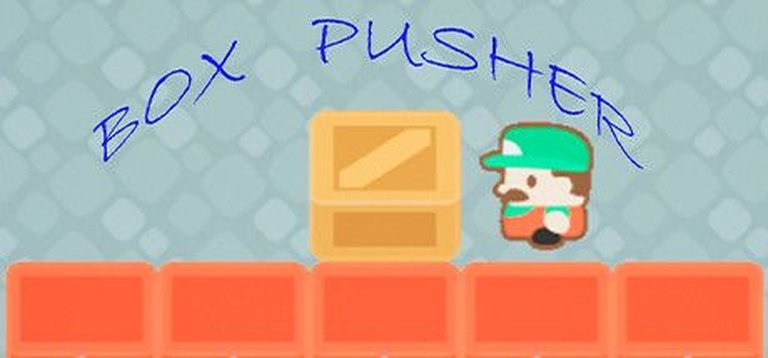
Box Pusher is a puzzle game released in 2021 for Windows, developed by Ruskija Game Experience and published by Valkeala Software. The game follows the classic sokoban style, where players must push different colored boxes to their corresponding goal locations. With 16 levels, players aim to complete each level with the fewest moves and the fastest time while collecting coins. The game features a save system that tracks the player’s fastest time, steps taken, and coins collected, unlocking new levels as players progress.
Where to Buy Box Pusher
PC
Box Pusher Guides & Walkthroughs
Box Pusher Reviews & Reception
steambase.io (57/100): Mixed
Box Pusher: A Sokoban Revival That Pushes All the Right Buttons (But Not Enough Boxes)
Introduction
In an era where video games are judged by their photorealistic graphics and sprawling open worlds, Box Pusher (2021) dares to ask: What if we just pushed boxes really well? Developed by Ruskija Game Experience and published by Valkeala Software, this minimalist puzzle game resurrects the Sokoban genre with a color-coded twist. While it lacks the ambition to redefine puzzle games, Box Pusher succeeds as a comforting, if unremarkable, homage to grid-based logistics. Its legacy lies not in innovation, but in its willingness to perfect the simple pleasure of spatial problem-solving—a thesis proven by its mixed-but-leaning-positive reception among puzzle purists.
Development History & Context
Studio Origins & Vision
Ruskija Game Experience, a lesser-known developer specializing in bite-sized puzzle games, crafted Box Pusher as a spiritual successor to their 2012 Nintendo DSi title of the same name. The studio’s philosophy—evident in their sparse Steam catalogue—prioritizes mechanical clarity over narrative or visual flair. Publisher Tero Lunkka, whose franchise includes similarly no-frills titles like Fat Pusher and Coin Pusher, positioned the game as an accessible entry point for casual players, leveraging the timeless appeal of Sokoban-style puzzles.
Technological Constraints & Era
Released in July 2021, Box Pusher arrived during a boom period for indie puzzle games, yet its technical aspirations were deliberately modest. Built with Unreal Engine (a curious choice for such a simple game), it targeted aging hardware, requiring only a 512MB GPU and Windows 8—a nostalgic nod to an era when puzzle games dominated Flash portals. This low-spec approach broadened its accessibility but limited its ability to compete with visually richer contemporaries like Baba Is You or Patrick’s Parabox.
Narrative & Thematic Deep Dive
The Silent Struggle of the Unnamed Pusher
Box Pusher eschews narrative entirely. There are no characters, no dialogue, and no stakes beyond the player’s pride. The manual for the 2012 DSi version dismissively refers to the protagonist as a “pawn,” and this ethos carries over to the 2021 iteration. The absence of story is both a strength and a weakness: it eliminates distractions, but it also renders the experience emotionally sterile. Unlike Portal’s dark humor or The Witness’s existential musings, Box Pusher offers only the cold, clinical satisfaction of efficiency.
Themes: Order in Chaos
Thematically, the game explores the human urge to impose order—a concept mirrored in its color-matching mechanics. Each level is a microcosm of entropy: disordered boxes must be meticulously sorted into their designated zones. The inclusion of collectible coins and time-based scoring injects a capitalist undertone, rewarding players for optimizing their labor. It’s a subtle commentary on modern productivity culture, albeit unintentional.
Gameplay Mechanics & Systems
Core Loop: Precision Over Panache
The gameplay is pure Sokoban: push colored boxes onto matching goals. The twist lies in its five-colored box system, forcing players to juggle multiple objectives simultaneously. A rewind mechanic—borrowed from the DSi version—allows trial-and-error experimentation, mitigating frustration. Levels escalate in complexity, introducing maze-like layouts and interlocking puzzles, but the difficulty curve remains gentle, catering to newcomers.
Scoring & Replayability
Three metrics dictate success: steps taken, coins collected, and time elapsed. This triad encourages replayability, though the lack of global leaderboards dampens competitive appeal. Steam achievements (notably sparse at just one) feel like an afterthought, undermining the game’s potential for challenge-seeking players.
Flaws: Repetition & Stagnation
The game’s greatest weakness is its limited scope. With only 16 levels and no level editor (a feature present in the DSi version), Box Pusher exhausts its ideas quickly. The absence of enemies, power-ups, or dynamic obstacles leaves little to distinguish its later stages from the first. It’s a competent puzzle game, but not a transformative one.
World-Building, Art & Sound
Visuals: Retro by Design
Box Pusher adopts a minimalist aesthetic, with fixed diagonal-down perspectives and flat, colorful sprites. While the DSi version featured varied tilesets (praised in its 2012 review), the 2021 iteration opts for a uniform warehouse backdrop—a missed opportunity to inject personality. Pixel-art enthusiasts might appreciate its retro charm, but others will find it overly austere.
Soundtrack: A Silent Workshop
The game’s audio design is functional but forgettable. The DSi version’s “soothing, meandering tunes” are absent here, replaced by generic clicks and clacks of boxes sliding into place. The silence amplifies the game’s loneliness, reinforcing its theme of solitary labor—though likely not by design.
Reception & Legacy
Launch Reception: Niche Approval
Critic reviews are nonexistent, but player feedback paints a mixed picture. On Steam, it holds a 57/100 score, with praise for its “relaxing puzzles” and criticism for its “lack of depth.” The DSi version fared better, earning a 7/10 for its cleverness but criticized for repetitiveness. Both versions share a fate as minor curios rather than breakout hits.
Industry Influence: A Quiet Ripple
Box Pusher’s legacy is modest. It joins a cadre of Sokoban clones but introduces little to the genre beyond its color-matching hook. Its true impact lies in preserving the genre’s fundamentals for a new generation—a digital museum piece for puzzle historians.
Conclusion
Box Pusher is the video game equivalent of a well-oiled widget: it works, it’s satisfying to tinker with, and it’s promptly forgotten. For Sokoban devotees, it’s a harmless diversion; for others, it’s a reminder of the genre’s limitations. Its $4.99 price tag feels fair, though bargain hunters might prefer its inclusion in Valkeala Software’s 2D bundle. In the pantheon of puzzle games, Box Pusher won’t be remembered as a pioneer—but as a testament to the enduring appeal of pushing boxes into holes, it gets the job done.